Milk Snake Breeder Setup and Housing: Complete Breeder Guide
Milk snake breeder setup and housing decisions affect daily care efficiency, animal health, and breeding season outcomes. A well-designed facility with appropriate enclosures, organized heating, and integrated record-keeping reduces the time spent on management while improving results. Breeders using integrated software report 30% less time on administrative tasks, and a physical setup that supports good record-keeping contributes significantly to that efficiency.
TL;DR
- Milk snakes span dozens of recognized subspecies of Lampropeltis triangulum and related species, each with distinct care and breeding requirements.
- Most milk snake subspecies require 60-90 days of seasonal cycling at 50-55 degrees Fahrenheit for reliable breeding.
- Clutch sizes range from 4-18 eggs depending on subspecies, with Honduran milk snakes averaging toward the larger end.
- Incubation runs 55-70 days at 78-82 degrees Fahrenheit with moderate humidity.
- Honduran milk snakes have an active morph program with albino, hypo, and tri-color tangerine lines among the established variants.
Rack Systems for Milk Snake Collections
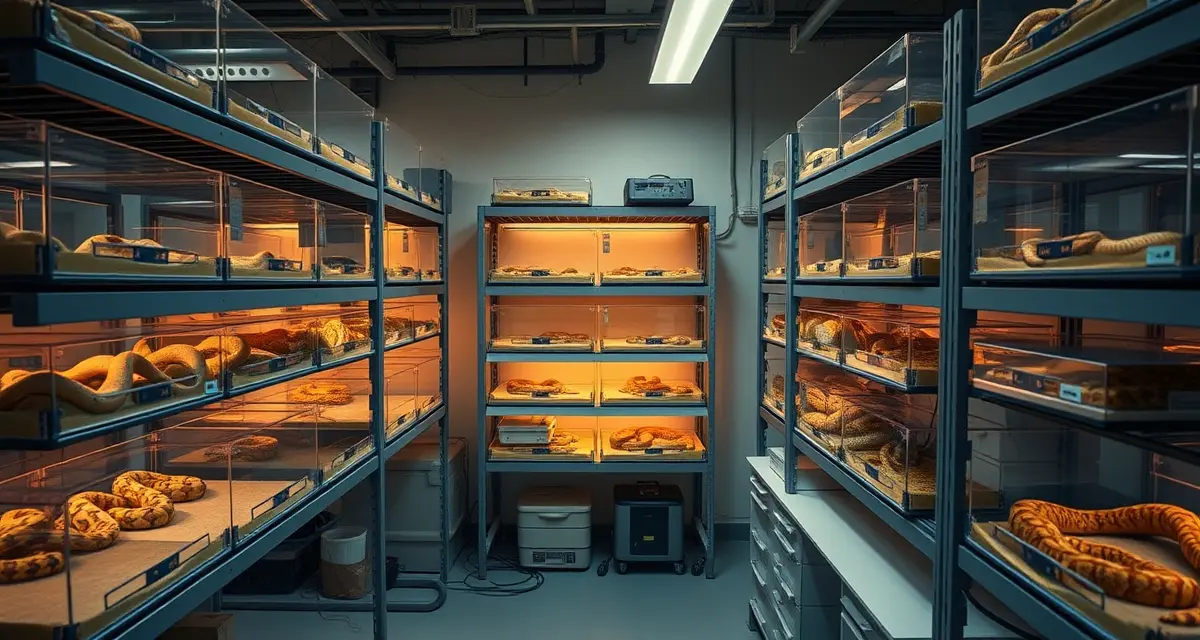
For collections of 10 or more animals, PVC rack systems with individual tubs provide space efficiency and consistent environmental control. Rack systems allow shared heating infrastructure, easy access for feeding and maintenance, and scalable capacity as your collection grows.
Tub sizing by animal stage:
- Hatchlings: 6-quart tubs for the first 6 months
- Juveniles: 16 to 28-quart tubs as animals grow
- Adult breeders: 28 to 41-quart tubs depending on subspecies size
Choose tubs with secure lid systems. While milk snakes are less aggressively escape-prone than some species, secure lids are still important in a collection where an escaped animal could enter another's enclosure.
Heating Systems
Heat tape or rope runs under the back third of each tub row, connected to quality thermostats. One thermostat per row is standard for most rack designs; verify that all tubs on a given row reach appropriate temperatures with your specific rack design.
Target 85-88°F warm side with 72-76°F ambient cool side. Verify temperatures at floor level inside representative tubs using a probe thermometer, not just at the outside of the rack.
Cooling Space
A dedicated cooling area maintaining 55-65°F is required for the breeding cycling period. Options include:
- A naturally cool basement room that maintains appropriate temperatures in winter
- A temperature-controlled spare room or closet
- A purpose-built cooling cabinet for smaller collections
Verify cooling space temperatures before moving animals. Log cooling space temperature periodically during the cooling period. HatchLedger's reptile breeder hub stores cooling protocol dates and temperatures linked to your individual animal records.
Quarantine Area
A completely separate quarantine area is essential. This space needs:
- Physical separation from the main collection room
- Its own dedicated tools and equipment (no sharing with main collection)
- Accessible hand hygiene
- Temperature control appropriate for incoming animals
Animals go directly to quarantine on arrival and stay for 60 to 90 days before joining the main collection. No exceptions.
Incubation Area
Dedicate a specific area for incubation with a quality incubator, stable ambient temperatures, and storage for incubation supplies. Keep incubators away from windows and direct heat sources that could cause temperature fluctuation.
Label every clutch container immediately and connect labels to digital records. During active incubation seasons with multiple clutches, physical and digital organization that match each other prevents container mix-ups.
Labeling and Organization
Label every enclosure with the animal ID. Post a reference chart matching animal IDs to enclosure positions. Update digital housing assignments whenever animals move. Reptile breeder software comparison resources consistently find that breeders who maintain current digital housing records reduce feeding and medication errors significantly compared to those who rely on physical labels alone.
Frequently Asked Questions
What is the best approach to milk snake breeder setup and housing?
Use rack systems once your collection exceeds 10 animals for efficiency. Heat every row with quality thermostats and verify temperatures regularly. Include a separate cooling space, dedicated quarantine area, and organized incubation space in your facility design. Label everything consistently and connect physical labels to digital records. Plan your facility before installing racks so drainage, lighting, and traffic flow work efficiently from the start.
How do professional breeders handle milk snake breeder setup and housing?
Professional milk snake breeders design facilities for efficiency and scalability. They use rack systems with consistent heating infrastructure, maintain organized quarantine and incubation areas, and keep clear physical organization matched to digital records. Their setups support the data collection that drives better breeding outcomes: verified temperatures, reliable humidity levels in enclosures that need it, and an organized cooling space that runs on a defined schedule.
What software helps manage milk snake breeder setup and housing?
HatchLedger is purpose-built for reptile breeders, connecting animal records, breeding history, clutch outcomes, and financial tracking in one system. Unlike generic spreadsheets, it's designed around the specific workflow of an active breeding season. Free for up to 20 animals.
What is the most commonly bred milk snake subspecies?
Honduran milk snakes (L. t. hondurensis) are the most widely bred milk snake subspecies due to their larger size, active morph development, and established keeper base. Nelson's milk snakes and Sinaloan milk snakes are also commonly bred. Scarlet kingsnakes have a smaller but dedicated keeper community.
How do you tell apart milk snake subspecies?
Subspecies identification relies on coloration pattern (band count and width), scale counts, and geographic origin. For captive-bred animals, documentation from the original breeder is the most reliable source. Hybridization between subspecies does occur and reduces the value and documentation reliability of offspring.
Sources
- USARK (United States Association of Reptile Keepers)
- Association of Reptilian and Amphibian Veterinarians (ARAV)
- Herpetologica (Herpetologists League)
- Society for the Study of Amphibians and Reptiles (SSAR)
- Reptiles Magazine (Bowtie Inc.)
Get Started with HatchLedger
Milk snake breeders working across subspecies and morph lines benefit from records that track lineage clearly and connect cooling protocols to seasonal clutch outcomes. HatchLedger keeps this information organized and searchable across your entire collection. Free for up to 20 animals.