Kingsnake Hatchling Inventory Management: Complete Breeder Guide
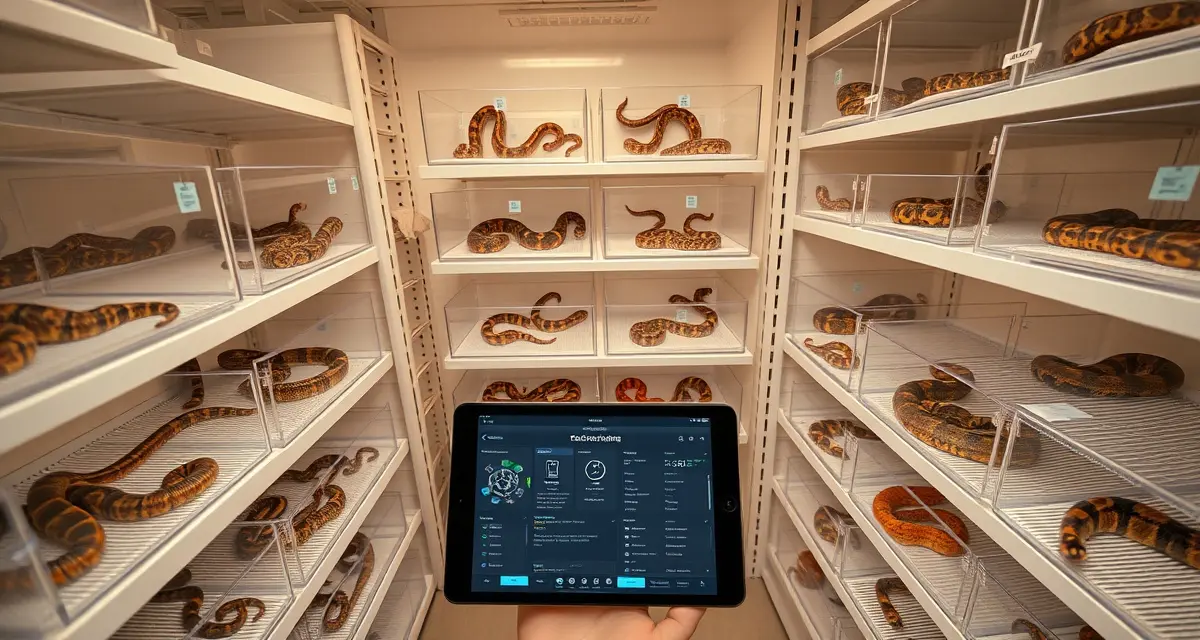
Kingsnake hatchling inventory management carries the same organizational requirements as other colubrid breeding programs, with the added complexity of managing a species where individual housing is a safety requirement from day one. Every hatchling is an individual record from the moment it hatches, and those records need to include not just feeding and weight data but also morph documentation and sale status. Breeders using integrated software report 30% less time on administrative tasks, and at peak hatchling season with 50 to 100 individual records to maintain, that efficiency is essential.
TL;DR
- Kingsnakes and milksnakes span the genus Lampropeltis, with numerous species and subspecies each having distinct cycling requirements.
- Most kingsnake species require 90-120 days of brumation at 45-55 degrees Fahrenheit for consistent breeding.
- Clutch size datas average 8-20 eggs depending on species, with California kingsnakes commonly producing 6-12 eggs.
- Incubation runs 55-75 days at 78-82 degrees Fahrenheit, similar to corn snakes.
- Kingsnake morph genetics overview include albino, anerythristic, and hypo lines plus combination morphs with active development in California kingsnakes, gray-banded kingsnakes, and Mexican black kingsnakes.
Setting Up From Hatch
Assign unique IDs at hatch before anything else. The ID links every subsequent record for that animal to its clutch, parents, and genetics. Use a convention that makes clutch attribution immediately clear: C-24-003-01 for clutch 3 of 2024, animal 1.
Record at hatch:
- Hatchling ID and clutch ID
- Hatch date and weight
- Visual morph assessment (flag uncertain identifications for follow-up)
- Any abnormalities
Create the individual enclosure label with the hatchling ID. This physical label is your connection between the animal in front of you and its digital record. In a room of 50 hatchlings in identical tubs, consistent labeling is what prevents feeding and record attribution errors.
The Core Data Points Through the Pre-Sale Period
Feeding Records
Every feeding attempt logs at the individual animal level. Date, prey type, prey size, method, and outcome for each hatchling.
With 50 kingsnake hatchlings, this means 50 individual feeding logs updated multiple times per month. Paper or spreadsheet approaches fail at this scale: they're slow to navigate, prone to misattribution, and can't provide quick at-a-glance status for individual animals.
HatchLedger's reptile breeder hub structures feeding records at the animal level. You navigate to the individual, log the event, and it belongs to that animal with no risk of row confusion or formula errors affecting multiple records simultaneously.
Weight Records
Weekly weights for the first 90 days, monthly thereafter. Log every measurement with date. An established feeder showing steady weight gain is a healthy, saleable animal. One losing weight despite eating is flagged for closer attention before it becomes a crisis.
Morph and Genetic Status
Confirm morph identification before listing each hatchling for sale. For recessive traits, document whether each animal is visual, confirmed het, possible het (with percentage), or normal based on known parentage genetics.
Inaccurate morph documentation in sale listings damages your reputation in a community where buyers verify and discuss genetic claims. Your records need to support exactly what you're selling.
Sale Status Tracking
Track every animal's current status:
- Available (established feeder, documentation complete)
- Not yet selling (feeding not yet established)
- Reserved (deposit received, matched to buyer)
- Sold and delivered
- Held for collection
Deposits need sub-records: buyer name, deposit amount, date received, which animal, balance due. Reptile breeder software comparison tools that connect deposit records to individual animals and clutch financials prevent the double-booking and deposit tracking errors that create buyer disputes.
Frequently Asked Questions
What is the best approach to kingsnake hatchling inventory management?
Assign IDs at hatch and create individual records immediately. Every kingsnake goes in individual housing from day one; your inventory records mirror this individual approach. Log feeding attempts and outcomes for each animal on a consistent schedule. Confirm morph and genetic documentation before listing animals for sale. Track deposit and sale status with complete buyer information. A digital system designed for individual animal records is essential for any cohort beyond 15 to 20 hatchlings.
How do professional breeders handle kingsnake hatchling inventory management?
Professional kingsnake breeders run individual records for every hatchling from the moment of emergence. They update feeding and weight records on schedule, confirm morph documentation before selling, and manage deposits with formal records. They review inventory status regularly to identify which animals need intervention and which are ready for sale. Their documentation standards make sale listings accurate and credible, which reduces post-sale disputes and builds buyer trust.
What software helps manage kingsnake hatchling inventory management?
HatchLedger manages multi-species collections with distinct cooling protocols, morph genetics, and clutch records in one system. For kingsnake breeders working across subspecies or multiple species, keeping each animal's protocol and lineage clearly organized prevents the documentation errors that affect buyer trust. Free for up to 20 animals.
Do all kingsnake species need the same cooling duration?
No. California kingsnakes from warmer coastal localities may respond to 90 days of cooling at 50-55 degrees Fahrenheit, while gray-banded kingsnakes from higher elevation Texas habitats may benefit from 120 days at lower temperatures. Eastern kingsnakes from northern localities often need the most aggressive cooling. Research the specific ecology of your animals' locale or subspecies.
Can different kingsnake species be housed together?
Kingsnakes are ophiophagous (snake-eating) and should never be cohabited, including with animals of the same species. Even animals cohabited without incident for extended periods can result in cannibalism. This applies to breeding introductions as well: supervise all introductions and separate animals immediately after copulation.
Sources
- USARK (United States Association of Reptile Keepers)
- Association of Reptilian and Amphibian Veterinarians (ARAV)
- California Academy of Sciences Herpetology Collection
- Herpetologica (Herpetologists League)
- Reptiles Magazine (Bowtie Inc.)
Get Started with HatchLedger
Managing multiple kingsnake species and subspecies with distinct seasonal cycling protocol requirements and active morph programs benefits from a system that keeps each animal's protocol, lineage, and clutch history clearly organized. HatchLedger connects all of that data across your collection. Free for up to 20 animals.