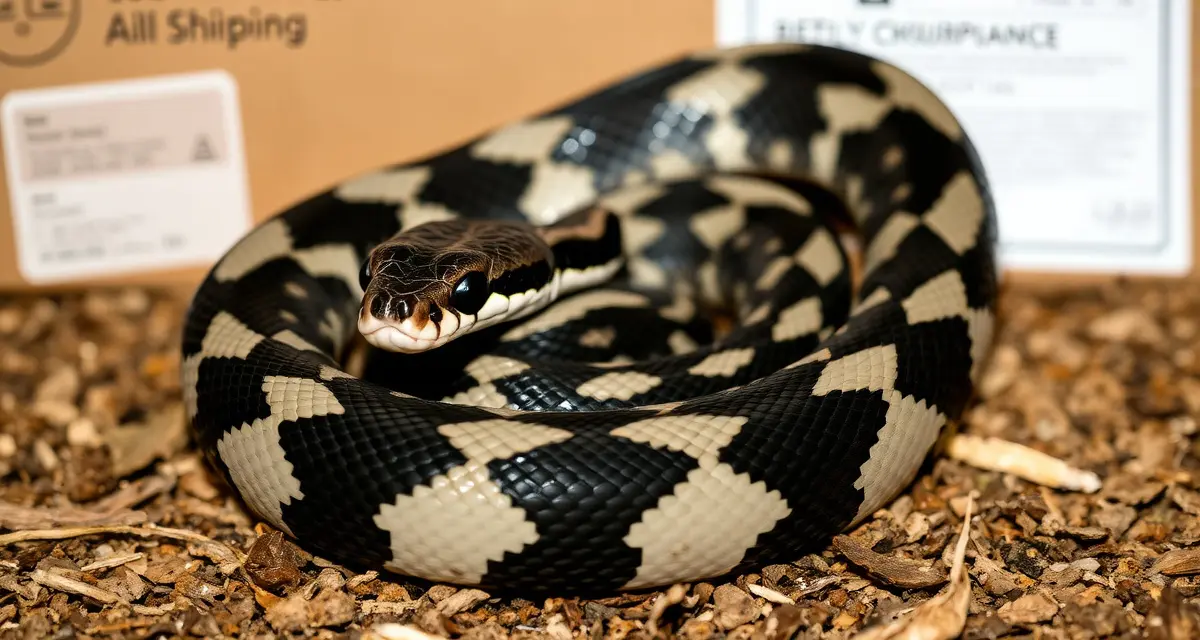
Kingsnake Compliance and Shipping: Complete Breeder Guide
Kingsnake compliance and shipping involves navigating federal and state regulations, carrier requirements, and packaging standards that apply to all live reptile commerce. Kingsnakes are native North American species, which simplifies some regulatory aspects compared to exotic imports, but state-level regulations vary and carrier requirements apply regardless of species origin. Breeders using integrated software report 30% less time on administrative tasks, and complete shipping records protect you if any post-sale issues arise.
TL;DR
- Kingsnakes and milksnakes span the genus Lampropeltis, with numerous species and subspecies each having distinct cycling requirements.
- Most kingsnake species require 90-120 days of brumation at 45-55 degrees Fahrenheit for consistent breeding.
- Clutch size datas average 8-20 eggs depending on species, with California kingsnakes commonly producing 6-12 eggs.
- Incubation runs 55-75 days at 78-82 degrees Fahrenheit, similar to corn snakes.
- Kingsnake morph genetics overview include albino, anerythristic, and hypo lines plus combination morphs with active development in California kingsnakes, gray-banded kingsnakes, and Mexican black kingsnakes.
Regulatory Framework
Federal Regulations
The Lacey Act prohibits trafficking in illegally taken wildlife. Captive-bred kingsnakes from documented breeding programs are legal to sell under federal law. Your breeding records demonstrating captive-bred status are your protection.
The Endangered Species Act doesn't apply to most common Lampropeltis species sold in the hobby, but verify that any subspecies you work with is not listed or protected.
State Regulations
Kingsnakes are native to many U.S. states, and some states have regulations about possession or sale of native reptile species. California has state regulations for some native reptile species. Hawaii prohibits nearly all reptile imports. Research your buyer's state regulations before completing any sale involving species that might be regulated in the destination state.
The safest approach: verify destination state regulations for your specific kingsnake subspecies before finalizing any sale.
Carrier Requirements
Air Shipment via Delta Cargo
Delta Cargo through the reptile shipping network is the primary option for air shipment of kingsnakes. Requirements include:
- Packaging per carrier specifications
- Temperature restrictions (no shipping when temps at origin or destination are below 40°F or above 90°F)
- Both shipper and recipient at cargo facilities
- Live animals ship as cargo freight
Contact Delta Cargo or authorized reptile shipping brokers for current requirements and pricing.
Packaging Standards
For kingsnake air shipment:
- Cloth snake bag tied securely or ventilated deli cup
- Foam-lined inner box for insulation
- Heat pack (cold weather) or cold pack (hot weather) wrapped away from direct animal contact
- Outer cardboard box labeled "Live Harmless Reptiles" with "This Side Up" indicators
- Both shipper and recipient contact information on the outer box
Test your packaging before using it with a live animal. A packaging scheme that can't maintain appropriate temperatures during a typical transit duration shouldn't be used.
Documentation with Each Sale
Include with every shipped animal:
- Purchase receipt with your contact information
- Animal description: species, subspecies, morph, date of birth
- Care information appropriate to the buyer's experience level
- Live arrival guarantee policy in writing
- Any health records relevant to the animal
Log shipping information in your sale records in HatchLedger's reptile breeder hub: tracking number, ship date, carrier, and expected delivery. This data is essential if a shipment is delayed or a dispute arises.
Reptile breeder software comparison resources find that breeders who document shipping information at the sale level resolve post-sale disputes faster and with better outcomes than those relying on email threads and memory.
Frequently Asked Questions
What is the best approach to kingsnake compliance and shipping?
Research destination state regulations before completing any sale, particularly for native subspecies with state-level protections. Use Delta Cargo for air shipments with verified packaging that meets carrier requirements. Provide complete documentation with every shipment. Have a written live arrival guarantee policy. Log every shipment with tracking information linked to the sale record. Maintain breeding records that support captive-bred documentation for every animal.
How do professional breeders handle kingsnake compliance and shipping?
Professional kingsnake breeders know the regulatory status of the subspecies they work with and verify destination state rules before completing sales. They use consistent, tested packaging that meets carrier requirements and seasonal temperature standards. They include complete documentation with every shipment, communicate shipping information proactively to buyers, and follow up at delivery. Their sale records include complete shipping documentation connected to individual animal records.
What software helps manage kingsnake compliance and shipping?
HatchLedger manages multi-species collections with distinct cooling protocols, morph genetics, and clutch records in one system. For kingsnake breeders working across subspecies or multiple species, keeping each animal's protocol and lineage clearly organized prevents the documentation errors that affect buyer trust. Free for up to 20 animals.
Do all kingsnake species need the same cooling duration?
No. California kingsnakes from warmer coastal localities may respond to 90 days of cooling at 50-55 degrees Fahrenheit, while gray-banded kingsnakes from higher elevation Texas habitats may benefit from 120 days at lower temperatures. Eastern kingsnakes from northern localities often need the most aggressive cooling. Research the specific ecology of your animals' locale or subspecies.
Can different kingsnake species be housed together?
Kingsnakes are ophiophagous (snake-eating) and should never be cohabited, including with animals of the same species. Even animals cohabited without incident for extended periods can result in cannibalism. This applies to breeding introductions as well: supervise all introductions and separate animals immediately after copulation.
Sources
- USARK (United States Association of Reptile Keepers)
- Association of Reptilian and Amphibian Veterinarians (ARAV)
- California Academy of Sciences Herpetology Collection
- Herpetologica (Herpetologists League)
- Reptiles Magazine (Bowtie Inc.)
Get Started with HatchLedger
Managing multiple kingsnake species and subspecies with distinct seasonal cycling protocol requirements and active morph programs benefits from a system that keeps each animal's protocol, lineage, and clutch history clearly organized. HatchLedger connects all of that data across your collection. Free for up to 20 animals.