Reptile Egg Incubation Substrate Guide
By HatchLedger Editorial Team · Published 2025-06-17 · Updated Mar 13, 2026
The substrate your eggs sit in for 60 days is not a trivial choice. It controls moisture availability, gas exchange, and whether eggs stay in contact with each other in the ways they need to. Here's what's used, why, and how to make decisions for your setup.
Vermiculite
Vermiculite is expanded mica, the same material used in gardening. It's been the default reptile incubation substrate for decades because it's cheap, consistent, and excellent at holding moisture without becoming waterlogged.
How to use it: Mix by weight, not volume. A 1:1 ratio by weight (1 gram of water per 1 gram of dry vermiculite) is a common starting point for ball pythons. Some breeders run drier at 1:0.75 (water:vermiculite) or wetter at 1:1.25 depending on their incubator environment and species.
The squeeze test: Take a handful of moistened vermiculite and squeeze firmly. At correct moisture, the substrate holds its shape when you release your hand but does not drip or release water. If it drips, it's too wet. If it crumbles immediately, it's too dry.
Replenishing: Vermiculite dries out over a 60-day incubation. Check substrate moisture around day 30-40 and add a small amount of water to the edges of the container (not directly on eggs) if the substrate feels dry. Accuracy matters less than consistency, big swings in moisture during late incubation are more damaging than incubating slightly dry throughout.
Grain size: Medium-grade vermiculite is the most common choice. Fine vermiculite (which is almost powdery) works but can compact around eggs more. Coarse vermiculite holds large air pockets and can make it harder to nestle eggs properly.
Perlite
Perlite is volcanic glass processed into lightweight, porous particles. It holds less water per unit weight than vermiculite but provides more air pockets around eggs.
Why breeders use it: Perlite creates a substrate where water is held less tightly than in vermiculite. This can reduce the risk of eggs sitting in contact with excess moisture. It's also less likely to compact over long incubations.
Moisture ratio: Typically mixed wetter than vermiculite, a 1:1 or even 1:1.5 water-to-perlite ratio by weight is common, because perlite doesn't retain moisture the same way. Calibrate to your setup.
Mixed substrate: Some breeders use a 50/50 vermiculite/perlite blend to get the moisture retention of vermiculite with the drainage properties of perlite. This is a matter of personal preference with no clear advantage either way in most ball python setups.
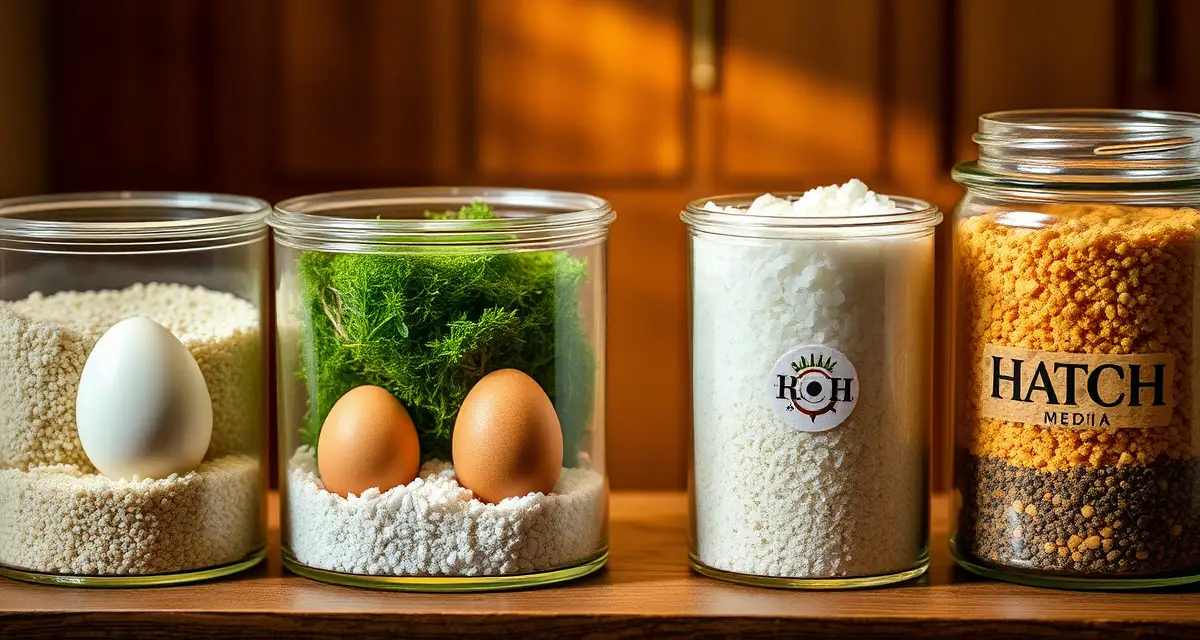
HATCH Incubation Media
HATCH (by Pro Products) is a commercial incubation substrate specifically formulated for reptile eggs. It's a mineral-based media designed for consistent moisture retention and gas exchange.
Advantages over DIY substrates: Pre-formulated for reptile use, consistent bag-to-bag moisture absorption properties, and designed to resist compaction. Easier for new breeders to use correctly than loose vermiculite because the margin for error on moisture ratios is wider.
Cost: Significantly more expensive per clutch than vermiculite or perlite. For breeders running 5-10 clutches per season, the cost difference is minor. For large operations running 30+ clutches, the cost adds up.
Usage: Follow package directions. The product is pre-calibrated so you add a specific volume of water to a specific amount of media and you're in the right range. Verify with the squeeze test.
Sphagnum Moss
Sphagnum moss is occasionally used, particularly for gecko eggs and some other species. It has natural antifungal properties that can help manage mold on egg surfaces.
Not commonly used for pythons: The moisture distribution in sphagnum is less uniform than vermiculite, and it's harder to maintain consistent humidity over a 60-day incubation. Most python breeders stick with vermiculite or perlite.
Useful for: Corn snakes, king snakes, some gecko species where you want slightly different moisture characteristics.
Dry Incubation (No Substrate)
Some breeders, particularly with python species, use dry incubation in sealed containers with a small amount of water in a separate compartment (not touching eggs). The eggs provide humidity to the sealed environment through respiration.
When it works: Works well for healthy eggs from well-hydrated females in a stable incubator. Eggs must be set closely together so they provide mutual humidity.
When it fails: If eggs are dehydrated at laying (female was chronically stressed or underfed), dry incubation will desiccate them further. Not recommended for new breeders or any time you're uncertain about the female's condition.
Container Selection with Substrate
The container type affects how substrate maintains moisture:
Sealed containers: Deli cups, Tupperware, and sealed plastic containers create a microenvironment. Substrate moisture stays relatively stable because little evaporates. This is the most common approach and allows you to use lower water ratios in substrate.
Vented containers: Small ventilation holes allow some moisture exchange with the incubator environment. Substrate dries faster, requiring more frequent monitoring. Works well when your incubator ambient humidity is already high.
Individual vs. group: Ball python eggs are typically incubated as a clutch together (as laid), not separated. They naturally adhere together after laying and separating them risks damage. Other species (corn snakes, leopard geckos) can be individually incubated in small cups.
Tracking Substrate Decisions
The substrate choices you make this season are data for next season. If you're running vermiculite at 1:1 in one incubator and perlite at 1:1.25 in another, and one setup consistently produces better hatch rates, that information is only useful if you recorded it.
HatchLedger's clutch record tracking lets you note substrate type and moisture ratio per clutch. Combined with incubation temperature and hatch percentage, you build a picture of what works in your specific environment. General advice from online forums is a starting point, but your own data from your setup is more reliable than anyone else's recommendation.
Quick Reference: Substrate Comparison
| Substrate | Moisture Retention | Cost | Best For |
|---|---|---|---|
| Vermiculite (medium) | High | Low | Ball pythons, boas, most pythons |
| Perlite | Moderate | Low | Any species; good drainage |
| HATCH media | High, consistent | Medium-high | New breeders, premium clutches |
| Sphagnum moss | Variable | Low-medium | Geckos, small colubrids |
| Dry incubation | N/A | Lowest | Experienced breeders, healthy females |
Starting with medium vermiculite at 1:1 by weight in sealed containers is a reliable default for ball pythons and most boa species. Adjust from that baseline based on your observed outcomes, and record every change you make.
FAQ
What is Reptile Egg Incubation Substrate Guide?
A reptile egg incubation substrate guide covers the materials used to surround and support eggs during incubation. It explains how substrates like vermiculite control moisture, gas exchange, and egg contact over the 60-day incubation period. The guide helps breeders choose the right material, mix it at the correct ratio, and maintain consistent conditions from lay to hatch across different species and setups.
How much does Reptile Egg Incubation Substrate Guide cost?
The guide itself is free educational content. The substrates it covers, like vermiculite, are inexpensive and widely available at garden centers or reptile supply shops. A bag of vermiculite typically costs a few dollars and can support multiple clutches. Overall, substrate is one of the lowest-cost components of a reptile incubation setup, making it accessible for hobbyists and professional breeders alike.
How does Reptile Egg Incubation Substrate Guide work?
Incubation substrate works by absorbing and slowly releasing moisture to maintain humidity around the eggs. Vermiculite, for example, is mixed with water at a specific weight ratio, then eggs are partially buried or set on top. The substrate acts as a humidity buffer, preventing eggs from drying out or becoming waterlogged while also allowing gas exchange essential for embryo development throughout the incubation period.
What are the benefits of Reptile Egg Incubation Substrate Guide?
Using the right substrate keeps humidity stable without constant manual adjustment, reduces the risk of eggs collapsing or molding, and supports proper embryo development. A well-mixed substrate like vermiculite holds its shape, releases moisture gradually, and is forgiving of minor fluctuations. It also makes moisture checks simple using the squeeze test, giving breeders a reliable, low-maintenance way to manage one of incubation's most critical variables.
Who needs Reptile Egg Incubation Substrate Guide?
Anyone incubating reptile eggs needs substrate knowledge, from first-time hobbyists hatching a single ball python clutch to experienced breeders running large-scale operations. It is especially important for species with long incubation periods where substrate moisture must remain stable for 60 days or more. Breeders working with multiple species benefit from understanding how substrate ratios can be adjusted to match different humidity requirements.
How long does Reptile Egg Incubation Substrate Guide take?
The substrate itself is prepared in minutes before the eggs are placed. Its job then runs for the full incubation period, typically 55 to 70 days for species like ball pythons. A moisture check around day 30 to 40 is the main maintenance task. Choosing and mixing substrate correctly at the start reduces the need for intervention and keeps conditions stable through to hatch.
What should I look for when choosing Reptile Egg Incubation Substrate Guide?
Look for a substrate that holds moisture without becoming waterlogged, allows gas exchange, and is consistent batch to batch. Vermiculite is the most proven option. Prioritize mixing by weight rather than volume for accuracy. Check that moistened substrate passes the squeeze test: it holds shape but does not drip. Avoid substrates with additives, strong odors, or inconsistent particle size, as these can introduce variables that affect hatch rates.
Is Reptile Egg Incubation Substrate Guide worth it?
Yes. Substrate is one of the highest-leverage variables in incubation. Eggs that dry out, sit in standing moisture, or experience erratic humidity are far less likely to hatch successfully. A correctly mixed and maintained substrate like vermiculite costs almost nothing and dramatically reduces incubation failures. For breeders investing months of care into a clutch, getting substrate right from day one is one of the most cost-effective decisions you can make.