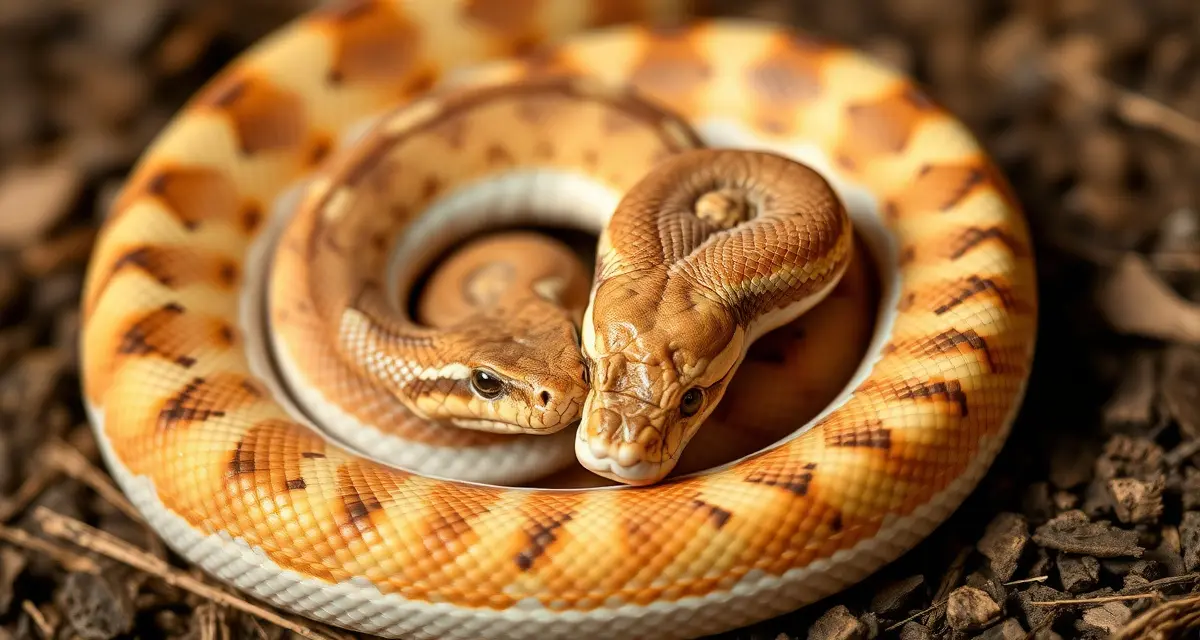
Corn Snake Pairing and Introduction: Complete Breeder Guide
By HatchLedger Editorial Team · Published 2025-04-16 · Updated Mar 13, 2026
Corn snake pairing and introduction is one of the most enjoyable parts of keeping this species because it's generally cooperative and produces reliable results when done correctly. Corn snakes are enthusiastic breeders once appropriately cycled, and the process is less complicated than many python species. Still, having a systematic approach to introductions and accurate documentation of pairings is essential for genetic accuracy and season-over-season improvement. Breeders using integrated software report 30% less time on administrative tasks, which means more time for the introductions and observation that make breeding season productive.
TL;DR
- Corn snakes (Pantherophis guttatus) are the most widely bred colubrid in captivity, with hundreds of documented morphs spanning all three major inheritance patterns.
- Seasonal cycling of 60-90 days at 50-60 degrees Fahrenheit is the standard cycling protocol for reliable spring breeding.
- Clutch sizes average 12-24 eggs for adult females, with experienced breeders often producing 2 clutches per season from well-conditioned females.
- Incubation setup runs 55-65 days at 78-82 degrees Fahrenheit, cooler than most python species.
- Corn snake morph genetics include multiple allelic series, including the amelanistic and anerythristic pathways, that interact in non-obvious ways.
Pre-Introduction Checklist
Before introducing any pair, verify:
Both animals have been properly cooled. Females that haven't been through a proper cooling period are less likely to be receptive. Males that haven't been cooled may show limited breeding drive.
The female is eating well post-cooling. A female that has resumed normal feeding after brumation is in a better position than one still off feed after warming. Give her at least 2 to 3 meals before the first introduction.
Both animals are at appropriate age and condition. Female corn snakes typically breed at 18 to 24 months at appropriate body weight. Males can breed starting around 18 months.
Your genetics plan is confirmed. Know exactly which male is going with which female and what offspring outcomes you're targeting from that pairing. Record this before introductions begin.
Introduction Technique
Corn snake introductions are typically straightforward:
- Place the male into the female's enclosure or a neutral container.
- Observe from a distance for the first 15 to 30 minutes.
- Courtship behavior includes the male actively following the female, chin rubbing along her dorsal surface, and tail positioning.
- Lock-ups (intromission) in corn snakes often complete within 15 to 30 minutes but can last several hours.
- Once the pair separates, return both to individual housing.
If the female is aggressive toward the male (striking repeatedly), separate them and try again in a week. Forced pairings when the female is clearly unreceptive are stressful and unproductive.
How Many Pairings Do You Need?
Multiple introductions over 2 to 4 weeks produce significantly better fertility rates than single pairings. A common schedule is introductions every 3 to 5 days through the breeding window. After each pairing, give both animals several days of undisturbed rest before reintroduction.
Log every introduction with date, duration, and outcome. This log is your evidence of successful breeding activity and the documentation behind your clutch's genetic records. HatchLedger's reptile breeder hub connects each pairing record to the resulting clutch, so your genetic documentation chain is complete from pairing to hatchling sale.
Keeping Males and Females Separate
Unless you're actively supervising an introduction, keep corn snake breeding pairs housed separately. Cohabitation is a management practice best avoided in breeding collections because:
- It makes feeding management difficult
- Aggression during feeding can injure animals
- It makes pairing date records less precise if the male is always present
- Long-term cohabitation causes stress in some individuals
Accurate documentation requires knowing which dates pairings occurred. If a male is always housed with a female, your pairing records become vague and genetic documentation less precise.
Genetic Documentation for Each Pairing
For every introduction, record:
- Female ID
- Male ID
- Introduction date and time
- Duration of observed courtship or lock-up
- Behavioral observations (did the female accept the male, was lock-up confirmed, etc.)
These records are the foundation of your hatchling genetic documentation. When your female lays 6 weeks later, you'll know exactly which male produced that clutch. When hatchlings sell and buyers ask about the sire, your records provide an accurate answer without relying on memory.
Reptile breeder software comparison resources consistently identify pairing record accuracy as a critical gap for breeders using informal record systems. Even experienced breeders who trust their memory make errors across a full season with multiple females being introduced to multiple males.
Frequently Asked Questions
What is the best approach to corn snake pairing and introduction?
Wait until both animals have been properly cooled and the female has resumed eating after warming. Place the male in the female's enclosure during the evening, observe for courtship behavior, and note any confirmed lock-ups. Separate animals after each session and repeat introductions every 3 to 5 days over 2 to 4 weeks. Log every introduction with date and outcome, and link pairing records to your clutch size records so genetic documentation is complete from pairing through to hatchling sale.
How do professional breeders handle corn snake pairing and introduction?
Professional corn snake breeders treat pairings as documented events, not casual encounters. They confirm cooling and post-cooling feeding before introductions begin, conduct multiple supervised sessions over several weeks, and log every interaction with behavioral notes. They maintain distinct records for each female in a season, especially if multiple males are being used. After the season, they review pairing records alongside fertility rates to identify which pairings and introduction protocols produced the best results.
What software helps manage corn snake pairing and introduction?
HatchLedger is purpose-built for reptile breeders, connecting animal records, breeding history, clutch outcomes, and financial tracking in one system. Unlike generic spreadsheets, it's designed around the specific workflow of an active breeding season. Free for up to 20 animals.
Can corn snakes produce two clutches in a single breeding season?
Yes, many adult corn snake females will double-clutch reliably, especially when kept at ideal temperatures and fed aggressively between clutches. Allow females at least 4-6 weeks of heavy feeding between the first and second clutch. Tracking body weight before and after each clutch helps assess whether a female is in condition for a second clutch that season.
What temperature should corn snake eggs be incubated at?
Corn snake eggs incubate best at 78-82 degrees Fahrenheit. Higher temperatures up to 84 degrees accelerate development but reduce the hatch window and can increase developmental problems. Below 75 degrees slows development significantly. Unlike ball python eggs, corn snake eggs tolerate a wider temperature range reasonably well.
What are the most profitable corn snake morphs for breeders?
Multi-gene combination morphs command the highest prices. Motley, Tessera, and Scaleless are structural genes that add significant value to color morph animals. Scaleless corn snakes in particular fetch $300-800 or more depending on color morph combination. Single-gene morphs like Amelanistic and Anerythristic are common and prices are compressed; combinations including structural genes maintain stronger margins.
What is Corn Snake Pairing and Introduction: Complete Breeder Guide?
This is a comprehensive breeding resource published on HatchLedger covering every stage of corn snake reproduction. It walks breeders through seasonal cycling protocols, pairing introductions, clutch management, and incubation setup. The guide covers corn snake morph genetics across all three major inheritance patterns and addresses documentation best practices for maintaining genetic accuracy across breeding seasons. Whether you're producing your first clutch or managing a multi-pairing operation, it provides a structured framework for consistent, repeatable results.
How much does Corn Snake Pairing and Introduction: Complete Breeder Guide cost?
The guide is free to read on HatchLedger. There is no purchase required to access the article content. HatchLedger may offer paid breeding management software separately, which the guide references for record-keeping and pairing documentation. That software helps breeders reduce administrative time so they can focus on hands-on work during breeding season, but accessing the written guide itself costs nothing.
How does Corn Snake Pairing and Introduction: Complete Breeder Guide work?
The guide works as a step-by-step reference you follow across the breeding season. It starts with cycling your corn snakes at 50-60°F for 60-90 days to trigger breeding readiness, then walks through safe pairing introductions, monitoring copulation, separating animals, and preparing for egg deposition. It continues through incubation at 78-82°F for 55-65 days and covers how to track morph genetics across pairings to predict offspring outcomes accurately.
What are the benefits of Corn Snake Pairing and Introduction: Complete Breeder Guide?
The guide helps breeders avoid common mistakes that lead to infertile clutches, stressed animals, or genetic record errors. By following a systematic introduction process, breeders improve pairing success rates and female conditioning for multiple clutches per season. Clear incubation parameters reduce egg loss. The genetics sections help breeders plan pairings intentionally rather than guessing outcomes. Integrated record-keeping practices referenced in the guide can reduce administrative overhead by around 30%, freeing up time for direct animal care.
Who needs Corn Snake Pairing and Introduction: Complete Breeder Guide?
This guide is written for corn snake breeders at any experience level. Beginners benefit from the structured cycling and introduction protocols that remove guesswork from a first breeding season. Intermediate breeders will find value in the morph genetics coverage and multi-clutch conditioning strategies. Advanced breeders running larger operations will appreciate the documentation and software integration sections. Anyone keeping corn snakes with the intent to breed them responsibly and produce genetically documented offspring will find it useful.
Related Articles
Sources
- USARK (United States Association of Reptile Keepers)
- Association of Reptilian and Amphibian Veterinarians (ARAV)
- Herpetological Review (Society for the Study of Amphibians and Reptiles)
- Reptiles Magazine (Bowtie Inc.)
- Society for the Study of Amphibians and Reptiles (SSAR)
Get Started with HatchLedger
Corn snake breeders managing multiple morphs, double-clutching females, and complex genetic documentation benefit from a system that links animal records to clutch outcomes and keeps morph genetics traceable across generations. HatchLedger handles all of this, free for up to 20 animals.