Corn Snake Morph Genetics Overview: Complete Breeder Guide
By HatchLedger Editorial Team · Published 2025-01-26 · Updated Mar 13, 2026
Corn snake morph genetics are among the best-documented in the entire reptile hobby. With over 800 named morphs and decades of breeding community knowledge, corn snakes offer breeders a rich genetic playground and some of the clearest inheritance patterns in herpetoculture. Understanding these genetics is essential for predicting litter outcomes, setting accurate het status on your animals, and making pairing decisions that produce what buyers want. Breeders using integrated software report 30% less time on administrative tasks, which is time better spent studying the genetics that drive your pairing strategy.
TL;DR
- Corn snakes (Pantherophis guttatus) are the most widely bred colubrid in captivity, with hundreds of documented morphs spanning all three major inheritance patterns.
- Seasonal cycling of 60-90 days at 50-60 degrees Fahrenheit is the standard cycling protocol for reliable spring breeding.
- Clutch sizes average 12-24 eggs for adult females, with experienced breeders often producing 2 clutches per season from well-conditioned females.
- Incubation setup runs 55-65 days at 78-82 degrees Fahrenheit, cooler than most python species.
- Corn snake morph genetics include multiple allelic series, including the amelanistic and anerythristic pathways, that interact in non-obvious ways.
The Foundation: Modes of Inheritance
Recessive Morphs
Most corn snake morphs are simple recessive mutations. A snake must carry two copies of the mutant gene (one from each parent) to be visual. A snake carrying only one copy looks like a normal (or wild type) but can pass the trait to offspring.
Common recessive corn snake morphs include:
- Anerythristic: Removes red pigmentation; adults are black, white, and grey
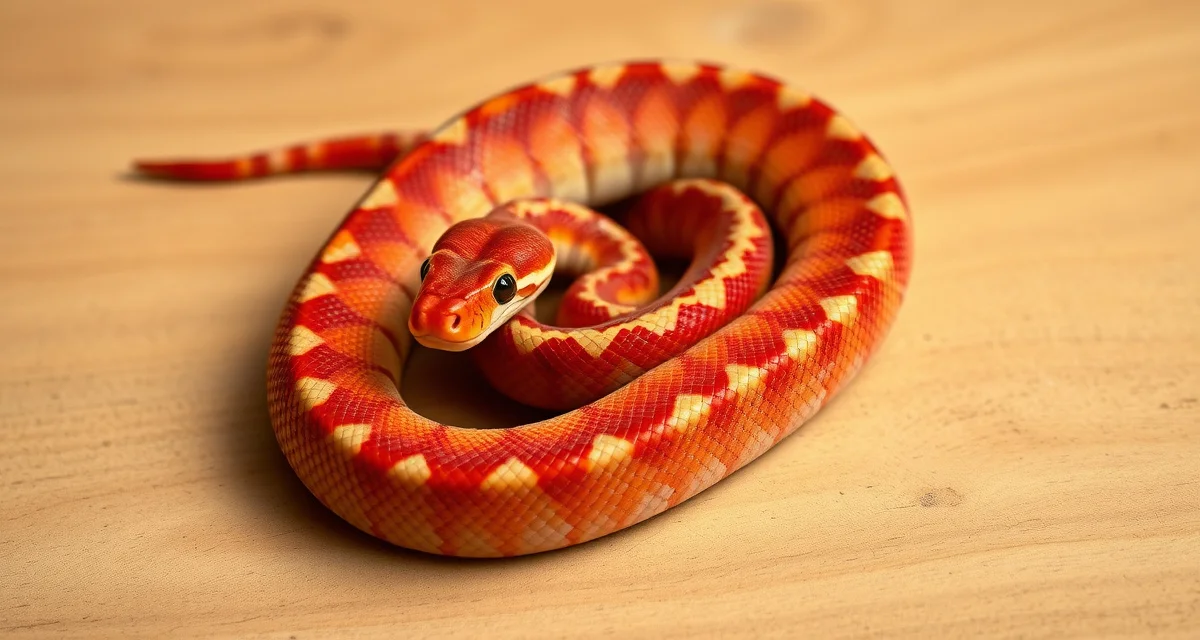
- Albino (amelanistic): Removes black pigmentation; produces red, orange, and white animals
- Charcoal: A greyscale anerythristic type
- Diffused: Reduces ventral pattern
- Hypo: Reduces black pigmentation (not to be confused with albino)
- Lavender: Produces a pastel lavender coloration
- Caramel: Yellow-toned base with reduced black pigmentation
- Palmetto: A rare clean white morph
When you pair two normal-appearing snakes that are both het for the same recessive trait, you get the classic Mendelian ratio: 25% visual, 50% het, 25% normal. When you pair two visual animals for the same recessive trait, all offspring are visual.
Co-dominant and Dominant Morphs
Some corn snake traits are co-dominant or dominant. Co-dominant morphs produce a visual effect in one copy and a different or more extreme visual in two copies.
Tessera is a co-dominant mutation producing a distinctive stripe-dot pattern. Scaleless is a dominant mutation. Kastanie is another example. These morphs are valuable partly because you don't need two copies for a visual animal, making them easier to incorporate into project lines.
Polygenic Traits
Beyond simple one-gene inheritance, corn snake appearance is influenced by polygenic traits, particularly in naturally occurring locality variants like Miami, Okeetee, and Carolina corns. These traits are influenced by multiple genes and selective breeding rather than single-gene mutations. Selectively bred lines require multi-generational documentation to produce consistent results.
Working with Het Animals
Het (heterozygous) animals carry one copy of a recessive trait but don't visually express it. They're valuable in breeding programs because pairing them with visual animals produces some visual offspring.
When documenting het status:
- Confirmed het: The animal's parentage is known, and at least one parent was visual for the trait
- Possible het (66% het, 50% het): Produced from a pairing where some offspring would be het and some wouldn't; the specific animal hasn't been proven
- Proven het: The animal has produced offspring that confirm it carries the gene
Be precise in your records and sales listings. Calling an animal "het" without specifying the percentage misrepresents its actual genetic status. Buyers understand these distinctions, and incorrect information damages trust.
Track het status for every animal in your collection in HatchLedger's reptile breeder hub. When you pair animals, pull up each animal's genetic records to confirm what outcomes you can expect and what you need to document accurately for hatchling sale listings.
Multi-Gene Combos
Combining multiple recessive morphs produces combo animals. The combinations are extensive: an animal can be albino + anerythristic (snow), albino + diffused (blizzard), and so on. The more traits combined, the more distinctive the animal and generally the higher the value.
Planning multi-gene pairings requires careful genetic math. For each additional recessive trait you want to combine, you need animals that are visual or confirmed het. A pairing between a snow het diffused and a snow will produce some snow het diffused offspring, but you'll need to work through the Punnett square probabilities to know your expected ratios.
Reptile breeder software comparison tools don't always include genetic probability calculators, but your breeding records should note the expected outcomes for every planned pairing. Log your genetic rationale for each pairing before the season begins.
Frequently Asked Questions
What is the best approach to corn snake morph genetics overview?
Learn the inheritance patterns for the specific morphs you're working with before your first pairing. For recessive traits, understand het status and the difference between confirmed het, possible het, and visual animals. Document genetic status accurately for every animal in your collection and be precise in sale listings. For multi-gene projects, plan pairings on paper before introducing animals, so you know exactly what offspring outcomes to expect and what documentation you need to provide with each hatchling sold.
How do professional breeders handle corn snake morph genetics overview?
Professional corn snake breeders maintain documented genetic records for every animal in their collection, including parentage, known morph status, and het status with appropriate probability qualifiers. They plan pairings with specific offspring goals in mind and document expected genetic ratios. They're accurate and honest in their sale listings, never upgrading "possible het" animals to "confirmed het" status without evidence. Many maintain breeding records in dedicated software that makes genetic status visible alongside each animal's other records.
What software helps manage corn snake morph genetics overview?
HatchLedger is purpose-built for reptile breeders, connecting animal records, breeding history, clutch outcomes, and financial tracking in one system. Unlike generic spreadsheets, it's designed around the specific workflow of an active breeding season. Free for up to 20 animals.
Can corn snakes produce two clutches in a single breeding season?
Yes, many adult corn snake females will double-clutch reliably, especially when kept at ideal temperatures and fed aggressively between clutches. Allow females at least 4-6 weeks of heavy feeding between the first and second clutch. Tracking body weight before and after each clutch helps assess whether a female is in condition for a second clutch that season.
What temperature should corn snake eggs be incubated at?
Corn snake eggs incubate best at 78-82 degrees Fahrenheit. Higher temperatures up to 84 degrees accelerate development but reduce the hatch window and can increase developmental problems. Below 75 degrees slows development significantly. Unlike ball python eggs, corn snake eggs tolerate a wider temperature range reasonably well.
What are the most profitable corn snake morphs for breeders?
Multi-gene combination morphs command the highest prices. Motley, Tessera, and Scaleless are structural genes that add significant value to color morph animals. Scaleless corn snakes in particular fetch $300-800 or more depending on color morph combination. Single-gene morphs like Amelanistic and Anerythristic are common and prices are compressed; combinations including structural genes maintain stronger margins.
What is Corn Snake Morph Genetics Overview: Complete Breeder Guide?
Corn Snake Morph Genetics Overview: Complete Breeder Guide is a comprehensive resource covering inheritance patterns, morph identification, and pairing strategies for corn snake breeders. It documents the genetics behind hundreds of named morphs, explains recessive, dominant, and co-dominant traits, and helps breeders accurately assign het status to their animals. The guide draws on decades of community knowledge to make corn snake genetics accessible to breeders at every experience level.
How much does Corn Snake Morph Genetics Overview: Complete Breeder Guide cost?
This guide is free educational content published on HatchLedger. There is no cost to read or reference it. HatchLedger offers breeding management software separately, which breeders can use alongside the guide to track pairings, clutches, and genetic outcomes. The article itself is provided as a public resource to support the reptile breeding community.
How does Corn Snake Morph Genetics Overview: Complete Breeder Guide work?
The guide works by breaking down corn snake morph genetics into clear inheritance categories: recessive, dominant, and co-dominant. It explains how allelic series like amelanistic and anerythristic interact, how to predict clutch outcomes using Punnett square logic, and how to read het status correctly. Breeders apply this knowledge when making pairing decisions to produce specific morphs with predictable frequency.
What are the benefits of Corn Snake Morph Genetics Overview: Complete Breeder Guide?
The primary benefit is accurate pairing decisions that produce the morphs buyers want while reducing guesswork. Understanding genetics helps breeders set correct het status, price animals appropriately, and avoid unexpected outcomes. Breeders who combine this knowledge with breeding software report spending 30% less time on administrative tasks, freeing more time for hands-on husbandry and strategic planning.
Who needs Corn Snake Morph Genetics Overview: Complete Breeder Guide?
This guide is designed for corn snake breeders ranging from hobbyists producing their first clutch to experienced keepers managing large collections. It is especially useful for anyone working with multi-gene combinations, trying to understand allelic interactions, or setting up a breeding program with clear genetic goals. New breeders learning inheritance basics and experienced breeders refining pairing strategies both benefit from the structured overview.
Related Articles
- Burmese Python Morph Genetics Overview: Complete Breeder Guide
- Carpet Python Morph Genetics Overview: Complete Breeder Guide
Sources
- USARK (United States Association of Reptile Keepers)
- Association of Reptilian and Amphibian Veterinarians (ARAV)
- Herpetological Review (Society for the Study of Amphibians and Reptiles)
- Reptiles Magazine (Bowtie Inc.)
- Society for the Study of Amphibians and Reptiles (SSAR)
Get Started with HatchLedger
Corn snake breeders managing multiple morphs, double-clutching females, and complex genetic documentation benefit from a system that links animal records to clutch outcomes and keeps morph genetics traceable across generations. HatchLedger handles all of this, free for up to 20 animals.