Corn Snake Hatchling Care Guide: Complete Breeder Guide
Corn snake hatchling care is one of the most accessible aspects of breeding this species. Corn snake hatchlings are generally healthy, feed reliably after their first shed, and grow quickly with appropriate care. That said, "accessible" doesn't mean "effortless," especially when you're managing 50 to 150 hatchlings at peak season. Breeders using integrated software report 30% less time on administrative tasks, and when you have dozens of hatchlings all needing their own feeding logs and weight records, that time savings is significant.
TL;DR
- Corn snakes (Pantherophis guttatus) are the most widely bred colubrid in captivity, with hundreds of documented morphs spanning all three major inheritance patterns.
- Seasonal cycling of 60-90 days at 50-60 degrees Fahrenheit is the standard cycling protocol for reliable spring breeding.
- Clutch sizes average 12-24 eggs for adult females, with experienced breeders often producing 2 clutches per season from well-conditioned females.
- Incubation setup runs 55-65 days at 78-82 degrees Fahrenheit, cooler than most python species.
- Corn snake morph genetics include multiple allelic series, including the amelanistic and anerythristic pathways, that interact in non-obvious ways.
The First Days After Hatching
Corn snake hatchlings pip from eggs and may spend 12 to 48 hours partially inside the egg before fully emerging. Don't rush this process. The hatchling is absorbing remaining yolk and shouldn't be pulled out of the egg prematurely.
Once fully emerged, move each hatchling to an individual housing setup. Assign a unique ID immediately and record hatch date, weight, and visual morph assessment.
Individual housing prevents disease spread and makes feeding tracking practical. Group housing of hatchlings leads to feeding competition, stress, and occasional cannibalism in older juveniles.
Housing Corn Snake Hatchlings
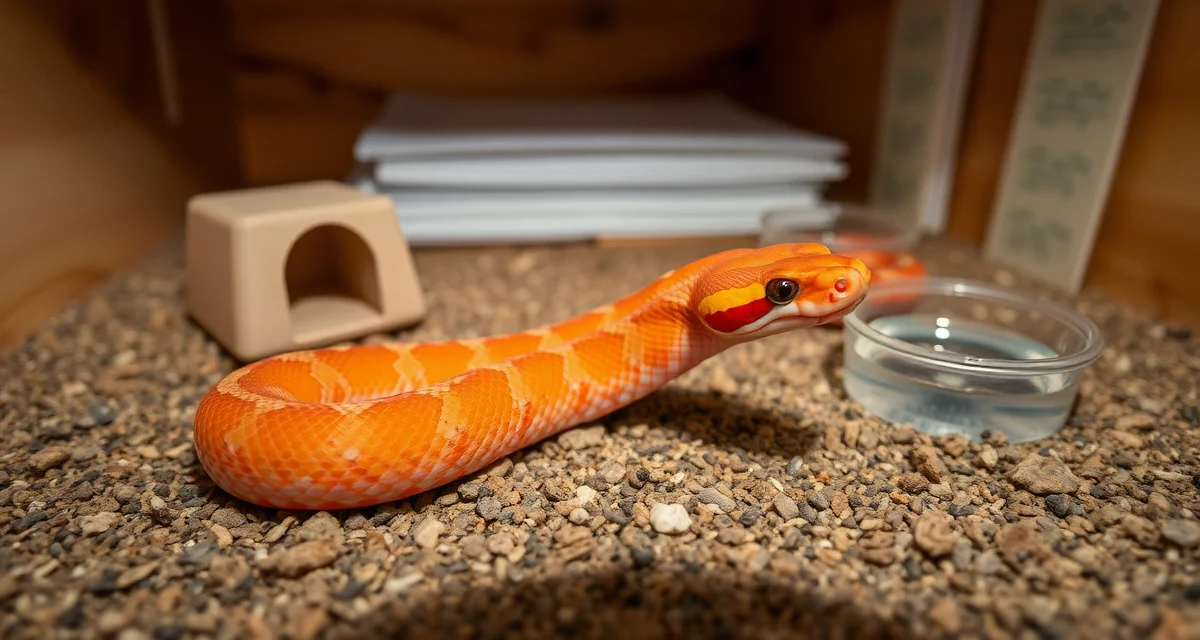
Hatchling corn snakes don't need large enclosures. A 6" x 6" x 12" plastic enclosure or deli cup system works well for the first several months. Corn snakes grow quickly and will need to be moved to larger enclosures as they develop.
Provide paper towel or aspen shaving substrate for easy visual monitoring of feeding, shedding, and waste. A small hide or half a paper towel tube as cover reduces stress.
Temperature: maintain an ambient range of 78-82°F with a warm side of 85-88°F using a heat mat or heat tape on a thermostat. Corn snakes are terrestrial and use belly heat effectively. Provide a water bowl that the hatchling can enter if needed.
Feeding Corn Snake Hatchlings
The first feeding attempt should come after the hatchling's first shed, typically 7 to 14 days after hatching. Most corn snake hatchlings are reliable first feeders and will take frozen-thawed pinkies readily after their initial shed.
Offer warmed frozen-thawed pinkies via feeding tongs. The prey item should be warmed to approximately 98-105°F. Corn snake hatchlings are generally not as difficult as some species; a healthy hatchling will typically strike and swallow within a few minutes of being offered prey.
If a hatchling refuses twice, try:
- Fresh frozen-thawed prey (sometimes stale prey won't trigger a strike)
- Scenting the prey with a freshly killed pinky or with lizard scent
- Leaving the prey item overnight
Log every feeding attempt with outcome. Most corn snake hatchlings feeding issues resolve within 3 to 5 attempts if approached with patience. Persistent refusers beyond 6 weeks warrant closer investigation.
Shedding and Growth
First shed typically occurs 1 to 2 weeks after hatching. Log every shed date and assess completeness. Clean, complete sheds indicate adequate humidity. Most corn snake hatchlings don't need a humid hide, but having a slightly damp paper towel available during shed cycles improves success rates in dry environments.
Corn snakes grow rapidly with consistent feeding. Hatchlings starting at 10 to 15 grams can reach 50 grams within 6 months and 100 grams or more within a year. Feeding prey appropriately sized to the snake's current girth every 5 to 7 days produces excellent growth rates.
Building Individual Records from Day One
Every corn snake hatchling should have a complete individual record from hatch day. Include:
- Unique ID linked to parent clutch
- Hatch date and weight
- Morph identification (and het status if known from genetic pairing)
- Feeding history (every attempt and outcome)
- Shed dates
- Weight at regular intervals
- Sale status (available, reserved, sold)
These records serve multiple purposes: they support accurate morph and genetic documentation for buyers, they let you catch health problems early, and they feed into your clutch P&L in HatchLedger's reptile breeder hub as animals sell.
Reptile breeder software comparison resources consistently find that breeders managing 50+ hatchlings simultaneously need a system that makes individual record access fast and error-free. Spreadsheets with 50 rows, each requiring manual updates, become increasingly unreliable as the season progresses.
Frequently Asked Questions
What is the best approach to corn snake hatchling care guide?
House hatchlings individually from day one. Begin feeding attempts after the first shed with appropriately sized frozen-thawed pinkies via tongs. Log every feeding attempt and outcome for each animal. Weigh regularly and track growth. Most corn snake hatchlings are reliable feeders with minimal intervention; your primary job is maintaining appropriate temperatures, providing timely prey, and keeping accurate records so you can document feeding status for buyers and catch the occasional problem feeder early.
How do professional breeders handle corn snake hatchling care guide?
Professional corn snake breeders set up their hatchling housing system before the clutch hatches so each animal moves directly into appropriate care. They assign IDs at hatch, begin feeding after the first shed, and log every interaction systematically. They move animals through feeding size stages as they grow, and they maintain records clean enough to provide buyers with a complete feeding and health history for each animal. Many have standardized processes for the entire hatchling period that reduce daily management time while maintaining record quality.
What software helps manage corn snake hatchling care guide?
HatchLedger is purpose-built for reptile breeders, connecting animal records, breeding history, clutch outcomes, and financial tracking in one system. Unlike generic spreadsheets, it's designed around the specific workflow of an active breeding season. Free for up to 20 animals.
Can corn snakes produce two clutches in a single breeding season?
Yes, many adult corn snake females will double-clutch reliably, especially when kept at ideal temperatures and fed aggressively between clutches. Allow females at least 4-6 weeks of heavy feeding between the first and second clutch. Tracking body weight before and after each clutch helps assess whether a female is in condition for a second clutch that season.
What temperature should corn snake eggs be incubated at?
Corn snake eggs incubate best at 78-82 degrees Fahrenheit. Higher temperatures up to 84 degrees accelerate development but reduce the hatch window and can increase developmental problems. Below 75 degrees slows development significantly. Unlike ball python eggs, corn snake eggs tolerate a wider temperature range reasonably well.
What are the most profitable corn snake morphs for breeders?
Multi-gene combination morphs command the highest prices. Motley, Tessera, and Scaleless are structural genes that add significant value to color morph animals. Scaleless corn snakes in particular fetch $300-800 or more depending on color morph combination. Single-gene morphs like Amelanistic and Anerythristic are common and prices are compressed; combinations including structural genes maintain stronger margins.
Sources
- USARK (United States Association of Reptile Keepers)
- Association of Reptilian and Amphibian Veterinarians (ARAV)
- Herpetological Review (Society for the Study of Amphibians and Reptiles)
- Reptiles Magazine (Bowtie Inc.)
- Society for the Study of Amphibians and Reptiles (SSAR)
Get Started with HatchLedger
Corn snake breeders managing multiple morphs, double-clutching females, and complex genetic documentation benefit from a system that links animal records to clutch outcomes and keeps morph genetics traceable across generations. HatchLedger handles all of this, free for up to 20 animals.