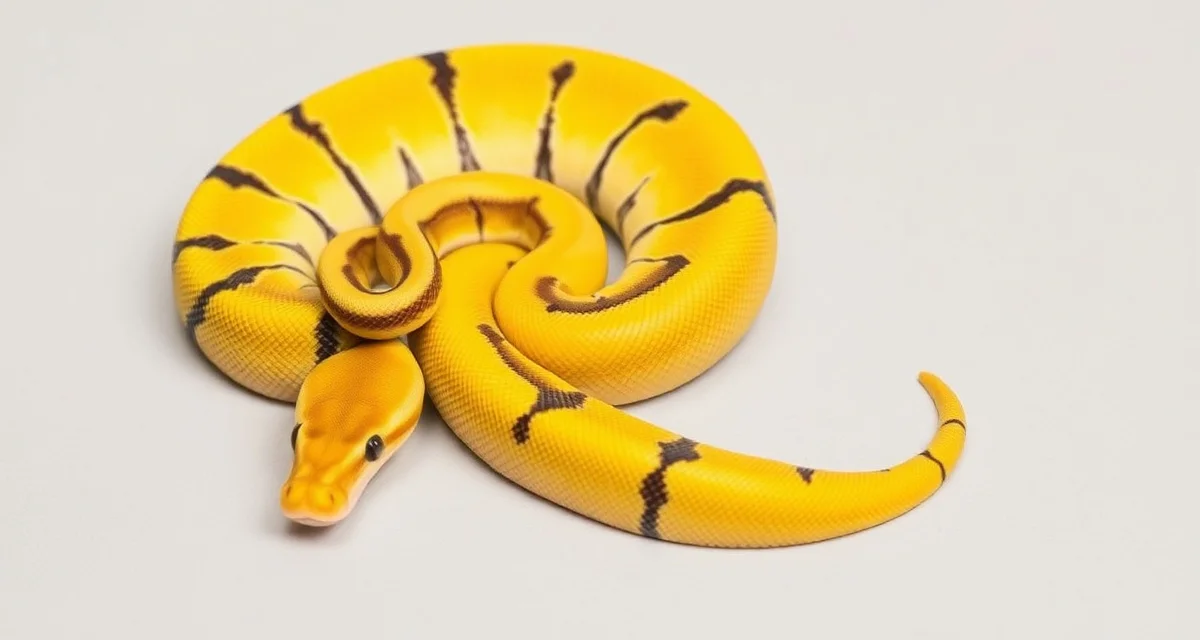
Spider Pastel Ball Python: Breeding Odds, Pairings and Market Value
Spider Pastel, commonly called Bumble Bee, is one of the most recognizable combo morphs in the hobby. Vivid yellow from Pastel meets pattern disruption from Spider. It's a natural byproduct of crossing Pastel and Spider lines, and it's consistently in demand. This guide covers breeding odds, pairings, and pricing for this pairing.
TL;DR
- The Spider Pastel combination requires careful planning across multiple genetic lines before visual animals can be produced.
- Recessive genes in any combination require both parents to carry the gene, making genetics guide the foundation of a successful project.
- Multi-recessive projects typically take 2-4 seasons from acquiring het stock before producing the target combination visual.
- Co-dominant genes in combinations show in single copy, allowing you to confirm the gene visually before selling or retaining animals.
- Documenting parentage for every animal in a multi-gene project is the only reliable way to maintain accurate het claims across generations.
Breeding Odds: Spider x Pastel
From a Spider x Pastel pairing, you get four phenotypes in equal 25% ratios:
- 25% Spider
- 25% Pastel
- 25% Spider Pastel (Bumble Bee)
- 25% Normal
Every hatchling in this clutch has commercial value. No wasted animals.
Important: Never pair Spider Pastel x Spider, Spider x Spider, or any combination involving two Spider-gene animals. Super Spider (homozygous) is not viable.
Building Value Into the Pairing
The base Spider x Pastel pairing produces good animals. Add recessives and the value climbs significantly:
- Both parents as het Pied: every Bumble Bee is a Bumble Bee het Pied, retail $400-$700 vs. $250-$450 for plain Bumble Bee
- Both parents as het Clown: same principle, Bumble Bee het Clown commands $500-$800
The Most Efficient Combos from Spider Pastel
| Animal | Retail Range |
|--------|-------------|
| Spider Pastel (Bumble Bee) | $250-$450 |
| Spider Pastel het Pied | $400-$700 |
| Spider Pastel het Clown | $500-$800 |
| Spider Pastel Clown (visual) | $900-$1,600 |
| Spider Pastel Pied (visual) | $800-$1,500 |
Spider Wobble Disclosure
All Spider combos including Bumble Bee carry the neurological wobble condition. Disclose this to every buyer, verbally, in your listings, and in your buyer documentation. HatchLedger's buyer pack generator supports custom wobble disclosure language added to certificates automatically for all Spider-gene animals.
Managing This Pairing in HatchLedger
Log both parents with their full genetics before the breeding season. When you set up this pairing in HatchLedger's planner, the system shows both animals' gene makeup side by side. Record every lock date. After ovulation (mid-body swelling), note the date and calculate your expected pre-lay shed and lay window.
After hatch, record each offspring with its identified phenotype. For mixed Spider x Pastel clutches, all four phenotypes are distinguishable at hatch, Bumble Bees are vivid yellow with Spider pattern disruption, Pastels are bright yellow without Spider disruption, Spiders are patterned with disruption, normals are normal.
FAQ
What are the breeding odds for Spider Pastel ball python?
Spider x Pastel pairing produces 25% Spider, 25% Pastel, 25% Spider Pastel (Bumble Bee), and 25% normal. All offspring are healthy (aside from the Spider wobble). From a typical clutch of 6 eggs, you'd expect statistically 1-2 Bumble Bees, 1-2 Pastels, 1-2 Spiders, and 1-2 normals, though actual ratios vary.
How do professional breeders handle Spider Pastel ball python pairings?
Most experienced breeders add recessive het value to both parents before setting up Spider x Pastel pairings. Het Pied or het Clown in both animals means every Bumble Bee, Pastel, and Spider in the clutch carries hidden recessive genetics, significantly raising the value of all offspring. They also always disclose the Spider wobble to buyers.
Sources
- USARK (United States Association of Reptile Keepers)
- Association of Reptilian and Amphibian Veterinarians (ARAV)
- MorphMarket (reptile industry market reference)
- World of Ball Pythons (WoBP genetics reference database)
- Reptiles Magazine (Bowtie Inc.)
Get Started with HatchLedger
Building a Spider Pastel project across multiple seasons means tracking genetics, parentage, and clutch outcomes that compound in complexity year over year. HatchLedger connects all of that data in one system so your project documentation stays accurate from first pairing through final sale. Try it free with up to 20 animals.