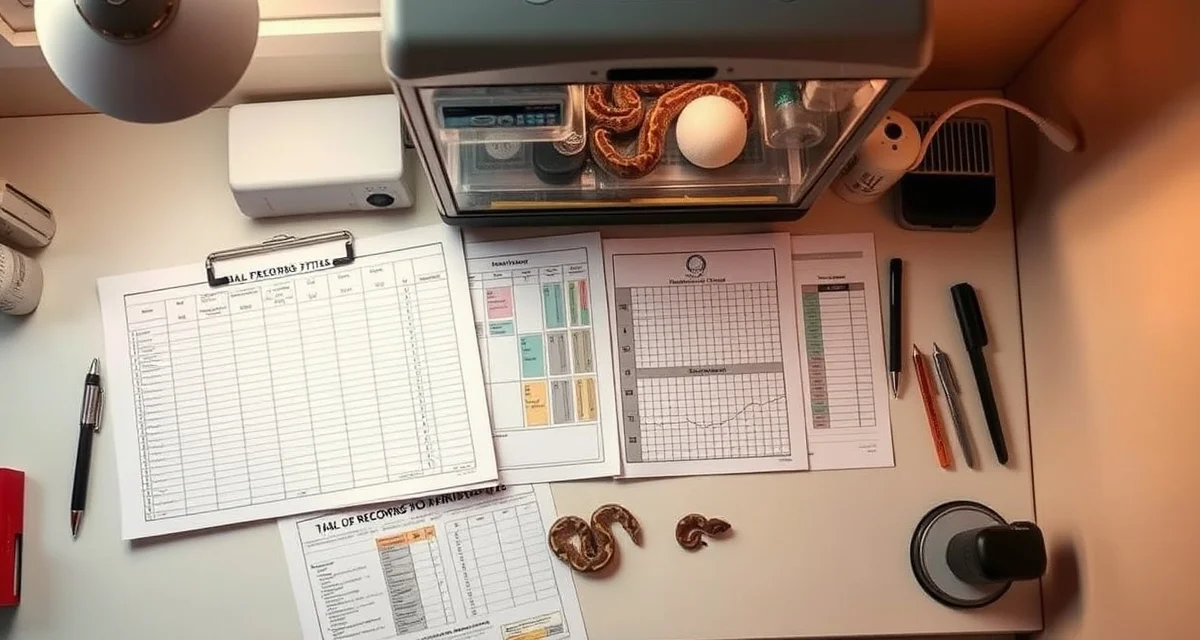
Clutch Records for Reptile Breeders
A clutch record documents everything that happens from the moment eggs are laid through the sale of the last hatchling. For any serious reptile breeding program, these records are foundational. They validate genetics, inform future pairings, and provide buyers with traceable history for the animals they purchase.
Core Components of a Clutch Record
Parent information: Both the female and male IDs, their genetic makeup, and the pairing dates that led to this clutch. This connects the clutch to your breeding pair tracking records.
Lay data: Date, number of eggs, number of slugs, and incubation setup details.
Incubation log: Temperature and humidity readings, egg condition notes at each inspection, and any problem-egg documentation.
Hatch data: Pip dates, emergence dates, hatchling count, and initial physical assessment of each animal.
Genetics: Expected genetic outcomes based on parent genetics, and actual observed morphs in the hatchlings. For recessive morphs, the het status designation for each normal-appearing animal.
Sales records: Buyer, price, date, and platform for each sold hatchling. Links to any deposits or payment plans.
Ball Python Clutch Records
Ball python clutches average 4-6 eggs, though clutch sizes from 1 to 11 eggs are documented. Larger, healthier females tend to produce more eggs, which is one reason breeders track female weight carefully over time.
A ball python clutch record gains significant value when it documents the genetic outcomes against the expected ratios. If a het x het recessive pairing produces its expected percentage of visuals over several clutches, those records increase the credibility of any animals you sell from the program as possible hets or proven hets.
For co-dominant morphs, the records show how the morph expresses across a clutch and whether any unexpected super forms appeared. Supers from unintentional pairings can happen when a breeder doesn't realize both parents carry the same co-dom gene.
Documentation That Increases Animal Value
Three types of documentation increase what buyers are willing to pay for reptile hatchlings:
- Proven parents: Records showing that both parents have produced clutches before, ideally with documented offspring
- Confirmed het status: Clutch records demonstrating that possible hets have either produced visuals (proving het status) or come from known het x het pairings with documented outcomes
- Health history: Records showing first feeds, first sheds, growth rates, and any health events resolved cleanly
All of this lives in your clutch records. Breeders who document this way can provide buyers with a printout or digital record for every animal they sell. That level of transparency builds repeat customers and referrals.
Connecting Clutch Records to the Rest of Your Program
Clutch records don't stand alone. They're one node in a connected data set:
- Female records feed in (breeding history, weight history, health history)
- Breeding season records feed in (pairing dates, ovulation, lay prediction)
- Hatchling records branch out (individual animal profiles, feeding logs, sales)
- Financial records connect (clutch revenue, costs, profitability)
HatchLedger is built around this interconnected model. When you open a clutch record, you can see the full context: the parents' histories, the breeding season events, the incubation data, and where all the hatchlings went. Your clutch record keeping process becomes less about maintaining separate documents and more about logging events as they happen in a system that organizes them automatically.