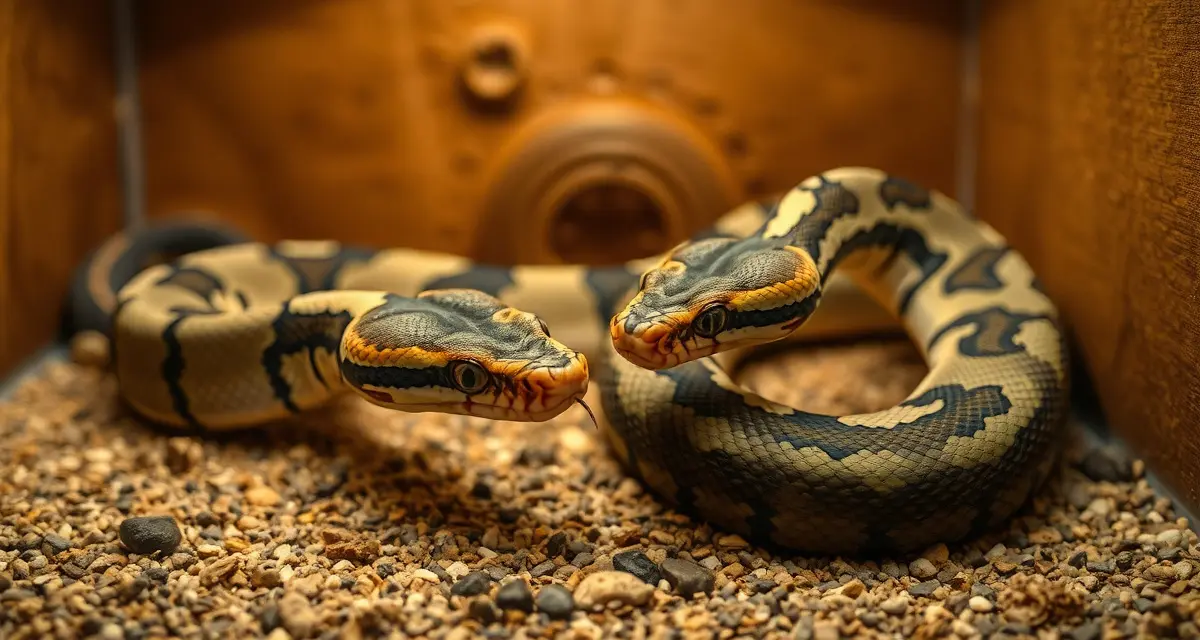
Carpet Python Pairing and Introduction: Complete Breeder Guide
Pairing carpet pythons for breeding involves managing a species that can be significantly more defensive and aggressive than ball pythons or boas. Females in particular can be aggressive toward males they're not ready for, and introductions need to be supervised more carefully than with many other species. Breeders using integrated software report 30% less time on administrative tasks, giving you time to observe pairings directly rather than leaving animals together unsupervised.
TL;DR
- Carpet pythons (Morelia spilota) encompass multiple recognized subspecies genetics overview including coastal, jungle, diamond, and Irian Jaya, each with distinct breeding triggers.
- Most carpet python subspecies require a 2-3 month seasonal cycling period with temperatures dropping 10-15 degrees Fahrenheit to trigger reliable ovulation.
- Average clutch size recordss range from 10-20 eggs, with large female diamond carpets sometimes producing 25 or more.
- Incubation typically runs 55-65 days at 84-88 degrees Fahrenheit, slightly lower than ball python targets.
- Subspecies identification in your records matters: crossing subspecies produces offspring of uncertain market value and documentation becomes complex.
Getting carpet python pairings right requires reading both animals carefully and being willing to end an introduction if either animal is showing signs of stress or aggression rather than breeding interest.
Verifying Both Animals Are Ready
Both animals need to be properly cycled before introductions. The male should have gone through the full cooling protocol (4-6 weeks at 68-74F ambient) and should be visibly active and alert -- actively moving, tongue-flicking frequently, and showing arousal when placed near the female's enclosure.
The female should show similar signs of cycling response. A female that's been properly cooled but isn't showing any behavioral change may not be in breeding condition yet, or may need additional cycling time. Introducing animals before they're ready often produces aggressive interactions rather than breeding.
Body condition for both animals should be appropriate. Males that are significantly underweight or that have been worked heavily in early breeding season may show reduced interest or reduced fertility. Females that are underweight may not develop viable follicles.
Conducting the Introduction
Introduce the male to the female's enclosure, not the reverse. The female is territorial and introducing her to an unfamiliar environment increases stress and reduces receptivity.
Before the introduction, confirm the female's last meal timing. Both animals should have had time to fully digest their last meals -- at least 5-7 days post-feeding.
Watch the introduction closely for the first 15-30 minutes. Look for the male's courtship behavior: tongue-flicking along the female's body, alignment alongside her, pelvic spur stimulation. The female's response is your indicator of receptivity: a receptive female will allow the male's approach without defensive behavior. A non-receptive female may move away actively, strike at the male, or coil defensively.
If the female strikes at the male in an aggressive (not defensive) way and the male retreats, end the introduction and try again in 3-5 days. Don't leave animals together when the female is showing clear rejection behavior.
Copulation and Breeding Locks
Carpet python copulation events are typically shorter than those of larger constrictors -- often 2-6 hours. The breeding lock is visible as the male's tail wrapped under the female's with hemipenes engaged. Don't disturb the pair during a confirmed breeding lock.
After a successful copulation event, remove the male from the female's enclosure. Log the date, duration, and confirmation of copulation. Reintroduce the male again in 3-5 days to encourage additional breeding events.
Carpet python males can be bred to multiple females in a season but should have rest periods between pairings. Watch male condition -- males that are losing significant weight through breeding season need rest, not more pairings.
Post-Breeding Female Management
After successful pairings, the female's behavior and appetite will change as follicle development progresses toward ovulation. Females often become more defensive during this period, which is a normal behavioral change. Handle with care during the post-pairing weeks.
Watch for the ovulation event (mid-body swelling moving posteriorly over 24-48 hours), which confirms successful reproduction and lets you calculate an expected lay date. Once ovulation is confirmed, prepare incubation setup.
HatchLedger provides pairing logs where you record every introduction with date, behavioral observations, and copulation outcome.
HatchLedger connects pairing records to clutch outcomes so you can evaluate how pairing management affects breeding success.
Frequently Asked Questions
What is the best approach to carpet python pairing and introduction?
Verify both animals are properly cycled and behaviorally ready before introductions. Introduce the male to the female's enclosure. Supervise the introduction for the first 15-30 minutes and end it if the female shows clear rejection behavior. Log confirmed copulation events rather than assuming cohabitation equals breeding. Reintroduce every 3-5 days for multiple pairing events. Monitor male condition through breeding season and rest animals showing signs of stress or weight loss.
How do professional breeders handle carpet python pairing introductions?
Professional breeders observe carpet python pairings directly rather than leaving animals together unsupervised, particularly at the start of breeding season. They've learned to read the difference between courtship behavior and aggression, and they end introductions that aren't productive rather than hoping they improve. They log every introduction with detailed behavioral notes and confirmed copulation observations, which helps them evaluate which pairings produce results and which don't. Male condition is monitored through the season to ensure fertility isn't compromised by overbreeding.
What software helps manage carpet python pairing records?
HatchLedger is purpose-built for reptile breeders, connecting animal records, breeding history, clutch outcomes, and financial tracking in one system. Unlike generic spreadsheets, it's designed around the specific workflow of an active breeding season. Free for up to 20 animals.
How do carpet python subspecies differ in breeding requirements?
Irian Jaya carpet pythons are among the most forgiving of the subspecies and often respond to minimal cycling. Jungle carpets and coastal carpets benefit from more pronounced temperature drops. Diamond carpet pythons from cooler Australian habitats may require the most aggressive cooling protocol of all the subspecies to achieve reliable ovulation.
Can carpet pythons from different subspecies be crossed?
Technically yes, but the practice is controversial. Many buyers specifically seek pure-subspecies animals, and crossing reduces the value and marketability of offspring. Maintaining clear subspecies documentation in your records is important whether you keep them pure or not.
Sources
- USARK (United States Association of Reptile Keepers)
- Association of Reptilian and Amphibian Veterinarians (ARAV)
- Australian Journal of Zoology
- Herpetofauna (Australian Herpetological Society)
- The Herpetoculture of Morelia (published reference)
Get Started with HatchLedger
Carpet python breeding across multiple subspecies means tracking distinct protocols per animal and maintaining subspecies lineage documentation that buyers increasingly expect. HatchLedger connects animal records, breeding history, and clutch documentation in one system. Try it free with up to 20 animals.