Carpet Python Husbandry for Breeders: Complete Breeder Guide
By HatchLedger Editorial Team · Published 2025-02-24 · Updated Mar 13, 2026
Keeping carpet pythons in breeding condition requires attention to the details that distinguish good husbandry from adequate care. These are active, behaviorally complex snakes that do best with appropriate enrichment, stable thermal gradients, and a seasonal management protocol that aligns with their natural biology. Breeders using integrated software report 30% less time on administrative tasks, which is time that goes directly into the hands-on care that carpet python breeding quality requires.
TL;DR
- Carpet pythons (Morelia spilota) encompass multiple recognized subspecies genetics overview including coastal, jungle, diamond, and Irian Jaya, each with distinct breeding triggers.
- Most carpet python subspecies require a 2-3 month seasonal cycling period with temperatures dropping 10-15 degrees Fahrenheit to trigger reliable ovulation.
- Average clutch size recordss range from 10-20 eggs, with large female diamond carpets sometimes producing 25 or more.
- Incubation typically runs 55-65 days at 84-88 degrees Fahrenheit, slightly lower than ball python targets.
- Subspecies identification in your records matters: crossing subspecies produces offspring of uncertain market value and documentation becomes complex.
The subspecies variation across Morelia spilota means that care protocols need some flexibility. A diamond python thrives in conditions that would be too cool for a jungle carpet. A coastal carpet needs more space than an Irian Jaya. Knowing your specific animals and their requirements is the foundation of breeding-quality husbandry.
Enclosure Design
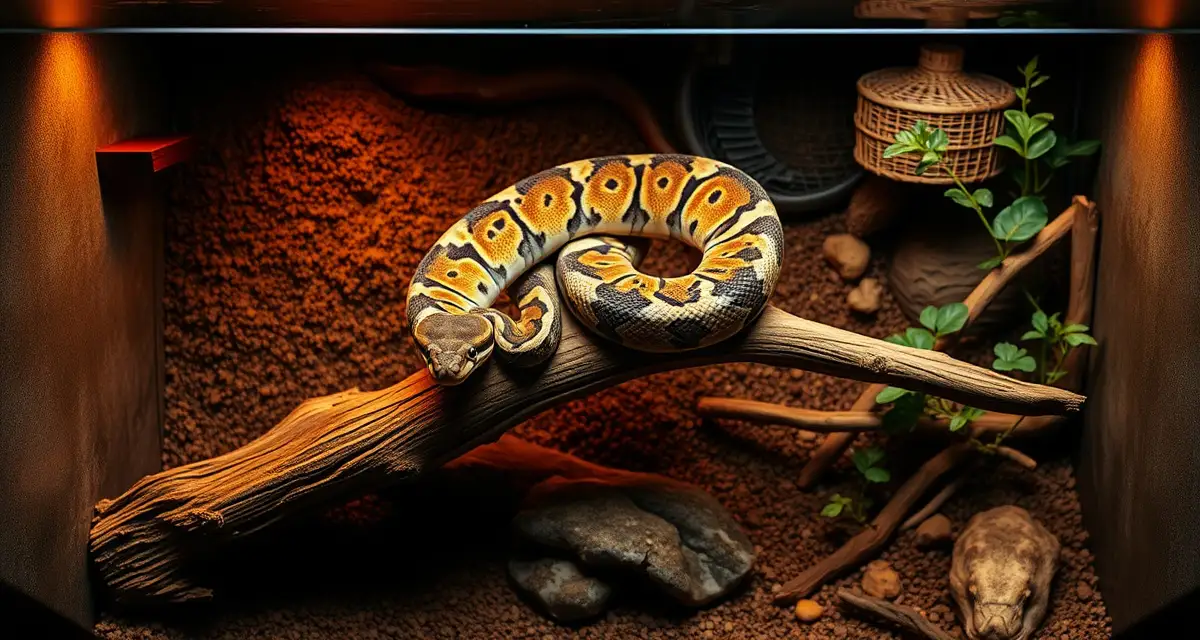
Arboreal tendencies in carpet pythons mean they use vertical space more than species like ball pythons. Adult carpet pythons benefit from enclosures that provide climbing opportunities -- horizontal branches or perches at various heights. An enclosure of 4'x2'x4' (length x width x height) provides adequate space for most adult carpets. Larger subspecies like big coastal females may need more floor space.
Front-opening enclosures are standard for carpet pythons. They reduce the ambush response that top-access enclosures can trigger in defensive individuals. Screen tops or significant ventilation is important -- carpet pythons are prone to respiratory issues in stagnant, humid environments.
Substrate choice balances humidity management with cleanliness. Cypress mulch, coco fiber, or bioactive setups work well for adult breeding animals. Paper substrate is easier for neonate management. Hides are essential -- carpet pythons are ambush hunters that feel most secure when they can fully conceal themselves.
Temperature and Humidity Management
Maintain a warm end of 88-92F and a cool ambient around 75-82F. The specific range depends on subspecies -- diamond pythons prefer cooler ambients (70-76F) while jungle carpets do better at the warmer end. Heat lamps or basking spots work well for carpet pythons that are arboreal; UTH alone doesn't provide the elevated basking opportunities they naturally seek.
Humidity should be 50-70% for most subspecies. Jungle carpets come from wet tropical environments and do well toward the higher end. Diamond pythons from temperate Australia tolerate and may prefer lower humidity. Good ventilation prevents the stagnant humid conditions that promote respiratory infections.
Monitor actual enclosure temperatures and humidity with digital instruments rather than estimating. Equipment that appears to be working correctly can fail gradually in ways that aren't obvious without measurement.
Feeding Breeding Adults
Feed adult carpet pythons every 10-14 days outside of breeding season. Appropriately-sized prey (1-1.25x the snake's widest body diameter) avoids the regurgitation risk of over-sized prey. Frozen/thawed prey is preferred for biosecurity and safety.
Some carpet pythons have a food response aggressive enough to create feeding accidents -- hook training (using a hook touch to signal "this is a feeding interaction, not social handling") helps prevent accidental bites during cage maintenance near feeding time.
Females going into breeding season should be at good body condition. The temporary feeding reduction during cycling shouldn't produce significant weight loss in a well-conditioned female. If a female is losing obvious body condition during cycling, offer a small meal -- some individuals eat even during cycling while others fast completely.
Monitoring Breeding Condition
Regularly assess each breeding animal's body condition. Breeding females should have visible body mass without excessive fat deposits. Their spine should be palpable but not prominently visible. Males in the cycling period can appear thinner than normal as they fast and focus on breeding activity.
Pay attention to behavioral indicators of breeding readiness. Males that are active, moving consistently, and showing tongue-flicking behavior when they encounter the scent of a female are in breeding condition. Males that are lethargic and inactive may need more cycling time.
HatchLedger tracks feeding history, weight measurements, and behavioral observations for every animal, building the record baseline that makes deviations from normal visible.
HatchLedger connects husbandry records to breeding outcomes so you can evaluate whether specific husbandry decisions correlate with better or worse breeding results.
Frequently Asked Questions
What is the best approach to carpet python husbandry for breeders?
Provide appropriate enclosures with vertical climbing space, a clear thermal gradient (warm end 88-92F, cool ambient 75-82F, adjusted for subspecies), and humidity at 50-70% with good ventilation. Feed every 10-14 days outside breeding season on appropriately-sized F/T prey. Monitor body condition regularly and keep females in lean-to-moderate condition going into breeding season. Log all husbandry observations so behavioral or condition changes are visible against a baseline.
How do professional breeders handle carpet python husbandry for a breeding collection?
Professional carpet python breeders tailor their husbandry to the specific needs of each subspecies in their collection rather than applying one-size-fits-all protocols. They maintain temperature and humidity logs, feed on a consistent schedule, and monitor breeding animals' body condition through the full annual cycle. When an animal's condition or behavior changes, their records provide context for evaluating whether the change is significant. They also connect husbandry investments to breeding outcomes, using the data to refine their practices over time.
What software helps manage carpet python husbandry records?
HatchLedger is purpose-built for reptile breeders, connecting animal records, breeding history, clutch outcomes, and financial tracking in one system. Unlike generic spreadsheets, it's designed around the specific workflow of an active breeding season. Free for up to 20 animals.
How do carpet python subspecies differ in breeding requirements?
Irian Jaya carpet pythons are among the most forgiving of the subspecies and often respond to minimal cycling. Jungle carpets and coastal carpets benefit from more pronounced temperature drops. Diamond carpet pythons from cooler Australian habitats may require the most aggressive cooling protocol of all the subspecies to achieve reliable ovulation.
Can carpet pythons from different subspecies be crossed?
Technically yes, but the practice is controversial. Many buyers specifically seek pure-subspecies animals, and crossing reduces the value and marketability of offspring. Maintaining clear subspecies documentation in your records is important whether you keep them pure or not.
What is Carpet Python Husbandry for Breeders: Complete Breeder Guide?
This is a comprehensive breeder's guide covering carpet python (Morelia spilota) husbandry for successful breeding programs. It addresses subspecies differences across coastal, jungle, diamond, and Irian Jaya variants, seasonal cycling protocols, clutch management, and incubation techniques. The guide helps breeders move beyond basic care into the precise environmental and record-keeping practices that produce consistent breeding results and healthy offspring.
How much does Carpet Python Husbandry for Breeders: Complete Breeder Guide cost?
The guide is free editorial content published on HatchLedger. There is no purchase required to access the husbandry information. HatchLedger does offer breeding management software that breeders can use alongside this guide to track records, reduce administrative time, and maintain subspecies documentation — available through HatchLedger's subscription plans.
How does Carpet Python Husbandry for Breeders: Complete Breeder Guide work?
The guide works by walking breeders through each phase of carpet python reproduction: setting up proper thermal gradients, implementing a 2-3 month seasonal cooling cycle with temperature drops of 10-15°F, identifying subspecies-specific triggers, managing gravid females, and incubating eggs at 84-88°F for 55-65 days. It integrates husbandry best practices with record-keeping workflows to streamline breeding operations.
What are the benefits of Carpet Python Husbandry for Breeders: Complete Breeder Guide?
Key benefits include reliable ovulation through proper seasonal cycling, better clutch outcomes averaging 10-20 eggs per female, reduced administrative burden through integrated software tools, and clean subspecies documentation that protects offspring market value. Breeders also gain a structured framework that translates hands-on care into repeatable, documented results across multiple animals and breeding seasons.
Who needs Carpet Python Husbandry for Breeders: Complete Breeder Guide?
This guide is for serious carpet python breeders — from hobbyists expanding into multi-animal operations to established breeders looking to systematize their programs. It's especially useful for those working across multiple subspecies who need clear documentation practices, and for anyone transitioning from casual keeping to producing offspring with traceable genetics and consistent breeding histories.
How long does Carpet Python Husbandry for Breeders: Complete Breeder Guide take?
The husbandry cycle itself spans roughly 6-9 months per breeding season: 2-3 months of seasonal cooling, followed by pairing, ovulation, egg laying, and a 55-65 day incubation period. Reading and applying the guide takes under an hour, but implementing a full breeding protocol from cycling through hatchling emergence typically runs 7-8 months depending on the subspecies and individual female response.
Related Articles
- Green Tree Python Husbandry for Breeders: Complete Breeder Guide
- Reticulated Python Husbandry for Breeders: Complete Breeder Guide
- Boa Constrictor Husbandry for Breeders: Complete Breeder Guide
- Burmese Python Record Keeping for Breeders: Complete Breeder Guide
Sources
- USARK (United States Association of Reptile Keepers)
- Association of Reptilian and Amphibian Veterinarians (ARAV)
- Australian Journal of Zoology
- Herpetofauna (Australian Herpetological Society)
- The Herpetoculture of Morelia (published reference)
Get Started with HatchLedger
Carpet python breeding across multiple subspecies means tracking distinct protocols per animal and maintaining subspecies lineage documentation that buyers increasingly expect. HatchLedger connects animal records, breeding history, and clutch documentation in one system. Try it free with up to 20 animals.