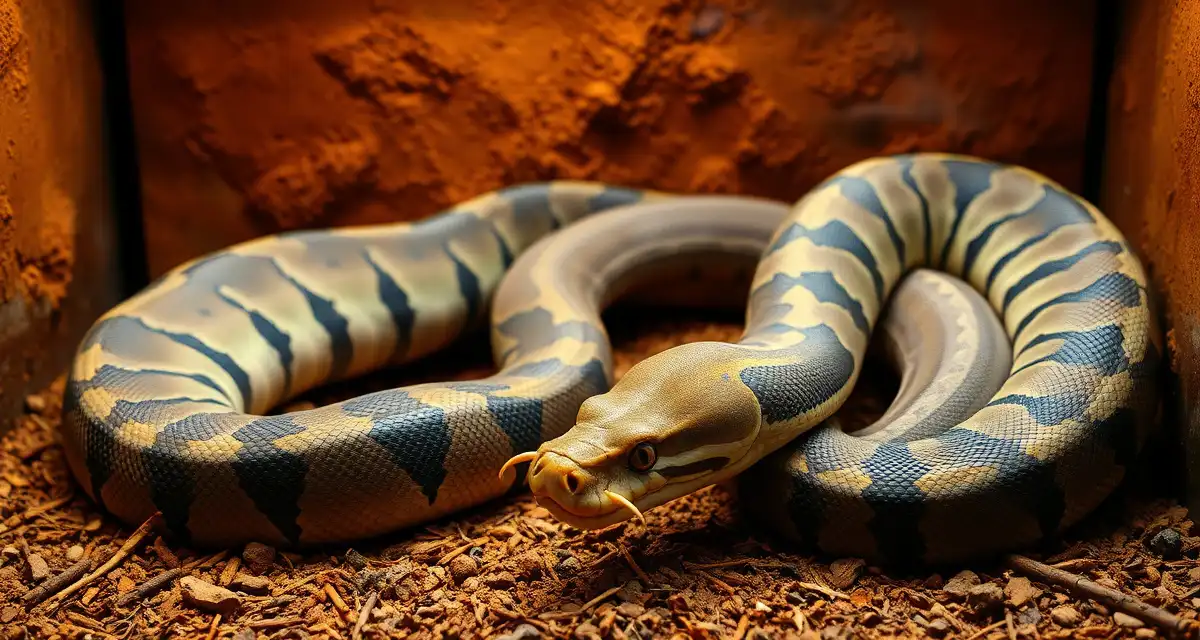
Burmese Python Pairing and Introduction: Complete Breeder Guide
Pairing Burmese pythons for breeding requires more physical planning than most other commonly kept python species. These are large, powerful animals, and a breeding introduction involves animals that can exceed 100 pounds. Breeders using integrated software report 30% less time on administrative tasks, which is time better spent on the careful observation and safety management that Burmese breeding introductions require.
TL;DR
- Burmese pythons (Python bivittatus) are among the largest constrictors in captivity, with breeding females commonly exceeding 100-200 lbs.
- Clutch sizes average 25-50 eggs, making Burmese pythons among the most productive large constrictors in captive breeding.
- Cycling typically involves a 4-8 week period of reduced temperatures (dropping 8-12 degrees Fahrenheit) and reduced feeding frequency.
- Incubation parameters runs 60-65 days at 88-90 degrees Fahrenheit, with females capable of thermoregulating eggs by muscular shivering.
- Compliance requirements requirements for Burmese python ownership and interstate transport vary by state, with federal protections under the Lacey Act applying in some jurisdictions.
The biology of Burmese breeding introductions follows the same principles as other large pythons -- males respond to seasonal cycling cues, pelvic spur stimulation precedes copulation, and breeding locks can last for extended periods. The differences are primarily logistical, related to the scale of the animals involved.
Preparing Animals for Introduction
Both animals need to have completed their cycling period before introductions begin. Four to six weeks of reduced ambient temperatures (75-80F) with reduced photoperiod (10 hours light) is the standard cycling duration. Males that haven't been properly cycled often show minimal breeding interest even when introduced to receptive females.
Female body condition at time of introduction matters significantly for clutch quality. Females should be at lean-to-moderate body condition -- not actively losing weight from being too thin, but not carrying excessive fat deposits. Obese females are at higher risk for reproductive complications and typically produce smaller clutches with higher slug rates.
Both animals should have had their last meal digested before introduction -- at least 5-7 days post-feeding for large animals. Attempting to breed animals with undigested prey increases stress and can lead to regurgitation.
The Introduction Process
Introduce the male to the female's enclosure, not the reverse. This is especially important with large animals where stress from the introduction can produce defensive behavior. The female in her own space is more settled and more likely to be receptive.
Because you're working with very large animals, introductions carry physical risks that don't exist with smaller species. Have your second person present when making the introduction. Don't attempt to separate animals that are in a breeding lock -- this is dangerous and can injure both animals.
Watch the introduction for the first 30-60 minutes. Look for the male to actively investigate the female with tongue flicks along her body, pelvic spur stimulation (visible as the male pressing his spurs against the female's dorsal surface), and body alignment alongside her. If the female is receptive, she'll hold still and allow the male's approach. If she moves away actively or shows defensive behavior, the introduction may need to be paused and reattempted.
Managing Breeding Pairs in Cohabitation
Extended cohabitation is the most common approach for Burmese breeding introductions. Males and females are housed together for periods of 2-5 days, then separated for several days before the next introduction. This approach allows multiple breeding events to occur and gives the male recovery time between introductions.
During cohabitation, check on the pair at least once or twice daily. You need to verify that copulation is occurring (not just cohabitation), monitor for signs of aggression or stress, and ensure both animals have access to appropriate temperatures and water.
Some breeding pairs cohabitate without producing copulation. A male that shows initial interest but doesn't breed after several days of cohabitation may not be ready or may not be compatible with that specific female. Document what you observe honestly -- "male showed investigative behavior, no copulation observed" is useful data. "Male housed with female for 3 days" is less useful.
How Many Pairings Are Enough
For most Burmese pairings, two to four confirmed copulation events distributed across the breeding season is sufficient for good fertilization rates. More pairings may slightly improve fertilization but also increase the physical burden on both animals.
Rotate introductions across your females if you're working with one male and multiple females. Space introductions with each female approximately one week apart. Monitor the male's condition through the season -- males that are losing significant weight or showing signs of stress need rest, not more breeding activity.
HatchLedger provides pairing logs where you can record every introduction with date, duration, observed behaviors, and confirmed copulation. This record links forward to the female's clutch data, creating a complete reproductive timeline.
HatchLedger tracks male rotation schedules and pairing outcomes so you can evaluate each male's performance across the season.
Frequently Asked Questions
What is the best approach to Burmese python pairing and introduction?
Ensure both animals have completed seasonal cycling before introductions begin. Introduce the male to the female's enclosure. Have a second person present for all introductions with large adults. Watch for confirmed copulation, not just cohabitation. Use extended cohabitation periods of 2-5 days with separations between sessions. Log every introduction with behavioral observations and copulation outcomes. Monitor male condition through the breeding season and rest animals that show signs of stress.
How do professional breeders handle Burmese python pairing introductions?
Professionals follow consistent two-person safety protocols for all large constrictor introductions. They document confirmed copulation events rather than assuming they occurred. They monitor both animals throughout breeding season cohabitation and are prepared to separate pairs if stress or aggression develops. They also track male rotation schedules so they can evaluate each male's output across the season and identify males that are underperforming relative to the number of pairings they've done.
What software helps manage Burmese python pairing records?
HatchLedger tracks every animal, clutch, and sale record for Burmese python breeders, with documentation that supports regulatory compliance and buyer confidence. When managing large clutches and compliance requirements simultaneously, a connected system prevents the record-keeping gaps that create problems at sale. Free for up to 20 animals.
Are Burmese pythons legal to own and breed in all US states?
No. Burmese pythons are listed as an injurious species under the Lacey Act, which restricts interstate transport. Several states have additional bans on ownership entirely. Check current state and federal regulations before acquiring or transporting animals. USARK maintains updated resources on applicable regulations.
How large should a Burmese python enclosure be for a breeding pair?
Breeding females typically require enclosures of at least 8x4 feet and often larger for full-grown adults. Dedicated breeding rooms or custom builds are standard at scale. Thermal gradient with hot spots at 88-92 degrees Fahrenheit and ambient temperatures in the mid-70s allows proper thermoregulation.
Sources
- USARK (United States Association of Reptile Keepers)
- Association of Reptilian and Amphibian Veterinarians (ARAV)
- US Fish and Wildlife Service (Injurious Wildlife regulations)
- Journal of Herpetology (Society for the Study of Amphibians and Reptiles)
- Florida Fish and Wildlife Conservation Commission
Get Started with HatchLedger
Burmese python breeding involves large animals, large clutches, and compliance documentation that is difficult to manage without a dedicated system. HatchLedger tracks every animal, clutch, and sale record in one place, giving you the documentation you need for regulatory compliance and buyer confidence. Try it free with up to 20 animals.