Burmese Python Egg Incubation Setup: Complete Breeder Guide
By HatchLedger Editorial Team · Published 2025-05-20 · Updated Mar 13, 2026
Setting up incubation for Burmese python eggs is a larger-scale operation than most reptile breeders encounter with smaller species. A single Burmese clutch of 60-80 eggs requires significant incubation space, careful temperature management across a large volume, and consistent monitoring for 60-70 days. Breeders using integrated software report 30% less time on administrative tasks, which is time you need for the regular egg condition checks and temperature verification that responsible incubation demands.
TL;DR
- Burmese pythons (Python bivittatus) are among the largest constrictors in captivity, with breeding females commonly exceeding 100-200 lbs.
- Clutch sizes average 25-50 eggs, making Burmese pythons among the most productive large constrictors in captive breeding.
- Cycling typically involves a 4-8 week period of reduced temperatures (dropping 8-12 degrees Fahrenheit) and reduced feeding frequency.
- Incubation runs 60-65 days at 88-90 degrees Fahrenheit, with females capable of thermoregulating eggs by muscular shivering.
- Compliance requirements requirements for Burmese python ownership and interstate transport vary by state, with federal protections under the Lacey Act applying in some jurisdictions.
Whether you're using artificial incubation or maternal incubation, the fundamentals are the same: consistent temperature at 88-90F, appropriate humidity, adequate airflow, and minimal disturbance.
Artificial Incubator Options
Commercial reptile incubators from manufacturers like ProStar, Lyon Technologies, and similar brands are the most commonly used setups for Burmese python clutches. These units are designed for precise temperature control over large internal volumes and are much more reliable than consumer-grade incubators designed for poultry.
The incubator you choose needs to hold the temperatures required (88-90F) reliably for 60-70 days without significant variation. Temperature controllers should be calibrated at setup and periodically verified with an independent probe thermometer. An incubator that reads 89F on its display but actually runs at 85F or 92F at egg level will produce poor results.
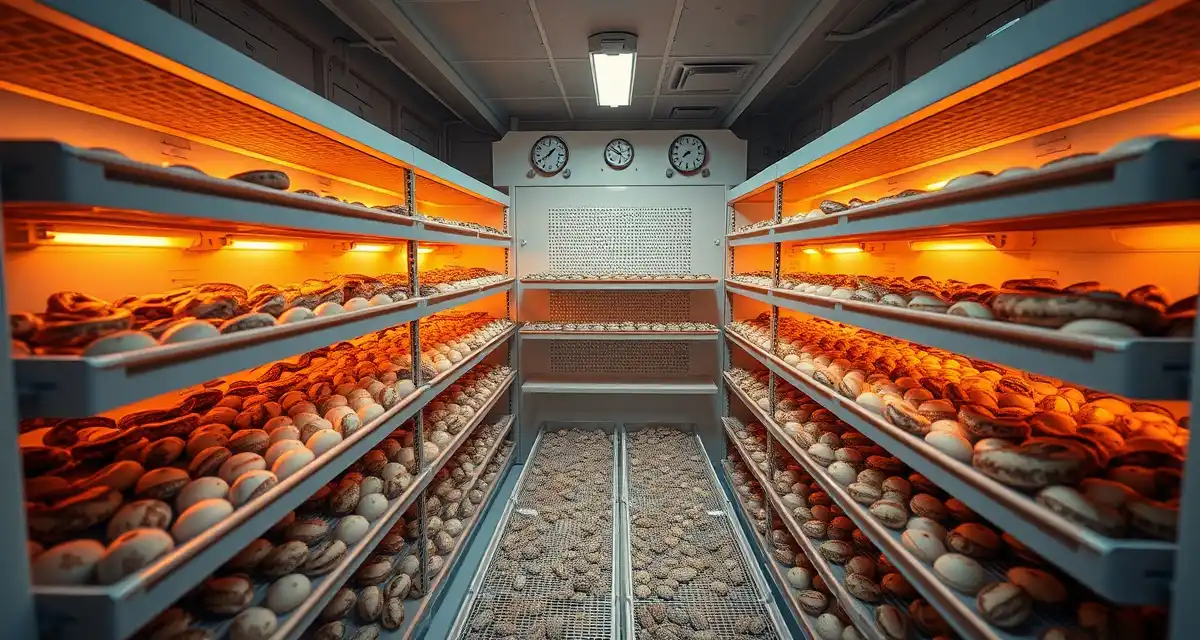
Some Burmese breeders use custom-built incubation chambers: a small room or large cabinet with a dedicated heating system and thermostat. Custom builds can be made to any size needed and allow for very precise control when done properly. They also allow you to walk into the space rather than reaching into a cabinet, which is practical for managing very large clutches.
Maternal Incubation
Burmese pythons are one of the few python species that actively incubate their eggs maternally. A female will coil around her clutch and produce heat through muscular shivering (thermogenesis), maintaining egg temperature with remarkable precision. Studies have documented gravid Burmese females maintaining clutch temperatures within 1-2 degrees of their target even in ambient temperatures significantly below the eggs' requirements.
The tradeoff with maternal incubation is the physical cost to the female. She fasts for the entire 60-70 day incubation period and loses significant weight. A female in excellent pre-lay condition will handle this, but a female entering incubation already thin may be seriously compromised by the process.
To support maternal incubation, provide the female with a warm ambient temperature (80-85F in the nesting area) and a private, secure nesting box. Minimize disturbances during incubation -- opening the box frequently and handling the female or eggs causes her to uncoil, disrupting temperature regulation. Check on the clutch every few days at most during maternal incubation.
Setting Up Artificial Incubation
If using artificial incubation, remove the eggs from the female as soon as possible after laying (within 24-48 hours) and before she has begun serious maternal incubation behavior. Transfer the eggs carefully -- do not rotate eggs or change their orientation from how they were laid. Developing embryos can drown if eggs are turned after the embryo has anchored to one side.
Place eggs in incubation containers in slightly damp substrate (perlite or vermiculite at a 1:1 ratio by weight is common). Eggs should be partially buried in the substrate, not sitting on top of it. Group eggs in contact with each other as they were in the clutch -- this supports natural development.
Cover the container to maintain humidity, but include small ventilation openings to allow gas exchange. Check containers every 3-4 days. Monitor egg weights if you're able to weigh the containers or individual eggs at the start, and assess whether humidity appears appropriate by egg condition (firm and white, not shrunken or waterlogged).
HatchLedger lets you log your incubation setup, track temperature readings, record egg weight data, and document the final hatch outcomes for each clutch.
HatchLedger connects incubation records to your clutch P&L so the full production investment is visible against hatch outcomes.
Frequently Asked Questions
What is the best approach to Burmese python egg incubation setup?
Use a high-quality commercial incubator calibrated at 88-90F verified by an independent probe. Incubate eggs in perlite or vermiculite at a 1:1 ratio by weight, without rotating eggs from their lay orientation. Maintain containers with minimal airflow for gas exchange but sufficient humidity to prevent egg desiccation. Consider maternal incubation if your female is in excellent pre-lay condition -- Burmese females are effective natural incubators. Verify incubation temperatures regularly throughout the 60-70 day period and log any anomalies.
How do professional breeders handle Burmese python egg incubation?
Professionals verify their incubation temperatures at the start of each season and use independent probe thermometers rather than relying solely on incubator displays. They track egg condition throughout incubation, removing slugs promptly to prevent mold spread, and monitor egg weights where practical. They also plan for the scale of a Burmese clutch in their incubation setup -- a 70-egg clutch needs more incubation space than most breeders have available for smaller species. Their incubation records include temperature logs and any anomalies so they can diagnose problems if hatch rates are lower than expected.
What software helps manage Burmese python incubation records?
HatchLedger tracks every animal, clutch, and sale record for Burmese python breeders, with documentation that supports regulatory compliance and buyer confidence. When managing large clutches and compliance requirements simultaneously, a connected system prevents the record-keeping gaps that create problems at sale. Free for up to 20 animals.
Are Burmese pythons legal to own and breed in all US states?
No. Burmese pythons are listed as an injurious species under the Lacey Act, which restricts interstate transport. Several states have additional bans on ownership entirely. Check current state and federal regulations before acquiring or transporting animals. USARK maintains updated resources on applicable regulations.
How large should a Burmese python enclosure be for a breeding pair?
Breeding females typically require enclosures of at least 8x4 feet and often larger for full-grown adults. Dedicated breeding rooms or custom builds are standard at scale. Thermal gradient with hot spots at 88-92 degrees Fahrenheit and ambient temperatures in the mid-70s allows proper thermoregulation.
What is Burmese Python Egg Incubation Setup: Complete Breeder Guide?
A Burmese python egg incubation setup guide covers everything captive breeders need to successfully hatch clutches from one of the world's largest constrictors. This includes incubator selection, temperature and humidity management, egg positioning, candling procedures, and monitoring protocols across the 60-65 day incubation period. Given clutch sizes of 25-50 eggs, the guide addresses large-scale incubation challenges unique to this species.
How much does Burmese Python Egg Incubation Setup: Complete Breeder Guide cost?
Setting up Burmese python incubation requires investment in appropriate equipment. A quality incubator large enough for 25-50 eggs typically costs $200-$600, with commercial units running higher. Additional costs include substrate (vermiculite or perlite), digital thermometers, hygrometers, and backup heating. Ongoing costs are minimal—primarily electricity. Total setup investment commonly ranges from $300-$800 depending on equipment quality and redundancy measures.
How does Burmese Python Egg Incubation Setup: Complete Breeder Guide work?
Burmese python eggs are collected after laying and placed in a moist incubation substrate like vermiculite at a 1:1 water-to-substrate ratio by weight. Eggs are maintained at 88-90°F with humidity around 90-100%. Breeders check eggs regularly for mold, collapse, or discoloration. After 60-65 days, pipping begins as hatchlings cut through the shell using their egg tooth.
What are the benefits of Burmese Python Egg Incubation Setup: Complete Breeder Guide?
Proper incubation setup maximizes hatch rates, reduces egg loss to mold or desiccation, and produces healthier hatchlings. Controlled artificial incubation outperforms maternal incubation in consistency, freeing the female from prolonged fasting and physical stress. Reliable monitoring protocols help breeders catch problems early, and organized record-keeping supports compliance documentation required under state regulations and the federal Lacey Act.
Who needs Burmese Python Egg Incubation Setup: Complete Breeder Guide?
Captive Burmese python breeders at any experience level benefit from a structured incubation guide, but it is especially critical for those managing their first large clutch. Given the species' legal complexity—with ownership and interstate transport regulated at state and federal levels—breeders need reliable husbandry protocols that also support compliant record-keeping. Hobbyists scaling up operations will find the large-clutch logistics particularly relevant.
How long does Burmese Python Egg Incubation Setup: Complete Breeder Guide take?
Burmese python eggs incubate for 60-65 days at 88-90°F under stable conditions. This timeline is relatively consistent but can shift slightly based on incubation temperature—slightly cooler temps extend the period, warmer temps shorten it. Breeders should begin monitoring closely after day 55. Pipping and full emergence typically span 24-72 hours once hatchlings start cutting through the shell.
Related Articles
- Reticulated Python Egg Incubation Setup: Complete Breeder Guide
- Boa Constrictor Egg Incubation Setup: Complete Breeder Guide
- Burmese Python Clutch Size and Egg Count: Complete Breeder Guide
Sources
- USARK (United States Association of Reptile Keepers)
- Association of Reptilian and Amphibian Veterinarians (ARAV)
- US Fish and Wildlife Service (Injurious Wildlife regulations)
- Journal of Herpetology (Society for the Study of Amphibians and Reptiles)
- Florida Fish and Wildlife Conservation Commission
Get Started with HatchLedger
Burmese python breeding involves large animals, large clutches, and compliance documentation that is difficult to manage without a dedicated system. HatchLedger tracks every animal, clutch, and sale record in one place, giving you the documentation you need for regulatory compliance and buyer confidence. Try it free with up to 20 animals.