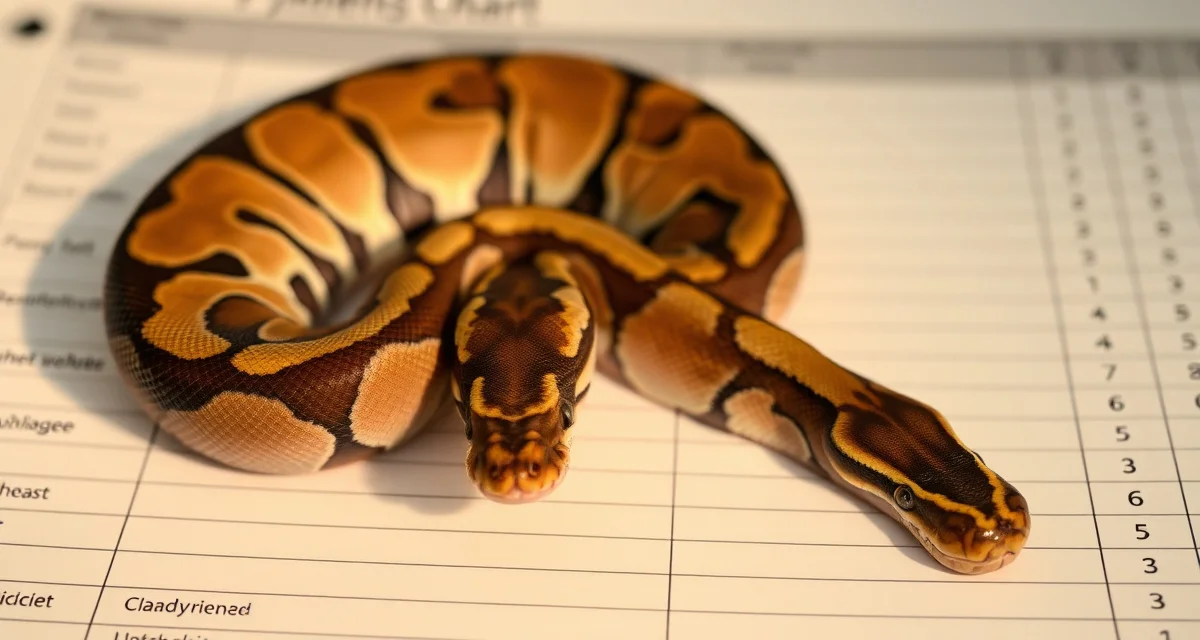
Breeding for Super Forms in Ball Pythons
Super forms are the homozygous version of co-dominant morphs, two copies of the same gene in one animal. They're often dramatically different-looking from single-gene animals, and some of the most commercially valuable ball pythons are super forms or combinations involving them. Understanding which super forms are safe, which require caution, and which are not viable is essential knowledge for any serious breeder.
TL;DR
- Ball python breeding operations require systematic record-keeping from pre-season preparation through end-of-season sales.
- Females at 1,200-1,500g or more are the target weight before introducing them to a breeding male.
- Ovulation detection is the key event that anchors pre-lay shed and lay date calculations.
- Clutch profitability guide depends on understanding actual cost basis per animal, not just gross sale revenue.
- Well-documented animals with complete feeding histories and clear genetic records consistently sell faster and at higher prices.
How Super Forms Are Produced
Every co-dominant morph has a super form. When you breed two animals carrying the same co-dom gene, you statistically produce:
- 25% homozygous super form
- 50% single-gene animals
- 25% normals (no copies of the gene)
To maximize super form production, breed single-gene to single-gene, or breed a super form to normals (producing 100% single-gene offspring) and then breed those singles together.
Super Forms With Dramatic Visual Impact
Super Pastel
Two Pastel copies = extremely vivid yellow, reduced brown tones, sharp alien-head contrast. Commercially strong. Retail $175-$450. Safe animal. Excellent as a production breeder.
Super Enchi
Two Enchi copies = intense orange saturation, dramatically reduced dark tones. Commercially strong. Retail $250-$700. Safe animal.
Super GHI
Two GHI copies = very dark, near-black coloration, heavily disrupted pattern. Unusual but commercially appealing in niche markets. Retail $350-$700. Safe animal.
Super Mojave (and other BEL super forms)
Two Mojave copies = Blue-Eyed Leucistic (BEL): white or near-white body with blue eyes. One of the most commercially desirable animals in the hobby. Retail $300-$600. Safe animal. Same BEL outcome from Super Lesser, Super Butter, etc.
Super Pinstripe
Two Pinstripe copies = dramatic dorsal stripe expression, almost patternless in some examples. Commercially strong among buyers who want unusual pattern animals. Retail $300-$600. Safe animal.
Super Forms That Require Caution or Avoidance
Super Cinnamon and Super Black Pastel
Two Cinnamon copies = Super Cinnamon hatchlings with severe spinal kinking. Not viable, require euthanasia. Same outcome from Super Black Pastel (allelic with Cinnamon).
Never pair two Cinnamon-gene animals together. Never pair two Black Pastel animals together. Never pair Black Pastel to Cinnamon.
Super Spider
Two Spider copies = not viable. Super Spider hatchlings have extreme neurological dysfunction. Require immediate euthanasia.
Never pair two Spider-gene animals together.
Building Super Form Production Into Your Program
The Efficient Route
For any co-dom super form you want to produce: pair two single-gene animals. The 25% super form rate means a 6-8 egg clutch statistically produces 1-2 supers alongside singles and normals.
For premium super form production (Super Pastel Clown, Super Enchi Pied, etc.), you need the super form combined with a recessive:
- Route A: Super Pastel het Clown x het Clown = chance at Super Pastel Clown
- Route B: Pastel Clown x Pastel Clown (but remember Pastel Clown is Pastel + Clown) = similar production
Using Super Forms as Breeders
Super forms of safe co-doms are excellent breeders because they pass one copy of their gene to 100% of offspring:
- Super Pastel x Normal = 100% single-gene Pastel (no normals)
- Super GHI x Normal = 100% single-gene GHI
- Super Mojave x Normal = 100% single-gene Mojave
This makes super forms efficient for loading an entire clutch with a specific co-dom gene.
Tracking Super Forms in HatchLedger
HatchLedger records whether each animal is single-gene or super form for every co-dom gene in its makeup. This distinction matters because:
- Super forms are priced differently from single-gene
- Super forms breed differently (100% gene transmission to offspring vs. 50%)
- Buyer documentation needs to specify single-gene vs. super form
The lineage engine records super form status from parentage when confirmed through offspring production.
FAQ
What is the best approach to ball python super form breeding?
Focus on safe co-dom supers (Pastel, Enchi, GHI, Mojave, Pinstripe, etc.) and avoid any pairings that risk producing Super Cinnamon, Super Black Pastel, or Super Spider. Use super forms as breeding assets, their 100% gene transmission to all offspring makes them efficient for loading a co-dom into a recessive line. Price and document super vs. single-gene animals separately in your records and listings.
How do professional breeders handle ball python super form production?
Experienced breeders build super form production into recessive lines. They're not just producing Super Pastels, they're producing Super Pastel het Clown or Super Pastel het Pied animals that have substantially higher commercial value than plain super forms. They track gene combinations through HatchLedger's lineage engine and price every tier of their clutch output accurately.
Sources
- USARK (United States Association of Reptile Keepers)
- Association of Reptilian and Amphibian Veterinarians (ARAV)
- World of Ball Pythons (WoBP genetics reference database)
- MorphMarket (reptile industry marketplace)
- Reptiles Magazine (Bowtie Inc.)
Get Started with HatchLedger
Every part of a ball python breeding operation -- from pairing records to clutch documentation to financial tracking -- works better when the data is connected rather than scattered across notebooks and spreadsheets. HatchLedger is built for exactly that. Try it free with up to 20 animals.