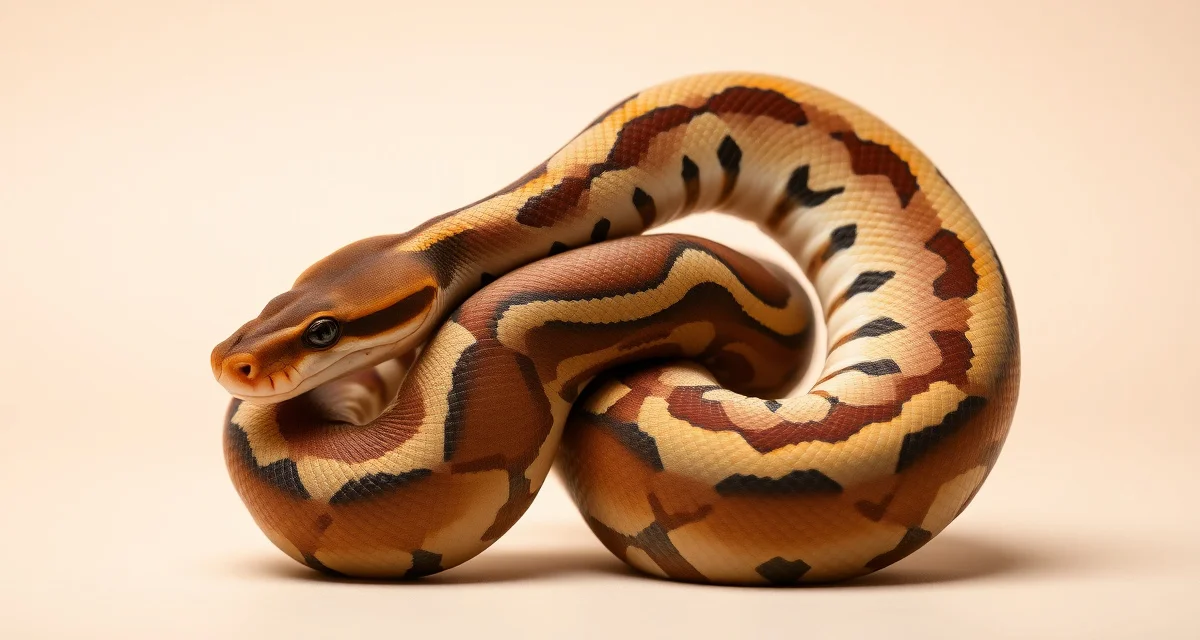
Understanding Ball Python Lock and Breeding Behavior
A "lock" in ball python breeding means the male and female are physically connected during copulation, typically observable as the male's tail wrapped under the female's, tails entwined, animals often motionless for hours. Understanding what a lock looks like, how long it lasts, and how to confirm it's fertile is foundational breeding knowledge. Miss your locks, and your timeline calculations for ovulation and egg deposition become guesswork.
TL;DR
- Ball python breeding operations require systematic record-keeping from pre-season preparation through end-of-season sales.
- Females at 1,200-1,500g or more are the target weight before introducing them to a breeding male.
- Ovulation detection is the key event that anchors pre-lay shed and lay date calculations.
- Clutch profitability guide depends on understanding actual cost basis per animal, not just gross sale revenue.
- Well-documented animals with complete feeding histories and clear genetic records consistently sell faster and at higher prices.
What Does a Ball Python Lock Look Like?
A confirmed lock shows:
- Male and female tails intertwined or positioned together near the cloacal region
- Hemipenes visibly extended (sometimes, not always visible)
- Both animals relatively still, often coiled together
- Can last anywhere from 20 minutes to several hours
Not every introduction results in a lock, and not every lock results in successful fertilization. Males may chase females without locking. Females may be unreceptive. A single observed lock is a good sign but not a guarantee of fertilization.
What's NOT a Lock
- Male lying alongside female with no tail contact: not a lock
- Male riding on top of female: pre-lock investigation behavior, not confirmed lock
- Tails crossed but animals actively moving separately: likely incidental
How Often to Introduce for Breeding
Introduce male to female every 10-14 days during the breeding season (October-March). Leave the male in overnight, this is when most locks occur, often in the cooler, quieter nighttime hours.
Return in the morning to check. If you find them locked, note the time observed and the date. If you find them separated, that doesn't mean they didn't lock, just that you didn't observe it.
Some breeders use trail cameras or motion-sensor recording to document locks they miss during overnight hours. If you're running 10+ pairs this becomes impractical, but for high-value pairings it's worthwhile.
How to Interpret Lock Frequency
For most ball python pairings, you want at least 3-4 confirmed locks before ovulation occurs. A single lock early in the season doesn't guarantee a clutch. Multiple locks over 4-8 weeks substantially improves confidence that fertilization has occurred.
A female that locks with the male in October but then refuses all introductions through January and never ovulates was likely not fertilized. Put her back in rotation the following season.
Logging Lock Dates in HatchLedger
Every confirmed lock should be recorded immediately. Date, time if known, which male, which female. HatchLedger's breeding season planner stores this data and uses lock records to calculate:
- Expected ovulation window (typically 2-6 weeks after the last fertile lock)
- Expected pre-lay shed date (28-35 days after ovulation)
- Expected lay date (10-20 days after pre-lay shed)
These calculations give you a window to watch for ovulation rather than checking every animal every day blindly.
Confirming a Fertile Lock vs. Non-Fertile Contact
This is where experience helps. Fertile locks typically involve the male appearing more engaged, the female being less resistant, and the lock lasting longer (45 minutes to several hours). Quick "bumps" with immediate separation are less reliably fertile.
The real confirmation of fertile locks comes later, when you observe ovulation. Ovulation is the definitive signal that fertilization occurred and follicle development is proceeding.
Managing Multiple Pairings Simultaneously
When you're running 8-12 pairings through a season, keeping lock dates organized is essential. Missing a lock date means your ovulation window estimate is based on incomplete data.
I use HatchLedger's planner to alert me on introduction days for every pairing. This keeps the schedule consistent without relying on memory. When a lock is observed, I log it immediately from my phone.
Common Lock Behavior Problems
Male won't lock with female: Try a different male. Some males are more aggressive breeders than others. Try cooling the female's enclosure 2-4°F for a week before re-introduction. Check that the male is healthy weight and has fed recently.
Female refuses all males: May be too light (under 1,500g), may be off-cycle, or may have health issues. Check weight, check feeding record, consider a vet visit if she was eating well and weight is appropriate.
Locks but no ovulation: Common in the first 1-2 seasons for young females. Continue pairings. Some females don't ovulate their first season even with successful locks.
FAQ
What is the best approach to ball python lock breeding behavior?
Log every confirmed lock date and time. Introduce males on a consistent 10-14 day schedule. Don't assume a single lock means a successful season, continue pairings until ovulation is confirmed. Use breeding management software to track lock dates and calculate expected ovulation windows automatically.
How do professional breeders handle ball python lock breeding documentation?
Experienced breeders record every introduction and every confirmed lock in their tracking system. Some use overnight cameras for high-value pairings. They interpret lock frequency and quality in context, a male that locks readily on multiple introductions with a receptive female is more likely to produce fertilized eggs than a single observed lock. HatchLedger's log shows the complete lock history for any pairing at a glance.
Sources
- USARK (United States Association of Reptile Keepers)
- Association of Reptilian and Amphibian Veterinarians (ARAV)
- World of Ball Pythons (WoBP genetics reference database)
- MorphMarket (reptile industry marketplace)
- Reptiles Magazine (Bowtie Inc.)
Get Started with HatchLedger
Every part of a ball python breeding operation -- from pairing records to clutch documentation to financial tracking -- works better when the data is connected rather than scattered across notebooks and spreadsheets. HatchLedger is built for exactly that. Try it free with up to 20 animals.