Ball Python Morph FAQ: Genetics Prices and Availability
Direct answers to the most common morph genetics questions from new buyers, hobby breeders working through their first projects, and experienced keepers expanding into genetics they haven't worked with before.
TL;DR
- Ball python breeding operations require systematic record-keeping from pre-season preparation through end-of-season sales.
- Females at 1,200-1,500g or more are the target weight before introducing them to a breeding male.
- Ovulation detection is the key event that anchors pre-lay shed and lay date calculations.
- Clutch profitability guide depends on understanding actual cost basis per animal, not just gross sale revenue.
- Well-documented animals with complete feeding histories and clear genetic records consistently sell faster and at higher prices.
What is a ball python morph?
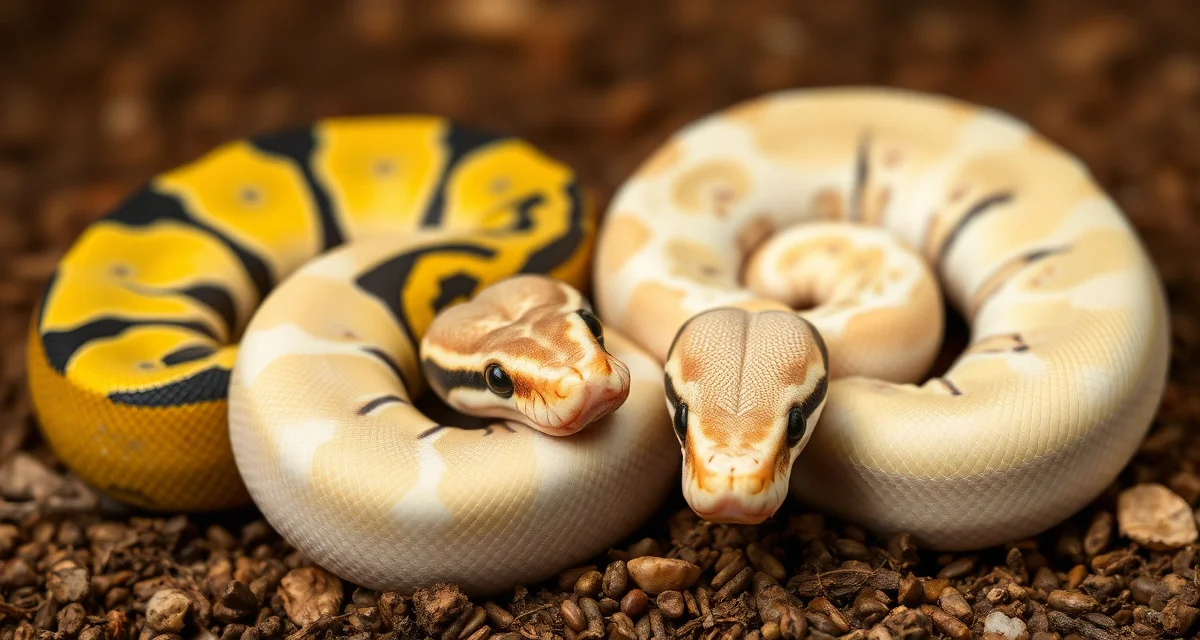
A morph is a genetic variant that changes the animal's appearance, color, pattern, or both. Morphs range from subtle (Pastel's slightly brighter yellows) to extreme (Pied's white-and-pattern pattern, Clown's dramatic irregular markings). Over 5,000 named morph combinations exist in the ball python hobby, though the vast majority are produced from a core group of 30-50 foundation genes.
What's the difference between co-dominant and recessive morphs?
Co-dominant: A single copy of the gene changes the animal's appearance. Two copies (the "super" form) looks different again. Examples: Pastel, Spider, Enchi, Banana, Lesser, Mojave, Cinnamon.
Recessive: Two copies required to change appearance. Single-copy animals look normal and are called "hets" (heterozygous carriers). Examples: Clown, Pied, Albino, Axanthic.
The practical difference for breeders: co-dominant animals show the gene immediately and can be identified by visual inspection. Recessive hets look like normal ball pythons, you only know they carry the gene from documented parentage or by breeding them out.
What does "het" mean?
Het stands for heterozygous, the animal carries one copy of a recessive gene but doesn't visually express it. A het Clown looks exactly like a normal ball python but passes the Clown gene to 50% of its offspring. Breeding two hets together produces 25% visual Clown offspring.
"100% het" means the animal is definitely a carrier (typically from documented parents where one or both parents are visual for that gene). "Possible het" or "66% het" means the animal may or may not carry the gene based on statistical probability from a het × het pairing.
What are the most popular ball python morphs?
By market volume and demand, the consistent top performers are:
- Clown, highest-demand recessive, strong in combos
- Pied, white-sided classic recessive, consistently popular
- Banana/Coral Glow, orange co-dominant, broad buyer appeal
- Pastel, foundational co-dominant combo builder
- Enchi, increasingly popular combo gene
- Spider, still widely produced despite wobble controversy
- GHi, growing collector interest in dark-themed combos
- Albino, classic recessive, still widely produced
How much do ball python morphs cost?
Price ranges vary enormously based on morph rarity, sex, gene combination, and documentation quality.
| Category | Price Range |
|---|---|
| Single gene co-dominant (Pastel, Spider, etc.) | $60-$300 depending on sex |
| Single gene recessive visual (Clown, Pied) | $300-$2,000 depending on sex and quality |
| Popular two-gene combos | $200-$2,000 |
| Premium three-gene combos | $1,000-$10,000+ |
| Rare high-demand combos | $5,000-$30,000+ |
| 100% het recessives | $150-$800 |
Females typically sell at 2-3× male prices for the same morph because of their value as production animals.
What does "super" mean in ball python morphs?
A super form is a co-dominant animal with two copies of the gene (homozygous). Super forms are visually distinct from single-copy animals. Super Pastel is more bleached and bright than single Pastel. Super Enchi is more extreme than single Enchi.
Not every co-dominant morph has a viable super form. Spider's super form (Super Spider) is non-viable. Most co-dominant supers are healthy animals, Super Pastel, Super Enchi, Super Mojave (BEL), etc. are all common breeding goals.
What are allelic morphs?
Allelic morphs occupy the same genetic locus, the same "slot" on the chromosome. This means an animal can carry one copy of each allelic gene but not two copies of both independently.
The most important allelic groups:
- BEL complex: Lesser, Butter, Russo, Phantom, Mystic, Mocha, any combination of two produces a Blue-Eyed Lucy (BEL, white-bodied blue-eyed animal)
- Cinnamon/Black Pastel: Allelic to each other; combining one of each produces a super-like compound animal
- Mojave: Allelic with Lesser and the BEL complex
If you breed two allelic genes together, the double-hit animal is a compound form, not a standard "super", and its breeding outcomes differ from a homozygous super.
How do I know if a ball python morph combo is lethal?
Some morph combinations produce animals that don't survive. The most well-known examples:
- Super Spider: Homozygous Spider (Spider × Spider), non-viable
- Spider + Champagne: Produces high rates of severely kinked, non-viable animals
Before producing any Super form for the first time, research whether that super or combo is associated with lethality. Resources like the MorphMarket community forums and established breeders' documentation are reliable sources.
What's the difference between Banana and Coral Glow?
Genetically identical, they're the same mutation discovered independently in separate animals. VPI produced the "Banana" line; NERD produced the "Coral Glow" line. They're allelic (occupy the same locus) and produce the same visual effects. An animal with one copy from each line is a "Super Banana/Coral Glow", still the same visual result as a standard Super Banana. Most breeders treat them as the same morph.
What is a "possible het" worth?
A possible het is an animal that statistically may carry a recessive gene but has no documentation confirming it does. The value depends on:
- Probability percentage (possible het from two visuals producing 100% hets = very high probability, possible het from het × het = 67% after eliminating proven normals)
- Line documentation quality
- How easy/valuable it is to "prove out" the het
Possible hets from reputable breeders with documented parent information sell at meaningful discounts to 100% hets. Possible hets from unknown sources with no documentation are essentially normals from a value standpoint.
FAQ
What is the best approach to ball python morph FAQ?
Understanding the three core inheritance patterns, co-dominant, recessive, and allelic, resolves most genetics questions. Co-dominants express in single copy and have viable super forms (with a few exceptions). Recessives require two copies to express and produce "het" carriers that look normal. Allelic genes share a locus and produce compound animals when two alleles are combined.
How do professional breeders handle ball python morph questions?
Professional breeders maintain deep documentation for every animal in their collection, not just visual morph, but confirmed hets, possible hets, line information for recessives with multiple lines (like Axanthic), and full parentage records. This documentation answers buyer morph questions immediately from records rather than from memory.
What software helps manage ball python morph genetics?
HatchLedger is purpose-built for reptile breeders, connecting animal records, breeding history, clutch outcomes, and financial tracking in one connected system. Unlike general spreadsheets or notes apps, it's designed around the specific workflow of an active breeding season -- from pairing records through hatchling inventory and sales documentation. Free for up to 20 animals.
Sources
- USARK (United States Association of Reptile Keepers)
- Association of Reptilian and Amphibian Veterinarians (ARAV)
- World of Ball Pythons (WoBP genetics reference database)
- MorphMarket (reptile industry marketplace)
- Reptiles Magazine (Bowtie Inc.)
Get Started with HatchLedger
Every part of a ball python breeding operation -- from pairing records to clutch documentation to financial tracking -- works better when the data is connected rather than scattered across notebooks and spreadsheets. HatchLedger is built for exactly that. Try it free with up to 20 animals.