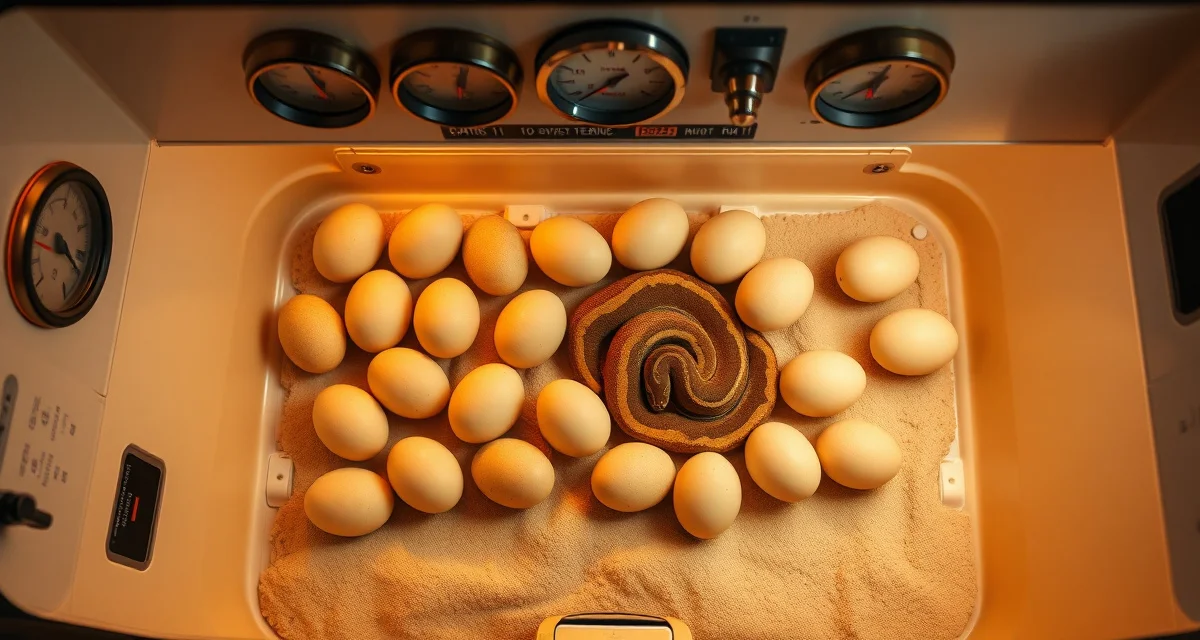
Egg Pulling vs Maternal Incubation for Ball Pythons
Every time a ball python clutch is laid, you make a decision: pull eggs to an artificial incubator or leave them with the mother. Both approaches work. Both have real tradeoffs. The right choice depends on your setup, your monitoring capacity, and how many clutches you're running simultaneously.
TL;DR
- Ball python breeding operations require systematic record-keeping from pre-season preparation through end-of-season sales.
- Females at 1,200-1,500g or more are the target weight before introducing them to a breeding male.
- Ovulation detection is the key event that anchors pre-lay shed and lay date calculations.
- Clutch profitability guide depends on understanding actual cost basis per animal, not just gross sale revenue.
- Well-documented animals with complete feeding histories and clear genetic records consistently sell faster and at higher prices.
How Maternal Incubation Works
When a ball python lays her eggs and coils around them, she's doing exactly what millions of years of evolution designed her to do. She maintains the egg mass temperature by shivering (a muscular thermogenesis behavior) and by adjusting her coil tightness. In appropriate room conditions, she can keep eggs at viable incubation temperatures without any equipment.
Maternal Incubation Requirements
- Room temperature: 80-84°F ambient. Lower than this and the mother can't maintain egg temps adequately without significant metabolic stress. Above 85°F and the eggs may overheat.
- Humidity: The female's coiled body helps maintain humidity, but the room should be at least 60% RH.
- No disturbance: Maternal females shouldn't be disturbed frequently. Every time you open the enclosure, you disrupt the thermal environment around the eggs.
Maternal Incubation Advantages
- No equipment required
- Natural behavior maintained
- Lower intervention stress for the female
- Good results in appropriate temperature ranges
Maternal Incubation Disadvantages
- Hard to monitor individual egg condition without disturbing the clutch
- Eggs can't be easily candled or weighed
- Room temperature fluctuations affect incubation
- If a slug or bad egg is in the clutch, it's harder to identify and remove
- Female cannot eat or maintain full health during the 60-day incubation period
How Artificial Incubation Works
Pull eggs from the enclosure within hours of lay, separate them gently, mark their orientation, and place them in a prepared incubation container at 88-90°F and 88-100% humidity.
Artificial Incubation Requirements
- Incubator: Any reliable device maintaining 88-90°F. Options include dedicated reptile egg incubators, converted wine coolers with Inkbird controllers, or Hovabator egg incubators with appropriate modification.
- Substrate: Moist vermiculite (1:1 by weight), Hatchrite, or perlite
- Containers: Deli cups, shoeboxes, or purpose-built egg boxes, anything that holds humidity and fits in the incubator
Artificial Incubation Advantages
- Full control over temperature and humidity
- Easy individual egg monitoring (candling, weighing)
- Bad eggs identified and removed quickly
- Female recovers faster, can resume eating sooner
- Multiple clutches managed in one incubator
- Eggs accessible for intervention if needed
Artificial Incubation Disadvantages
- Requires equipment investment ($100-$400 for a quality incubator setup)
- Equipment failures are catastrophic if unmonitored
- Requires correct technique to avoid harming eggs during pull
- More time investment for setup and monitoring
Which Method Do Production Breeders Use?
The overwhelming majority of semi-pro and professional ball python breeders pull eggs to artificial incubation. The reasons are practical:
- Running 5-15 clutches simultaneously requires a centralized incubation system
- Individual egg monitoring is essential for managing large batches
- Female recovery time matters when you're running the same female in back-to-back seasons
If you have 1-2 clutches per season and a consistently warm breeding room, maternal incubation is a legitimate option. If you're running more than 3-4 clutches, artificial incubation is strongly recommended.
The Egg Pulling Process
- Prepare container first. Pre-wet your substrate, get it into the container, and put the container in the incubator to come up to temperature. Don't pull eggs and then scramble for your setup.
- Separate eggs from the female. Gently lift the female's coils. Most females release eggs without much resistance. Some grip more tightly, work slowly and don't force.
- Separate the egg mass. Ball python eggs are typically fused together along their contact surfaces. Gently work eggs apart with your fingers. You'll hear and feel small tears along the fusion lines, this is normal. The egg shell is tough.
- Mark orientation. Using a Sharpie, put a dot on the top of each egg before moving them. Eggs should remain in the same orientation, flipping them can cause the embryo to drown in albuminous fluid.
- Place eggs in container. Single layer, right-side up, not touching standing water.
- Label the container. Both parent IDs and the lay date. This label goes on the container and into HatchLedger's incubation records.
Incubation Parameters: The Numbers That Matter
- Temperature: 88-90°F. Most breeders target 88-88.5°F as the safe middle, cooler is safer than too hot. Above 92°F eggs can die. Below 84°F development slows significantly or stops.
- Humidity: 88-100% RH inside the egg container
- Duration: 55-65 days at correct temps. Lower temps extend incubation. Some breeders run slightly cooler (86-87°F) and get 70-day incubation times, acceptable but not recommended for production operations.
FAQ
What is the best approach to ball python egg pulling vs maternal incubation?
For production breeders running multiple clutches, artificial incubation is the clear choice. It allows consistent monitoring, individual egg assessment, and faster female recovery. For hobbyists with 1-2 clutches in a consistently warm environment, maternal incubation is a valid and lower-intervention option.
How do professional breeders handle ball python egg pulling?
Experienced breeders prepare their incubation containers before the eggs arrive, they know the pre-lay shed has occurred and have everything ready. They pull eggs within hours of discovery, mark orientation immediately, and enter clutch data into HatchLedger before moving the containers into the incubator. They check incubators daily during breeding season and have backup heat sources in case of equipment failure.
Sources
- USARK (United States Association of Reptile Keepers)
- Association of Reptilian and Amphibian Veterinarians (ARAV)
- World of Ball Pythons (WoBP genetics reference database)
- MorphMarket (reptile industry marketplace)
- Reptiles Magazine (Bowtie Inc.)
Get Started with HatchLedger
Every part of a ball python breeding operation -- from pairing records to clutch documentation to financial tracking -- works better when the data is connected rather than scattered across notebooks and spreadsheets. HatchLedger is built for exactly that. Try it free with up to 20 animals.