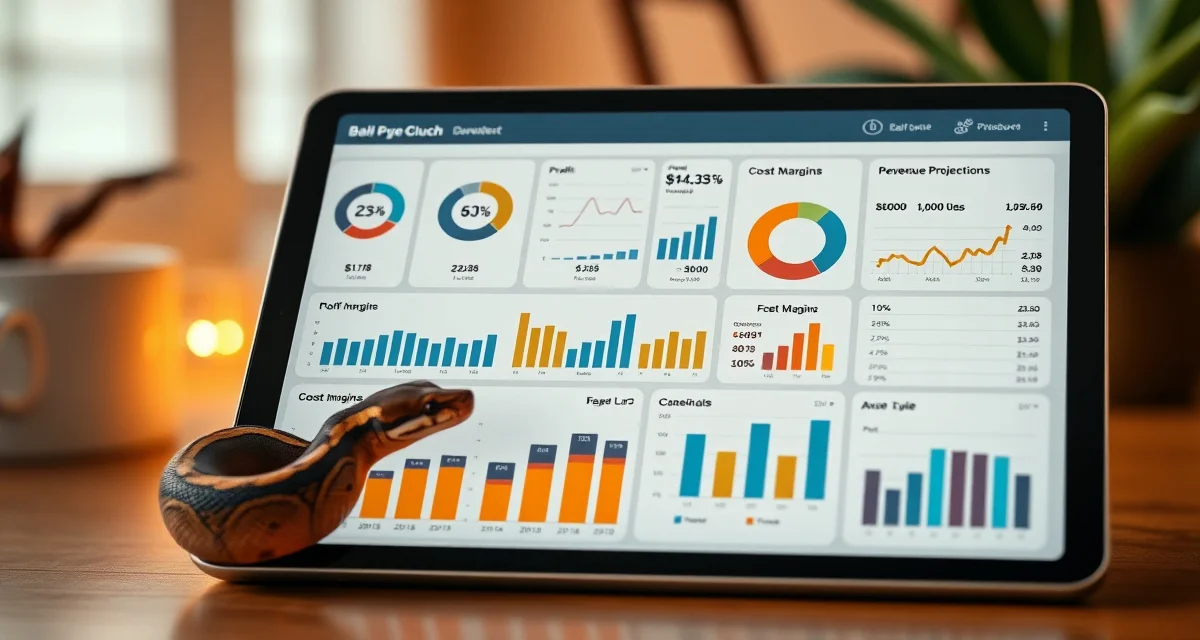
How to Calculate Ball Python Clutch Profitability
Most breeders know their total annual revenue. Few know their actual margin per clutch. That gap is where bad project decisions hide, low-margin pairings that consume incubator space, feeding costs, and time while returning modest money that makes an operation look productive without actually being profitable.
TL;DR
- Ball python breeding operations require systematic record-keeping from pre-season preparation through end-of-season sales.
- Females at 1,200-1,500g or more are the target weight before introducing them to a breeding male.
- Ovulation detection is the key event that anchors pre-lay shed and lay date calculations.
- Clutch profitability depends on understanding actual cost basis per animal, not just gross sale revenue.
- Well-documented animals with complete feeding histories and clear genetic records consistently sell faster and at higher prices.
Here's how to calculate clutch-level profitability accurately.
Step 1: Calculate Your Cost Basis for the Breeding Pair
The breeding animals represent capital that's tied up for the life of the project. To allocate their cost to each season's clutch, amortize acquisition cost over expected productive years.
Amortized pair cost per season:
Female acquisition cost: $1,800
Male acquisition cost: $600
Total pair cost: $2,400
Expected productive years: 6 (conservative estimate for a well-managed female)
Annual amortized cost: $2,400 ÷ 6 = $400/season
If the female produces one clutch per season, the full $400 is allocated to that clutch. If she produces two clutches (rare but possible), split proportionally.
What about animals you bred yourself? Use the production cost of that animal (its pro-rata share of the parent pair's season costs, feeders, etc.) as its "acquisition" value for future amortization. This gets recursive but is the accurate approach.
Step 2: Calculate Feeding Costs for the Breeding Pair
Ball python breeders typically reduce feeding frequency during breeding season, but both animals still need regular feeding from September through the following summer.
Estimating feeding costs:
- Female (adult, 1,500-2,500g range): approximately 1 prey item every 10-14 days off-season, less during active breeding
- Male: approximately 1 prey item every 14-21 days during breeding season
- Prey cost: $1.50-$4.00 per item depending on size and source
Example for an 8-month season (September-May):
Female: 18 feedings × $3.00 = $54
Male: 12 feedings × $2.00 = $24
Pair feeding cost: $78
Step 3: Calculate Incubation Costs
Incubation has direct supply costs and indirect electricity costs.
Direct costs:
- Substrate (vermiculite/perlite per clutch): $5-$15
- Egg container (reusable): $2-$5 amortized
- Thermometer probe maintenance: $2-$5
Electricity cost:
An incubator running at 88-90°F for 60 days uses approximately 90-150 kWh depending on unit efficiency and ambient room temperature. At $0.12-$0.15/kWh, that's $11-$22 per clutch.
Total incubation cost estimate: $20-$45 per clutch
Step 4: Calculate Hatchling Feeding Costs
Hatchlings require feeding before they sell, and animals that don't sell quickly carry ongoing feeder costs.
Hatchling feeding to sale:
- Average time from hatch to sale: 6-12 weeks (assuming animals feeding well)
- Average feeding frequency: every 7-10 days
- Cost per feeding: $0.75-$1.50 (fuzzy/rat pup)
Per hatchling feeding cost to sale: $3-$9
For a 6-hatchling clutch: $18-$54 total
Unsold inventory carrying cost:
An unsold hatchling at 6 months has consumed $15-$25 in feeders. An unsold animal at 12 months: $25-$50+. This is why inventory age management matters financially.
Step 5: Allocate Overhead
Overhead includes the breeding room itself (rent allocation if applicable, or opportunity cost), your time, replacement thermostats, rack maintenance, and miscellaneous supplies. This is harder to pin precisely but a reasonable allocation:
- Basic overhead per clutch: $30-$80 depending on operation scale
- Your time (hours × implied rate): Track hours spent on this clutch's animals and multiply by your chosen hourly rate
Many breeders omit time from their cost calculations and then wonder why the business doesn't feel profitable even when revenue is good.
Step 6: Sum Costs and Calculate Margin
Example clutch: Pastel het Clown female × Clown male
| Cost Line | Amount |
|---|---|
| Amortized pair cost (annual) | $400 |
| Pair feeding (season) | $78 |
| Incubation supplies + electricity | $35 |
| Hatchling feeding (6 animals, 8 weeks average) | $36 |
| Overhead allocation | $50 |
| Total cost basis | $599 |
| Cost per hatchling (6 hatchlings) | $100 |
Revenue (hypothetical clutch outcomes):
- 1 Pastel Clown female: $1,800
- 1 Pastel Clown male: $600
- 1 Clown female: $600
- 1 Clown male: $300
- 1 Pastel het Clown female: $350
- 1 het Clown male: $175
Total revenue: $3,825
Gross profit: $3,825 - $599 = $3,226
Gross margin: 84%
That's a healthy clutch. Compare this to a basic Cinnamon Pastel (Pewter) project:
Same costs: $599
Revenue (6 hatchlings, Pewters at $80-$120 each, Cinnamons at $60-$80):
- 6 hatchlings × $90 average = $540
Loss: $59 before your time is counted.
This is why knowing which projects make money is essential. A rack full of Pewters you're proud of may be costing you money.
Tracking This in HatchLedger
Manually running these calculations per clutch every season is doable but time-consuming and inconsistent. HatchLedger's budget calculator and clutch P&L tools automate this:
- Enter acquisition costs for each breeding animal
- Log feeder records per animal throughout the season
- Record incubation supply costs per clutch
- Log sales per hatchling as they occur
- The system calculates cost basis, revenue, and margin per clutch
The result is a per-clutch P&L statement at the end of each season that tells you exactly which pairings are worth continuing.
FAQ
What is the best approach to ball python clutch profitability?
Track costs and revenue at the clutch level, not just annually. Allocate breeding animal costs as annual amortized values. Include feeding, incubation, and overhead in your cost basis. Calculate cost per hatchling to know your floor. Then project expected revenue from likely clutch outcomes based on morph market prices. The difference tells you whether a project is worth running.
How do professional breeders handle ball python clutch profitability?
Professional breeders with multiple projects track P&L per clutch to identify which pairings generate acceptable margins and which should be discontinued or revised. They review project-level financials annually and make breeding decisions (which animals to hold back, which to sell, which morphs to add or remove from the program) based on financial data rather than pure enthusiasm.
What software helps manage ball python clutch profitability?
HatchLedger is purpose-built for reptile breeders, connecting animal records, breeding history, clutch outcomes, and financial tracking in one connected system. Unlike general spreadsheets or notes apps, it's designed around the specific workflow of an active breeding season -- from pairing records through hatchling inventory and sales documentation. Free for up to 20 animals.
Sources
- USARK (United States Association of Reptile Keepers)
- Association of Reptilian and Amphibian Veterinarians (ARAV)
- World of Ball Pythons (WoBP genetics reference database)
- MorphMarket (reptile industry marketplace)
- Reptiles Magazine (Bowtie Inc.)
Get Started with HatchLedger
Every part of a ball python breeding operation -- from pairing records to clutch documentation to financial tracking -- works better when the data is connected rather than scattered across notebooks and spreadsheets. HatchLedger is built for exactly that. Try it free with up to 20 animals.