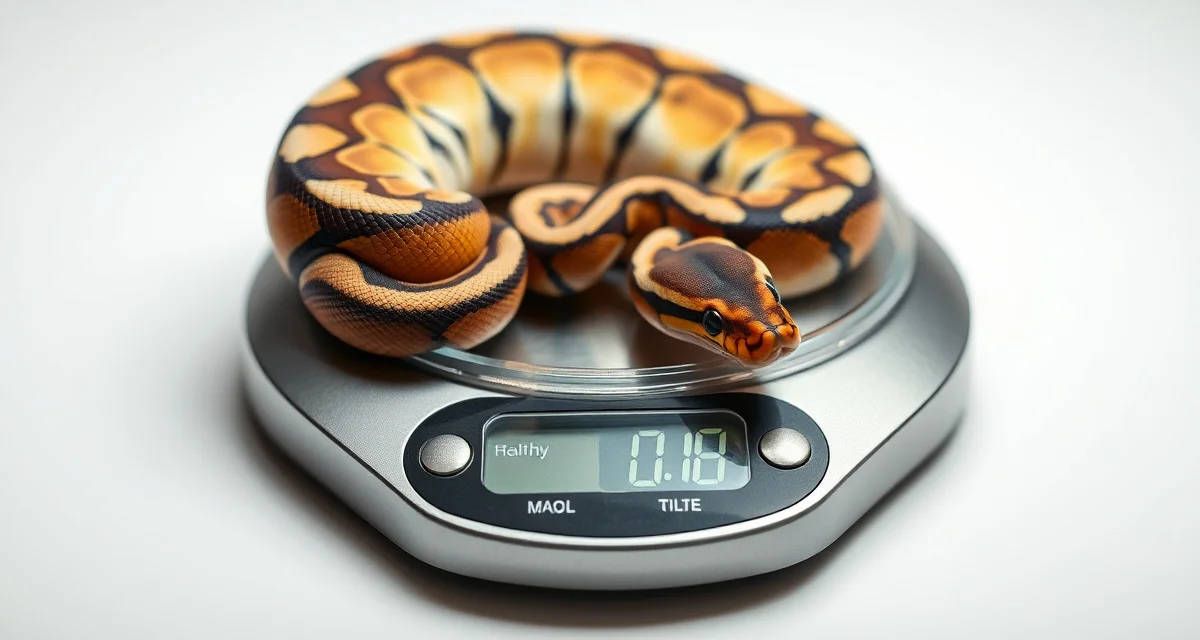
Ball Python Breeding Weight Requirements by Sex
By HatchLedger Editorial Team · Published 2025-06-24 · Updated Mar 13, 2026
Weight is the single most important factor in determining whether a ball python is ready to breed. Ignore this and you risk failed seasons, compromised female health, and clutches that never materialize. There's a number for females and a number for males, they're different, and both matter.
TL;DR
- Ball python breeding operations require systematic record-keeping from pre-season preparation through end-of-season sales.
- Females at 1,200-1,500g or more are the target weight before introducing them to a breeding male.
- Ovulation detection is the key event that anchors pre-lay shed and lay date calculations.
- Clutch profitability guide depends on understanding actual cost basis per animal, not just gross sale revenue.
- Well-documented animals with complete feeding histories and clear genetic records consistently sell faster and at higher prices.
Female Breeding Weight: The Hard Minimum
The absolute minimum weight for breeding a female ball python is 1,500 grams. This is the floor, not the recommendation.
At 1,500g, most females will technically be able to breed, but:
- Clutch sizes will be smaller (3-5 eggs vs. 6-8)
- Risk of follicle reabsorption is higher
- Recovery post-clutch takes longer
- Consecutive season breeding is more stressful on a lighter female
The better target is 1,700-1,800 grams minimum for a first-season breeder. A female at 1,800g+ going into her first breeding season is much more likely to produce a healthy, full-sized clutch.
Prime Production Weight for Females
The sweet spot for production females is 1,800-2,400g. In this range:
- Clutch sizes average 6-8 eggs
- Females recover well after breeding season
- Back-to-back season breeding is feasible with good post-season feeding
Very large females (2,600g+) often produce larger clutches but take longer to recover and may skip seasons if not well-conditioned.
Why Light Females Fail
A female under 1,500g that develops follicles is drawing on body reserves she doesn't have. She may reabsorb follicles (your season ends with no eggs), produce a partial clutch of mostly slugs, or in severe cases suffer metabolic collapse. A season lost to an underweight female also costs you the conditioning time you could have spent getting her ready for the following year.
Track your females' weights monthly throughout the off-season. HatchLedger's health monitoring records let you log weight data for every animal on a schedule, so you always know exactly where your females stand.
Male Breeding Weight: The Floor Is Lower
Males don't carry the same physiological burden as females. The minimum for males is generally 400-600 grams for first-season breeders, though most breeders prefer males at 700g+ before their first introduction.
Why Male Weight Matters Less (But Still Matters)
Males lose weight during breeding season. A male that starts at 600g and breeds 3-4 females can drop to 500g by March. That's significant proportional weight loss.
Watch your males throughout the season:
- Weigh them at the start of breeding season and monthly through March
- If a male loses more than 12-15% of starting body weight, pull him from rotation
- Feed him up, let him recover, and reintroduce later in the season
A depleted male not only struggles to breed effectively but can develop health issues. Males that are consistently too light at the start of breeding season aren't productive breeders.
Male Age vs. Weight
Age and weight often track together, but weight is the operative measure. A 3-year-old male at 500g is not ready. A 2-year-old male at 800g is.
Conditioning Animals for Breeding
Getting females to target weight before October requires planning. A female at 1,400g in July needs to gain 300g in 3 months, achievable with proper feeding (one appropriately-sized prey item every 7-10 days), but not guaranteed.
Feeding schedule for conditioning:
- Prey item should be roughly the same diameter as the widest part of the snake's body
- Feed every 7 days for rapid weight gain in underweight animals
- Move to 10-14 day intervals once at target weight to maintain without over-fattening
Don't force feed to hit a weight target. An overweight ball python develops different health problems. The goal is a well-conditioned, healthy animal at appropriate weight, not the maximum possible weight.
Tracking Weight in HatchLedger
Monthly weight logging for every breeding animal in your collection is one of the most important data points you can track. HatchLedger's health monitoring feature lets you log weights on a scheduled basis.
Before each breeding season, run a weight report on all planned breeders. Any female under 1,700g gets pulled from the pairing schedule until she reaches target weight. Any male under 700g either gets an intensive feeding regimen or sits out the season.
This kind of data-driven pairing decision prevents the most common cause of failed seasons: breeding animals that weren't ready.
Related Articles
- Banana and Coral Glow Ball Python Genetics: Sex-Linked Inheritance and Breeding Planning
- Ball Python Breeding License and Legal Requirements by State
- Is Ball Python Breeding Profitable FAQ
- How to Start a Ball Python Breeding Business FAQ
FAQ
What is the best approach to ball python breeding weight requirements?
Set a minimum weight threshold before any animal enters breeding rotation, 1,700g for females, 700g for males as conservative starting points. Track weight monthly. Use your actual weight data to make breeding decisions rather than estimating by appearance. Animals that don't meet weight threshold sit out the season and get focused feeding conditioning.
How do professional breeders handle ball python breeding weight requirements?
Experienced breeders weigh every animal monthly, track weight trends over time, and make data-driven breeding decisions. They know each female's typical weight at breeding season start, her typical clutch size, and how long her recovery takes post-season. They pull males from rotation when weight drops more than 12-15% and don't reintroduce until the male has recovered to within 10% of his starting weight.
What is Ball Python Breeding Weight Requirements by Sex?
Ball python breeding weight requirements by sex refers to the minimum and recommended body weights that male and female ball pythons must reach before being introduced for breeding. Females require at least 1,500g, with 1,700–1,800g being the preferred target. Males have a separate, lower threshold. Meeting these benchmarks reduces health risks, improves clutch sizes, and increases the likelihood of a successful breeding season.
How much does Ball Python Breeding Weight Requirements by Sex cost?
There is no cost associated with understanding ball python breeding weight requirements — it is a set of husbandry guidelines, not a product or service. However, reaching target weights requires ongoing investment in quality feeders, enclosures, and record-keeping tools like HatchLedger to track growth over time and ensure animals are on pace before each breeding season.
How does Ball Python Breeding Weight Requirements by Sex work?
Breeders weigh their animals regularly — typically monthly — and compare those weights against established thresholds. Females below 1,500g are held back from breeding that season. Once a female hits the target weight range, she is introduced to a male. Weight is tracked alongside feeding history and reproductive events to build a complete picture of each animal's readiness and condition.
What are the benefits of Ball Python Breeding Weight Requirements by Sex?
Following proper weight requirements leads to larger clutches (6–8 eggs vs. 3–5), lower rates of follicle reabsorption, faster post-clutch recovery, and healthier females over multiple seasons. For breeders, this translates directly to better profitability per season and reduced veterinary risk. Well-conditioned, properly documented animals also sell faster and command higher prices from buyers.
Who needs Ball Python Breeding Weight Requirements by Sex?
Anyone breeding ball pythons needs to understand sex-specific weight requirements — from hobbyists producing their first clutch to commercial operations managing dozens of females. Breeders who skip this step risk poor clutch outcomes, compromised female health, and lost revenue. It is foundational knowledge for anyone serious about responsible and profitable ball python reproduction.
How long does Ball Python Breeding Weight Requirements by Sex take?
Reaching female breeding weight typically takes 2–4 years from hatching, depending on feeding frequency and prey size. Hatchlings start around 60–80g and must reach at least 1,500g before their first breeding season. With consistent feeding, many females hit the recommended 1,700–1,800g range by their second or third year. Rushing this timeline by breeding underweight animals increases health risks and reduces clutch viability.
Sources
- USARK (United States Association of Reptile Keepers)
- Association of Reptilian and Amphibian Veterinarians (ARAV)
- World of Ball Pythons (WoBP genetics reference database)
- MorphMarket (reptile industry marketplace)
- Reptiles Magazine (Bowtie Inc.)
Get Started with HatchLedger
Every part of a ball python breeding operation -- from pairing records to clutch documentation to financial tracking -- works better when the data is connected rather than scattered across notebooks and spreadsheets. HatchLedger is built for exactly that. Try it free with up to 20 animals.