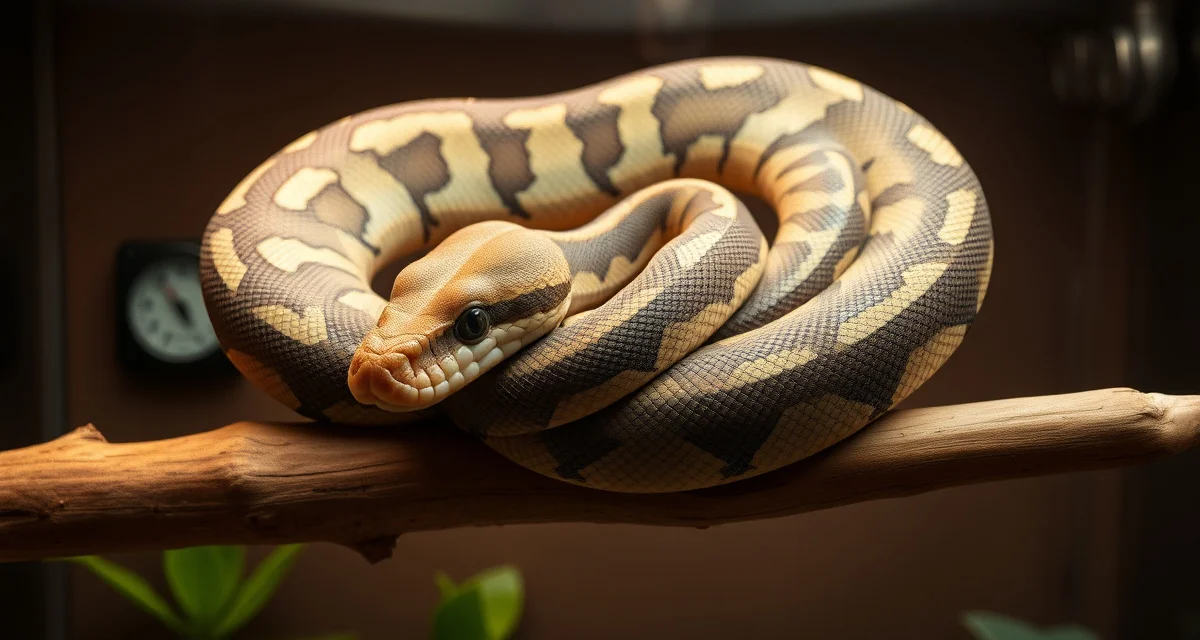
Boa Constrictor Seasonal Cycling: Complete Breeder Guide
By HatchLedger Editorial Team · Published 2025-01-25 · Updated Mar 13, 2026
Seasonal cycling is what triggers reproductive behavior in boa constrictors. Without intentional manipulation of temperature and photoperiod, most captive boas won't reliably enter breeding condition even if you introduce pairs at optimal body weight. Breeders using integrated software report 30% less time on administrative tasks, which matters during cycling season when you're making gradual environmental adjustments that require consistent monitoring over weeks.
TL;DR
- Boa constrictors are viviparous (live-bearing), with gestation lasting 5-8 months depending on subspecies and husbandry conditions.
- Seasonal cycling typically starts in October with a 5-10 degree Fahrenheit temperature reduction and reduced photoperiod.
- Litter sizes average 15-25 neonates for Boa constrictor imperator, though some localities and true red-tails average smaller litters.
- Confirming pregnancy in boas is subtler than in ball pythons and often requires close behavioral observation or portable ultrasound.
- Logging every pairing date and gestation-period observation gives you the data to accurately predict birth windows and prepare appropriate neonate housing.
The goal of cycling is to simulate the natural seasonal changes that boas would experience in the wild -- cooler temperatures and shorter days in fall and winter, followed by a gradual return to warm conditions in late winter and spring. In captivity, you control this cycle deliberately and can optimize the timing based on your breeding goals and facility calendar.
When to Start Cycling
In the Northern Hemisphere, most experienced boa breeders begin their cycling protocol in October. Starting too early (September or before) may not align with the animals' internal reproductive clock. Starting too late (December) shortens the time available for cycling before the prime pairing window.
Animals need to be in good body condition before cycling begins. Don't start cycling a female that's underweight, recovering from a health issue, or fresh from a major feeding change. Cycle females that have been consistently eating, maintaining good weight, and are free of health issues going into fall.
Males should follow the same cycling protocol. A male that's been properly cooled is far more likely to show active breeding behavior during introductions than one that's been maintained at constant warm temperatures year-round.
Temperature Drop Protocol
The target ambient temperature drop for boa cycling is typically 5-10 degrees Fahrenheit from your normal maintenance temperatures. For common boas (B. imperator) maintained at 82-85F ambient, a cycling temperature of 72-76F works well. More sensitive subspecies and localities may need more moderate drops.
Don't make this change abruptly. Drop temperatures gradually over 2-3 weeks -- roughly 1-2 degrees per week. This gradual approach mimics natural seasonal change and is less physiologically stressful than a sudden shift. Monitor your animals' behavior and feeding response as you drop temperatures.
Most boas will reduce feeding frequency or stop eating entirely during the cycling period. This is expected and should not alarm you. Don't force-feed cycling animals unless they're significantly underweight. The temporary feeding reduction is part of the process.
Photoperiod Adjustment
Reducing daylight hours supplements temperature drops in stimulating breeding behavior. If your breeding room uses artificial lighting, reduce daylight hours from your standard maintenance schedule (typically 12-14 hours) down to 10 hours per day. Make this change gradually over two weeks, simultaneous with your temperature drop.
Some breeders manage boa cycling entirely through temperature drops without photoperiod adjustment and achieve good results. Others find that combining both signals produces more reliable breeding behavior. The combined approach is worth trying if you've had inconsistent results from temperature-only cycling.
Duration of the Cycling Period
Six to eight weeks of reduced temperatures is the typical cycling duration for common boas. Extending beyond 10-12 weeks is generally unnecessary and keeps animals in a reduced-feeding state longer than needed. Very sensitive subspecies like Argentine boas may respond to shorter cycling periods of 4-6 weeks.
During the cycling period, your observation routine should focus on body condition. Animals that appear to be losing significant weight during cooling may need a small meal to maintain condition -- offer food once and don't worry if they refuse. If animals are accepting meals during cycling, make prey items smaller than normal.
Coming Out of Cooling and Starting Pairings
After your cycling period, begin warming animals back to normal maintenance temperatures over 1-2 weeks. As temperatures rise, animals will become more active and feeding response typically returns. This is when you start breeding introductions.
Many breeders time the warming period so that introductions can begin in late November to December. This puts most pairings in the November-February window, which aligns well with the boa's natural breeding season.
HatchLedger lets you log cycling start dates, temperature drops, feeding changes, and the transition back to breeding temperatures for each animal. When you're reviewing what drove a successful or disappointing season, your cycling records tell part of the story.
HatchLedger connects your seasonal management logs to breeding outcomes so you can evaluate which cycling protocols produced the best results across your collection.
Frequently Asked Questions
What is the best approach to boa constrictor seasonal cycling?
Begin cycling in October for most Northern Hemisphere operations. Drop ambient temperatures gradually over 2-3 weeks to 5-10 degrees below your normal maintenance range. Reduce photoperiod to around 10 hours of light per day if using artificial lighting. Expect reduced or absent feeding during the 6-8 week cycling period. Monitor body condition carefully and offer small meals if animals appear to be losing significant weight. Begin warming back to maintenance temperatures 1-2 weeks before you plan to start pairing introductions.
How do professional breeders handle boa constrictor seasonal cycling?
Professional breeders treat cycling as a scheduled protocol with documented start dates, temperature targets, and transition timelines. They log temperature changes, feeding responses, and behavioral observations throughout the cycling period. This data helps them evaluate whether their cycling protocol is producing the right behavioral responses and adjust timing or temperature parameters in subsequent seasons. They also track cycling protocol against breeding outcomes to see whether more aggressive or more moderate cycling produces better litter results for their specific animals and subspecies.
What software helps manage boa constrictor seasonal cycling records?
HatchLedger is purpose-built for reptile breeders, connecting animal records, breeding history, clutch outcomes, and financial tracking in one system. Unlike generic spreadsheets, it's designed around the specific workflow of an active breeding season. Free for up to 20 animals.
How do you sex boa constrictor neonates?
Boa constrictor neonates can be sexed by probing or by popping, both of which should be performed by an experienced keeper to avoid injury. Males typically probe to 4-8 subcaudal scales and females probe to 2-3. Recording sex in your records at birth is important for accurate inventory and sales documentation.
How long does it take a boa constrictor to reach breeding weight?
Most B. c. imperator females reach breeding weight (typically 3,000-5,000g depending on locality) at 3-4 years under good feeding conditions. True red-tailed boas (B. c. constrictor) grow larger and may take 4-5 years. Males of most localities are ready to breed at 18-24 months.
Can boa constrictors produce back-to-back litters in consecutive years?
Most experienced breeders rest females for a full season after a large litter to allow proper body condition recovery. A female that drops significant weight during a long gestation needs adequate recovery time before the next breeding cycle. Tracking body weight before and after gestation is the best guide.
What is Boa Constrictor Seasonal Cycling: Complete Breeder Guide?
Boa Constrictor Seasonal Cycling: Complete Breeder Guide is a comprehensive resource on HatchLedger covering how to intentionally manipulate temperature and photoperiod to trigger reproductive behavior in captive boa constrictors. It details the full cycling process, from October temperature reductions through gestation monitoring, litter expectations, and neonate preparation—giving breeders a structured framework for consistent breeding success.
How much does Boa Constrictor Seasonal Cycling: Complete Breeder Guide cost?
The guide itself is free editorial content published on HatchLedger. There is no purchase required to access the breeding information. HatchLedger does offer breeder software tools that can help manage the administrative side of cycling season, such as logging pairing dates and tracking gestation observations, which may have associated subscription costs.
How does Boa Constrictor Seasonal Cycling: Complete Breeder Guide work?
The guide works by walking breeders through each phase of the seasonal cycling process: initiating a 5–10°F temperature drop starting in October, reducing photoperiod to simulate natural seasonal shifts, introducing pairs at appropriate body weight, and monitoring behavioral and physical changes throughout the 5–8 month gestation. It also covers pregnancy confirmation methods including behavioral observation and portable ultrasound.
What are the benefits of Boa Constrictor Seasonal Cycling: Complete Breeder Guide?
Key benefits include higher breeding success rates through intentional environmental manipulation, accurate birth window prediction via detailed pairing and gestation logs, and better neonate preparation. Breeders who combine these techniques with management software report 30% less time on administrative tasks during the demanding cycling season, freeing more attention for hands-on animal monitoring.
Who needs Boa Constrictor Seasonal Cycling: Complete Breeder Guide?
This guide is intended for boa constrictor breeders of any experience level who want reliable, repeatable breeding outcomes. It is especially valuable for those working with Boa constrictor imperator or true red-tail localities, breeders managing multiple animals across a season, and anyone looking to move from ad hoc pairing attempts to a structured, data-driven cycling program.
Related Articles
- Boa Constrictor Clutch Size and Egg Count: Complete Breeder Guide
- Boa Constrictor Common Breeding Issues: Complete Breeder Guide
- Boa Constrictor Common Health Issues: Complete Breeder Guide
Sources
- USARK (United States Association of Reptile Keepers)
- Association of Reptilian and Amphibian Veterinarians (ARAV)
- Herpetologica (Herpetologists League)
- Reptiles Canada Magazine
- World Animal Protection
Get Started with HatchLedger
Boa constrictor breeding involves months of gestation monitoring, pairing records, and litter documentation that is difficult to track reliably across multiple females using notebooks or generic spreadsheets. HatchLedger gives you a single connected system for all of it, from cycling start through neonate sale. Try it free with up to 20 animals.