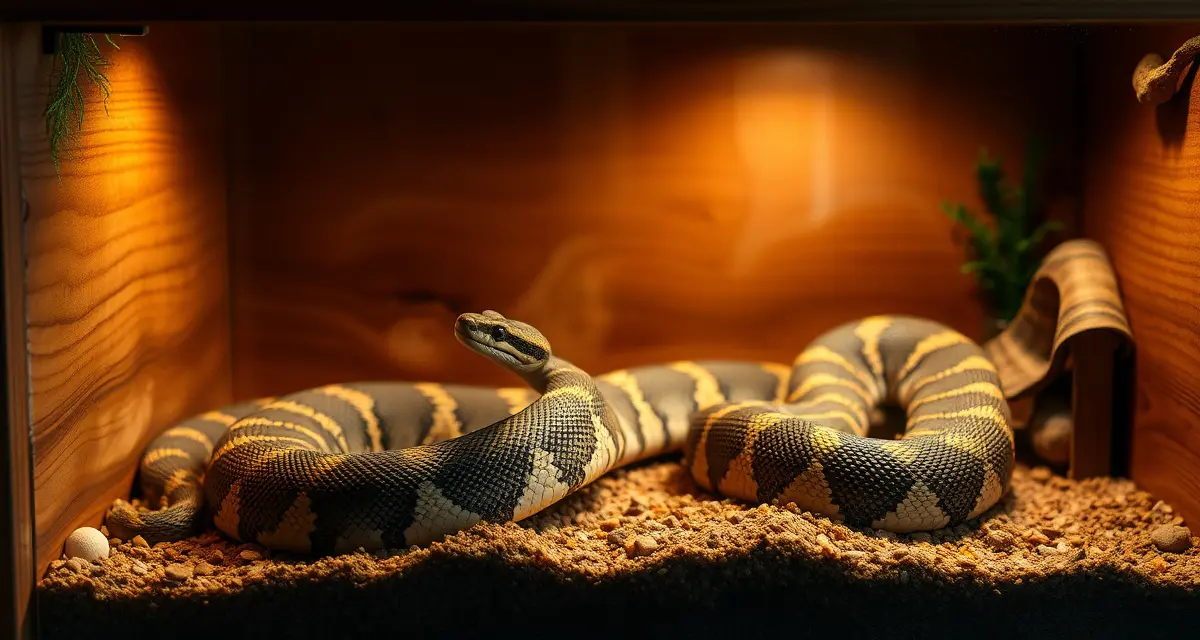
Boa Constrictor Pairing and Introduction: Complete Breeder Guide
Introducing boa constrictors for breeding requires more preparation than simply putting two animals together and hoping for the best. The conditions leading up to the introduction, how you manage the introduction itself, and what you do afterward all affect whether you get viable offspring. Breeders using integrated software report 30% less time on administrative tasks, freeing up the time needed to observe pairings directly rather than leaving animals together unsupervised.
TL;DR
- Boa constrictors are viviparous (live-bearing), with gestation lasting 5-8 months depending on subspecies and husbandry conditions.
- Seasonal cycling typically starts in October with a 5-10 degree Fahrenheit temperature reduction and reduced photoperiod.
- Litter sizes average 15-25 neonates for Boa constrictor imperator, though some localities and true red-tails average smaller litters.
- Confirming pregnancy in boas is subtler than in ball pythons and often requires close behavioral observation or portable ultrasound.
- Logging every pairing date and gestation-period observation gives you the data to accurately predict birth windows and prepare appropriate neonate housing.
The boa introduction process varies from the ball python approach in a few important ways. Boas are generally more actively visual during introductions, copulation events can last for extended periods, and cohabitation between introductions carries more risk with larger, more powerful animals.
Pre-Introduction Preparation
Before you introduce any pair, both animals should have completed their breeding season cooling period. Two to four weeks of reduced temperatures and shortened photoperiod puts animals in the right physiological state to respond to breeding introductions. A male that hasn't been properly cycled may show little to no interest in a receptive female.
Both animals should have their last meal digested before introduction -- typically 5-7 days after feeding for boas. Attempting introductions on animals with undigested prey increases stress and regurgitation risk.
Verify the female's body condition. A female that's significantly underweight should not be bred -- the physical demands of gestation on an already thin animal can be life-threatening. Aim for females at healthy breeding weight with good muscle tone and clear, bright eyes.
Conducting the Introduction
Always introduce the male to the female's enclosure, not the other way around. Females are territorial in their enclosures and introducing them to the male's space can disrupt the breeding response. The female's familiar environment and scent give the interaction a better starting context.
Place the male in the female's enclosure and observe for at least the first 30 minutes. Watch for the male's exploratory behavior -- active tongue flicking along the female's body, alignment alongside her, and pelvic spur stimulation (male uses his vestigial pelvic spurs to stimulate the female along her dorsal surface). If both animals are receptive, copulation typically initiates within the first few hours.
Boa copulation is long-duration. A breeding lock can last 4-24 hours. During copulation, minimize disturbance. Checking on the pair every few hours is reasonable; opening the enclosure and handling the animals during a lock is not.
How Long to Leave Pairs Together
You have two options for managing pairing duration: supervised short introductions (12-24 hours) or extended cohabitation (several days to a week). Both approaches have proponents among experienced breeders.
Supervised short introductions give you more control and reduce the risk of feeding aggression or combat injuries, which can occur occasionally with larger boas. Extended cohabitation increases the likelihood of multiple copulation events, which improves fertilization probability.
If you're using short introductions, run them every 3-5 days throughout the breeding season (December through February for most Northern Hemisphere breeders). If you're using extended cohabitation, remove the male once a copulation event is confirmed and bring him back after 5-7 days.
Observing and Logging Breeding Behavior
Keep detailed notes on every introduction. Record the date, time, male ID, female ID, the behaviors observed, whether copulation was observed, and approximate duration. This information is more valuable than it might seem in the moment.
If a season produces poor results -- high slug rates, no pregnancy confirmation -- your introduction logs are the first place to look. Did you actually observe copulation, or did you assume it happened based on cohabitation? How many confirmed copulation events occurred? Were introductions spaced appropriately? The answers often reveal what went wrong.
HatchLedger gives you a dedicated place to log pairing introductions with timestamps, behavioral observations, and outcome notes. This data links directly to the birth record when the female delivers, giving you a complete picture of each season's reproductive timeline.
Rotating Males Across Multiple Females
If you're breeding multiple females in a season, rotating one male across several females is common practice. Males can typically service 3-5 females per season without significant fertility decline, though this varies by the animal.
When rotating males, give each male a break of several days between introductions. Watch for signs of stress or weight loss in males that are being worked heavily through breeding season. A male that refuses food for weeks and is visibly thinner needs to rest, not more pairings.
Log every pairing for every male so you can track his total breeding activity for the season. If a particular male is producing litters with high slug rates, his schedule and fertility history will be part of your troubleshooting.
HatchLedger connects male breeding records to female birth outcomes so you can evaluate each male's performance across all pairings in a season.
Frequently Asked Questions
What is the best approach to boa constrictor pairing and introduction?
Cycle both animals before introductions begin. Introduce the male to the female's enclosure. Observe the first introduction directly, noting whether copulation actually occurred. Run supervised 12-24 hour introductions every 3-5 days throughout breeding season, or use extended cohabitation with careful monitoring. Log every introduction with date, observed behaviors, and outcome. Don't assume cohabitation equals successful breeding -- documented copulation events are what matter for predicting litter outcomes.
How do professional breeders handle boa constrictor pairing introductions?
Experienced breeders document every introduction rather than relying on memory. They note whether copulation was observed versus assumed, record how many confirmed breeding events occurred per female per season, and track male rotation schedules to ensure fertility isn't compromised by overwork. When a season produces unexpected results, their introduction logs provide the data needed to identify what went wrong. They also watch male condition through breeding season, pulling males from rotation when signs of stress or weight loss appear.
What software helps manage boa constrictor pairing records?
HatchLedger is purpose-built for reptile breeders, connecting animal records, breeding history, clutch outcomes, and financial tracking in one system. Unlike generic spreadsheets, it's designed around the specific workflow of an active breeding season. Free for up to 20 animals.
How do you sex boa constrictor neonates?
Boa constrictor neonates can be sexed by probing or by popping, both of which should be performed by an experienced keeper to avoid injury. Males typically probe to 4-8 subcaudal scales and females probe to 2-3. Recording sex in your records at birth is important for accurate inventory and sales documentation.
How long does it take a boa constrictor to reach breeding weight?
Most B. c. imperator females reach breeding weight (typically 3,000-5,000g depending on locality) at 3-4 years under good feeding conditions. True red-tailed boas (B. c. constrictor) grow larger and may take 4-5 years. Males of most localities are ready to breed at 18-24 months.
Can boa constrictors produce back-to-back litters in consecutive years?
Most experienced breeders rest females for a full season after a large litter to allow proper body condition recovery. A female that drops significant weight during a long gestation needs adequate recovery time before the next breeding cycle. Tracking body weight before and after gestation is the best guide.
Sources
- USARK (United States Association of Reptile Keepers)
- Association of Reptilian and Amphibian Veterinarians (ARAV)
- Herpetologica (Herpetologists League)
- Reptiles Canada Magazine
- World Animal Protection
Get Started with HatchLedger
Boa constrictor breeding involves months of gestation monitoring, pairing records, and litter documentation that is difficult to track reliably across multiple females using notebooks or generic spreadsheets. HatchLedger gives you a single connected system for all of it, from cycling start through neonate sale. Try it free with up to 20 animals.