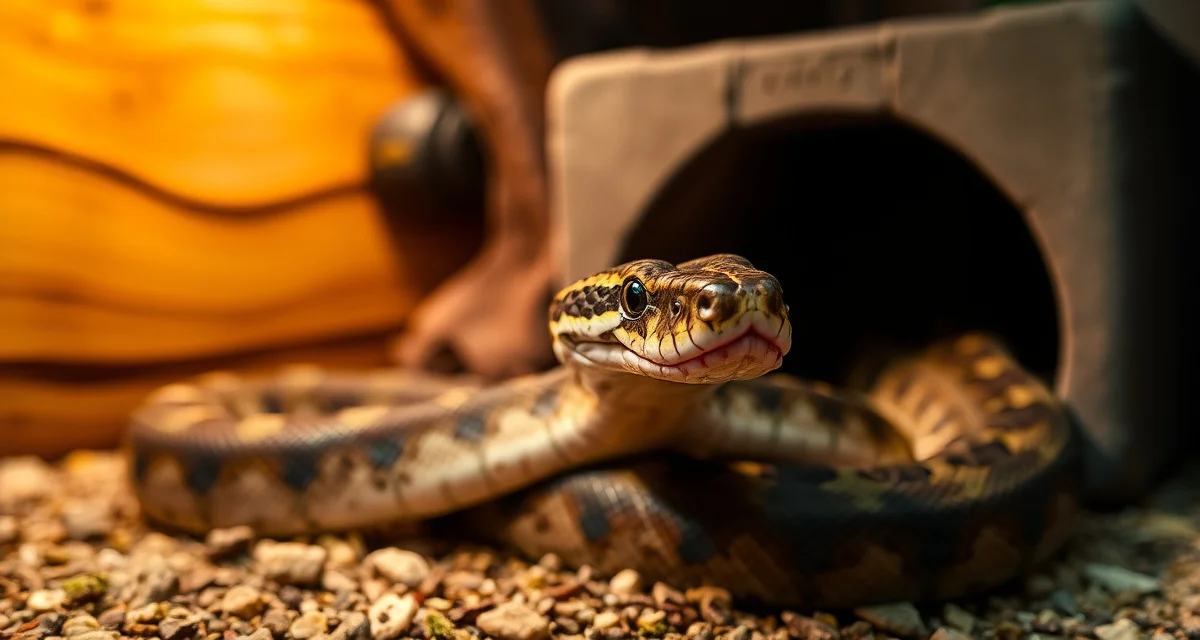
Boa Constrictor Husbandry for Breeders: Complete Breeder Guide
By HatchLedger Editorial Team · Published 2025-03-19 · Updated Mar 13, 2026
Keeping boa constrictors in breeding condition requires a level of husbandry commitment that goes beyond basic pet care. You're not just keeping animals healthy -- you're preparing females to withstand the physical demands of a 5-8 month gestation and raising neonates from birth through first feeding. Breeders using integrated software report 30% less time on administrative tasks, which is time better spent on the hands-on husbandry that production boas genuinely need.
TL;DR
- Boa constrictors are viviparous (live-bearing), with gestation lasting 5-8 months depending on subspecies and husbandry conditions.
- Seasonal cycling typically starts in October with a 5-10 degree Fahrenheit temperature reduction and reduced photoperiod.
- Litter sizes average 15-25 neonates for Boa constrictor imperator, though some localities and true red-tails average smaller litters.
- Confirming pregnancy in boas is subtler than in ball pythons and often requires close behavioral observation or portable ultrasound.
- Logging every pairing date and gestation-period observation gives you the data to accurately predict birth windows and prepare appropriate neonate housing.
Boa constrictor husbandry varies significantly depending on the subspecies you're working with. Common boas (Boa imperator) are generally more forgiving than the locality-specific B. c. constrictor subspecies, which tend to have more specific requirements. Know your animals and don't assume that one care protocol applies to all boas.
Enclosure Sizing and Type
Adult breeding boas need appropriately-sized enclosures. A common boa female at breeding weight (3-4 kg) needs at minimum a 4'x2'x2' enclosure. Larger females require proportionally larger spaces. Females that are overly cramped show stress behaviors -- constant movement, nose rubbing, failure to settle -- that negatively affect reproductive performance.
Front-opening enclosures (PVC or ABS construction) work well for boas because they allow you to service the enclosure from the front without reaching over the animal from above, which mimics an aerial predator approach and can stress the snake. Rack systems are viable for smaller boas and neonates, but adult breeding females do better in properly sized individual enclosures.
Substrate choice affects both humidity management and cleanliness. Cypress mulch, coco fiber, and bioactive setups all work well for maintaining humidity in the 60-70% range that boas prefer. Paper towels or newspaper are easier to clean but require active misting to maintain appropriate humidity. Many breeders use a combination: cypress mulch for adult breeding animals, paper substrate for neonates and young animals where cleanliness and observation are priorities.
Temperature and Heating
Boas need a clear thermal gradient. Warm side (hot spot) should reach 88-92F, with a cool ambient around 76-80F. Consistent warm-side access is particularly important for gravid females, who will spend extended time thermoregulating in the warm zone during gestation.
Use under-tank heaters (UTH) or radiant heat panels (RHP) on proportional thermostats for belly heat. Overhead ceramic heat emitters or deep heat projectors can supplement, particularly in larger enclosures where the UTH alone doesn't provide adequate ambient warmth. Avoid hot rocks and other direct contact heat sources.
Consistent temperatures throughout the year (outside of intentional breeding season cycling) support steady feeding responses and healthy digestion. Breeding cycle cooling should be intentional and gradual, not the result of ambient temperature variation in your facility.
Feeding Adult Breeding Animals
Breeding boas need to enter cycling season in good body condition. Females that are underweight will produce smaller litters. Females that are obese have increased complication risk during pregnancy and delivery. A boa at healthy body condition has a visible but not prominent spine, no indentations between the spine and the top of the body, and a smooth, rounded ventral profile.
Feed adult boas every 2-3 weeks outside of breeding season. Prey items should be no wider than 1.5 times the snake's body diameter at its widest point. Consistent frozen/thawed prey feeding reduces the risk of injury from live prey and supports proper biosecurity in a breeding facility.
During breeding season, males may refuse or reduce feeding. This is normal. Don't force-feed a male that's focused on breeding activity. Females should continue feeding through early gestation, then may reduce or stop feeding naturally as pregnancy progresses.
Hygiene and Biosecurity
In a multi-animal breeding operation, biosecurity matters more than most beginners realize. Boa inclusion body disease (IBD) is a serious viral condition that spreads between animals and has no cure. New acquisitions should be quarantined for a minimum of 60-90 days before being introduced to the main collection. During quarantine, use separate tools, gloves, and cleaning supplies to prevent cross-contamination.
Spot-clean enclosures as needed and do full substrate changes at least monthly. Disinfect enclosures with a veterinary-grade disinfectant between animal changeovers. Never move substrate or hides from one enclosure to another without disinfection.
HatchLedger tracks health events and veterinary visits for each animal, so your biosecurity logs are part of the permanent record. When you're evaluating whether a new acquisition's quarantine period is complete, or reviewing the health history of an animal before introducing it to a breeding rotation, that information is available immediately.
Maintaining Breeding Animals Long-Term
Boa breeding animals often stay in a collection for 10-20 years or more. Female boas can remain productive into their teens. Long-term maintenance requires annual veterinary exams, consistent weight monitoring, and a willingness to take animals out of breeding rotation when their condition warrants rest. Pushing a female through another breeding season when she's still recovering from the last one leads to shortened productive life and health complications.
HatchLedger connects your long-term husbandry logs to breeding outcomes so you can make evidence-based decisions about each animal's schedule rather than relying on rough impressions of how they look.
Frequently Asked Questions
What is the best approach to boa constrictor husbandry for breeders?
Provide appropriately-sized enclosures with a clear thermal gradient (warm side 88-92F, cool ambient 76-80F) and humidity maintained at 60-70%. Feed adults every 2-3 weeks on appropriately-sized frozen/thawed prey outside of breeding season. Maintain strict biosecurity including a 60-90 day quarantine for all new animals. Monitor body condition carefully -- breeders that enter cycling in good condition consistently outperform animals that are underweight or obese. Log all husbandry observations to build a multi-year health and care history for each animal.
How do professional breeders handle boa constrictor husbandry for a breeding collection?
Professional boa breeders treat husbandry as a year-round, systematic practice. They maintain consistent temperature and humidity logs, follow a structured feeding schedule outside of breeding season, and conduct regular weight and body condition assessments. They also maintain strict biosecurity protocols because the consequences of a disease outbreak in a boa collection can be devastating. Long-term records help them make decisions about which animals are in condition to breed and which need a rest season to recover.
What software helps manage boa constrictor husbandry records?
HatchLedger is purpose-built for reptile breeders, connecting animal records, breeding history, clutch outcomes, and financial tracking in one system. Unlike generic spreadsheets, it's designed around the specific workflow of an active breeding season. Free for up to 20 animals.
How do you sex boa constrictor neonates?
Boa constrictor neonates can be sexed by probing or by popping, both of which should be performed by an experienced keeper to avoid injury. Males typically probe to 4-8 subcaudal scales and females probe to 2-3. Recording sex in your records at birth is important for accurate inventory and sales documentation.
How long does it take a boa constrictor to reach breeding weight?
Most B. c. imperator females reach breeding weight (typically 3,000-5,000g depending on locality) at 3-4 years under good feeding conditions. True red-tailed boas (B. c. constrictor) grow larger and may take 4-5 years. Males of most localities are ready to breed at 18-24 months.
Can boa constrictors produce back-to-back litters in consecutive years?
Most experienced breeders rest females for a full season after a large litter to allow proper body condition recovery. A female that drops significant weight during a long gestation needs adequate recovery time before the next breeding cycle. Tracking body weight before and after gestation is the best guide.
What is Boa Constrictor Husbandry for Breeders: Complete Breeder Guide?
This guide is a comprehensive resource for boa constrictor breeders covering everything from daily husbandry routines to breeding season management. It addresses the unique demands of keeping boas in breeding condition, including nutrition, environmental cycling, gestation monitoring, and neonate care. Unlike basic pet care guides, it focuses on production-level husbandry — preparing females for 5-8 month gestations and successfully raising litters of 15-25 neonates from birth through first feeding.
How much does Boa Constrictor Husbandry for Breeders: Complete Breeder Guide cost?
The guide itself is free educational content published on HatchLedger. There is no purchase required to access the husbandry information. HatchLedger does offer breeding management software that breeders reference throughout the guide — that platform helps automate record-keeping tasks, with users reporting 30% less time on administrative work, freeing them to focus on the hands-on care that boa breeding genuinely demands.
How does Boa Constrictor Husbandry for Breeders: Complete Breeder Guide work?
The guide walks breeders through a seasonal workflow: initiating cooling cycles in October with a 5-10°F temperature drop and reduced photoperiod, introducing pairings, monitoring females for behavioral pregnancy cues or using portable ultrasound, logging pairing dates and observations, and preparing neonate housing ahead of predicted birth windows. Each phase builds on accurate record-keeping to improve timing predictions and breeding outcomes over successive seasons.
What are the benefits of Boa Constrictor Husbandry for Breeders: Complete Breeder Guide?
Breeders gain a structured framework for managing the full boa breeding cycle rather than relying on guesswork. Key benefits include clearer pregnancy confirmation methods, data-driven birth window predictions, better neonate preparation, and reduced administrative overhead through integrated logging. Over multiple seasons, consistent record-keeping compounds — giving breeders the historical data needed to refine pairing timing, identify high-producing females, and improve overall litter success rates.
Who needs Boa Constrictor Husbandry for Breeders: Complete Breeder Guide?
This guide is written for serious boa constrictor breeders — whether hobbyists scaling up or established producers looking to tighten their husbandry systems. It is especially relevant for breeders working with Boa constrictor imperator or true red-tail localities who want to move beyond basic care into production-level management. Anyone preparing females for gestation, monitoring live births, or struggling to track litter data across multiple animals will find it directly applicable.
Related Articles
- Boa Constrictor Buyer Waitlist Management: Complete Breeder Guide
- Boa Constrictor Clutch Size and Egg Count: Complete Breeder Guide
- Boa Constrictor Common Breeding Issues: Complete Breeder Guide
- Boa Constrictor Common Health Issues: Complete Breeder Guide
Sources
- USARK (United States Association of Reptile Keepers)
- Association of Reptilian and Amphibian Veterinarians (ARAV)
- Herpetologica (Herpetologists League)
- Reptiles Canada Magazine
- World Animal Protection
Get Started with HatchLedger
Boa constrictor breeding involves months of gestation monitoring, pairing records, and litter documentation that is difficult to track reliably across multiple females using notebooks or generic spreadsheets. HatchLedger gives you a single connected system for all of it, from cycling start through neonate sale. Try it free with up to 20 animals.