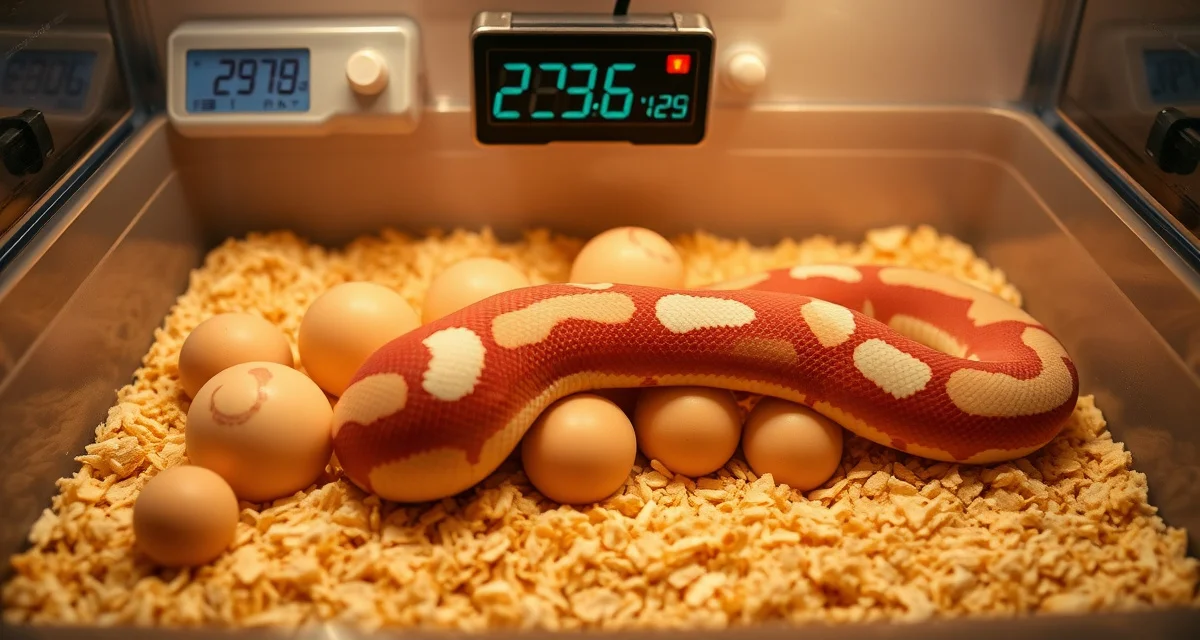
Blood Python Incubation Parameters: Complete Breeder Guide
Blood python egg incubation requires the same core conditions as most python species -- consistent temperature, appropriate humidity, minimal disturbance -- but the eggs are notable for their larger-than-expected size relative to the female. A blood python clutch of 12-16 large eggs needs adequate incubation space and careful substrate management. Breeders using integrated software report 30% less time on administrative tasks, freeing up time to monitor incubation conditions through the 65-75 day incubation period.
TL;DR
- Blood python eggs incubate at 88-90F (31-32C) for 65-75 days, longer than many other python species
- Use perlite at a 1:1 ratio by weight for substrate; eggs losing more than 10-15% of lay weight by mid-incubation are too dry
- Temperature consistency matters more than hitting an exact number -- a steady 88.5F beats a setup swinging between 86F and 92F
- Maternal incubation is viable for well-conditioned females, but the 65-75 day fast is a genuine metabolic concern for blood pythons prone to obesity
- Containers must have small ventilation openings -- airtight setups accumulate CO2 and impair embryo development
- Some breeders report better results with a temperature ramp starting at 86F for the first two weeks before raising to 88-90F
Temperature Targets
Incubate blood python eggs at 88-90F (31-32C). At this range, incubation duration is typically 65-75 days -- slightly longer than for some other python species. Temperature consistency is the priority. An incubator that holds 88.5F steadily outperforms one that swings between 86F and 92F.
Verify actual egg-level temperature with a calibrated probe thermometer independent of your incubator's built-in display. Temperature spikes above 92-93F can damage developing embryos. Install a temperature alarm in your incubation area so any thermostat malfunction is detected quickly.
Some blood python breeders report slightly better results incubating at a modest temperature ramp -- starting at 86F for the first two weeks and raising to 88-90F for the remainder. This isn't widely documented in scientific literature but has anecdotal support in the breeding community. It's worth considering if you're having variable hatch rates with standard approaches.
Humidity and Substrate
Blood python eggs are large and have correspondingly larger moisture requirements than smaller eggs. Use perlite at a 1:1 ratio by weight as substrate. This provides good moisture retention with adequate air exchange.
Eggs that dehydrate show dimpling and progressive shrinkage. Blood python eggs that shrink noticeably by mid-incubation need more substrate moisture. Conversely, eggs sitting in overly wet substrate may show surface mold. Adjust based on what you observe.
Weigh your incubation container or individual eggs at the start of incubation if you want an objective baseline for moisture tracking through the incubation period. Eggs losing more than 10-15% of their lay weight by mid-incubation are too dry.
Maternal Incubation
Blood pythons will maternally incubate their eggs. Females coil around clutches and generate heat through muscular thermogenesis. Maternal incubation is a viable option for well-conditioned females, though the fasting period (65-75 days) takes a toll on heavy-bodied animals that already carry significant metabolic demands.
If allowing maternal incubation, provide a private nesting area with ambient temperature of 82-85F. Minimize disturbance. Check on the female and clutch every few days at most.
Many blood python breeders use artificial incubation for consistency and to reduce the physical burden on females. Given the metabolic disease risk in blood pythons that are already prone to obesity, the prolonged fast of maternal incubation is a genuine concern for animals that aren't in peak condition.
Container and Setup
Incubate blood python eggs in containers with small ventilation openings -- not airtight setups, which accumulate CO2 and impair development. Commercial egg-incubation containers or standard plastic tubs with small holes in the lid both work.
Eggs should be partially supported by the substrate, not sitting on the surface without contact. Don't rotate eggs from their original lay orientation.
Remove any obvious slugs at lay and watch for mold on adjacent eggs through the incubation period. Surface mold on eggs should be addressed promptly -- wipe affected surfaces carefully with a dry cloth and check whether the underlying egg is still firm and viable.
HatchLedger tracks incubation start dates, temperature readings, and hatch outcomes for each clutch.
HatchLedger connects incubation records to clutch P&L for complete season tracking.
Frequently Asked Questions
What is the best approach to blood python egg incubation parameters?
Incubate at 88-90F on perlite at 1:1 by weight. Use containers with small ventilation openings. Verify actual egg-level temperature with a calibrated probe. Monitor egg condition every 3-4 days and adjust substrate moisture if eggs are showing significant changes. Blood python incubation runs 65-75 days -- plan for a longer incubation period than some other species. For well-conditioned females, maternal incubation is a viable alternative to artificial incubation.
How do professional breeders handle blood python incubation?
Professionals verify their setup each season with calibrated probes, track egg condition throughout incubation, and log temperature data so poor hatch rates can be investigated if they occur. They also evaluate the maternal incubation option carefully given the longer fast period blood pythons endure during brooding, making female condition at lay a key factor in the decision.
What software helps manage blood python incubation records?
HatchLedger provides clutch record management where incubation setup, temperature observations, and hatch outcomes connect to the parent pair's breeding record. The complete incubation record feeds into your clutch P&L and hatchling inventory creation.
How often should I check on blood python eggs during incubation?
Check eggs every 3-4 days to monitor for visible changes in firmness, dimpling, or surface mold. Blood python eggs are large enough that early signs of dehydration or mold are usually visible without disturbing the clutch significantly. Avoid opening the incubation container more than necessary, as repeated disturbance can cause temperature and humidity fluctuations that affect development.
Can blood python eggs from the same clutch hatch on different days?
Yes, it is common for eggs within a single clutch to pip and hatch over a span of 2-5 days. This is normal and not a sign of a problem with your incubation setup. Leave eggs that have not yet pipped in the incubator undisturbed while attending to hatchlings that have already emerged. Only intervene with a specific egg if it is significantly behind the rest of the clutch and showing signs of distress.
What should I do if a blood python egg collapses mid-incubation?
A collapsing egg is usually a sign of dehydration or embryo death. First check whether the egg is still firm at the center -- a partially dimpled egg that remains firm may recover if substrate moisture is increased. An egg that is fully collapsed, discolored, or emitting odor is likely non-viable and should be removed to prevent mold spread to healthy eggs. Log the outcome in your incubation records so you can identify patterns across seasons.
How does blood python incubation differ from ball python incubation?
The core parameters are similar -- perlite substrate, ventilated containers, and calibrated temperature probes apply to both. The main differences are that blood python eggs are considerably larger, the incubation period runs slightly longer at 65-75 days compared to 55-60 days for ball pythons, and the maternal incubation option carries more metabolic risk for blood pythons given their heavier body condition and obesity susceptibility. Blood python clutch sizes are also typically smaller, which means each egg represents a larger share of the season's output.
Sources
- Society for the Study of Amphibians and Reptiles (SSAR) -- peer-reviewed publications on python reproductive biology and incubation physiology
- Association of Reptilian and Amphibian Veterinarians (ARAV) -- clinical guidance on metabolic disease risk and husbandry standards for heavy-bodied pythons
- University of Florida IFAS Extension -- reptile husbandry and incubation research applicable to captive python breeding operations
- USARK (United States Association of Reptile Keepers) -- breeder practice documentation and captive husbandry standards for python species
Get Started with HatchLedger
HatchLedger gives blood python breeders a single place to log incubation start dates, temperature observations, egg condition notes, and hatch outcomes -- all connected to the parent pair's breeding record and your clutch P&L. If you're managing multiple clutches across a season or evaluating whether maternal incubation is working for your females, having that data organized makes a real difference. Try HatchLedger free and see how much cleaner your season records can be.